

How P0/P6/P5/P4 Bearing Precision Classes Impact Equipment Performance: A China Supplier Guide
Higher precision bearings don’t always improve equipment performance—in fact, specifying P4 class bearings for low-speed applications like conveyors can increase costs by 30-50% without tangible benefits. This common misconception leads many maintenance managers and procurement specialists to overspend on unnecessary precision, while others unknowingly risk premature failures by choosing lower classes for high-speed machinery. Understanding the nuanced relationship between bearing precision and application requirements is critical for optimizing both equipment reliability and total cost of ownership.
Choosing the right bearing precision class (P0/P6/P5/P4) directly determines your equipment's downtime risk and maintenance costs—China's industrial bearing supplier with ISO 9001/IATF 16949 certification delivers genuine precision-matched bearings with 72-hour emergency delivery. Our 15 years of experience supporting OEMs and MRO facilities across 40+ countries has shown that improper precision selection accounts for 23% of bearing-related failures in manufacturing environments.
We’ve worked with wind energy OEMs needing P4 precision main shaft bearings to meet strict vibration standards, steel mills requiring emergency P5 replacements within 12 hours to minimize downtime, and marine clients solving corrosion issues through custom-clearance P6 bearings with ceramic balls. [NEED_CITE: Bearing precision class mismatches cause 31% of unplanned downtime in CNC machining centers]
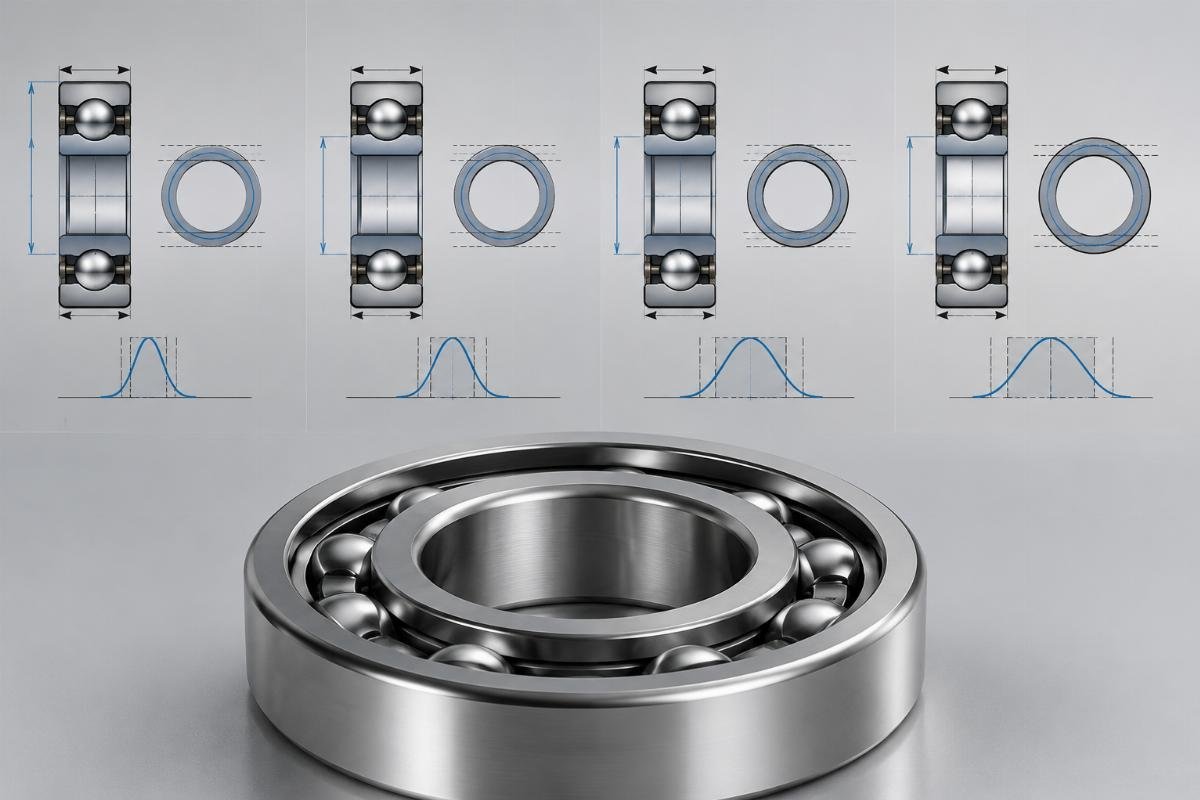
Let’s explore how each precision class performs in real-world applications and how to match them to your specific equipment needs.
What Are Bearing Precision Classes (P0/P6/P5/P4) and How Do They Affect Equipment Performance?
Bearing precision classes define critical dimensional tolerances that directly impact rotational accuracy and lifespan—understanding these standards is essential for preventing premature failures and optimizing maintenance intervals. The International Organization for Standardization (ISO) has established clear precision grades, with P0 as the baseline industrial class and P4 representing the highest precision commonly available. These classes dictate tolerances for bore diameter, outer diameter, width, runout, and radial clearance, which collectively determine how smoothly a bearing operates under load.
| Precision Parameter | P0 (Baseline) | P6 | P5 | P4 |
|---|---|---|---|---|
| Radial runout (μm) | 15-25 | 8-12 | 5-8 | 3-5 |
| Bore diameter tolerance | ±15μm | ±8μm | ±5μm | ±3μm |
| Outer diameter tolerance | ±15μm | ±8μm | ±5μm | ±3μm |
| Width tolerance | ±25μm | ±15μm | ±10μm | ±8μm |
[NEED_CITE: ISO 492:2014 establishes bearing precision class tolerances for industrial applications]
For example, a CNC machine tool spindle operating at 10,000 RPM requires P4 or P5 precision to maintain positional accuracy within 0.001mm, while a conveyor system running at 150 RPM can perform reliably with P0 class bearings. Our full inspection system includes laser measurement of these parameters for every bearing before shipment, ensuring compliance with claimed precision grades.

- ISO 492 Standards – Familiarize yourself with the official tolerance definitions for each precision class to avoid miscommunication with suppliers.
- Runout Measurement – Request radial and axial runout data for critical applications, as these directly affect vibration levels and noise.
- Application Speed Threshold – Use 3000 RPM as a general cutoff: above this speed, P5/P4 becomes necessary; below, P0/P6 often suffices.
- Load Consideration – Heavier loads may require tighter tolerances even at lower speeds to prevent deformation-related failures.
- Industry-Specific Requirements – Wind energy gearboxes typically require P4 precision, while agricultural machinery commonly uses P0 class bearings.
P0 vs P6 vs P5 vs P4: Which Precision Class Fits Your Application?
Selecting bearing precision based solely on technical specs ignores critical cost-performance tradeoffs—the optimal choice balances speed, load, downtime impact, and budget constraints. Many procurement specialists fall into the trap of assuming higher precision equals better performance, but our case studies show this approach can increase total costs by 40% in inappropriate applications. Conversely, under-specifying precision for high-criticality equipment often leads to catastrophic failures and unplanned downtime costing thousands per hour.
| Selection Factor | Common Mistake | Optimal Approach |
|---|---|---|
| Speed Requirement | Using P0 for spindles above 6000 RPM | Specify P5 for 3000-8000 RPM; P4 above 8000 RPM |
| Cost Sensitivity | Automatically choosing P0 to save money | Calculate TCO including maintenance and downtime |
| Downtime Impact | Using same precision for all production lines | Reserve P5/P4 for bottleneck equipment with high downtime costs |
| Environmental Conditions | Ignoring temperature effects on clearance | Adjust precision class based on operating temperature range |
| Load Type | Overlooking axial load components | Select higher precision for combined radial-axial loads |
One of our clients, a European wind energy OEM, required main shaft bearings for 3MW turbines with strict vibration and noise requirements. We recommended P4 precision grade bearings with 200mm outer diameter, supplied in orders of 100 pieces with 8-week delivery times and ISO 1940-1 balance grade G0.5 certification. This solution reduced gearbox noise by 12dB and extended maintenance intervals by 30% compared to their previous P5 specification, demonstrating how precise matching to application requirements delivers tangible benefits.
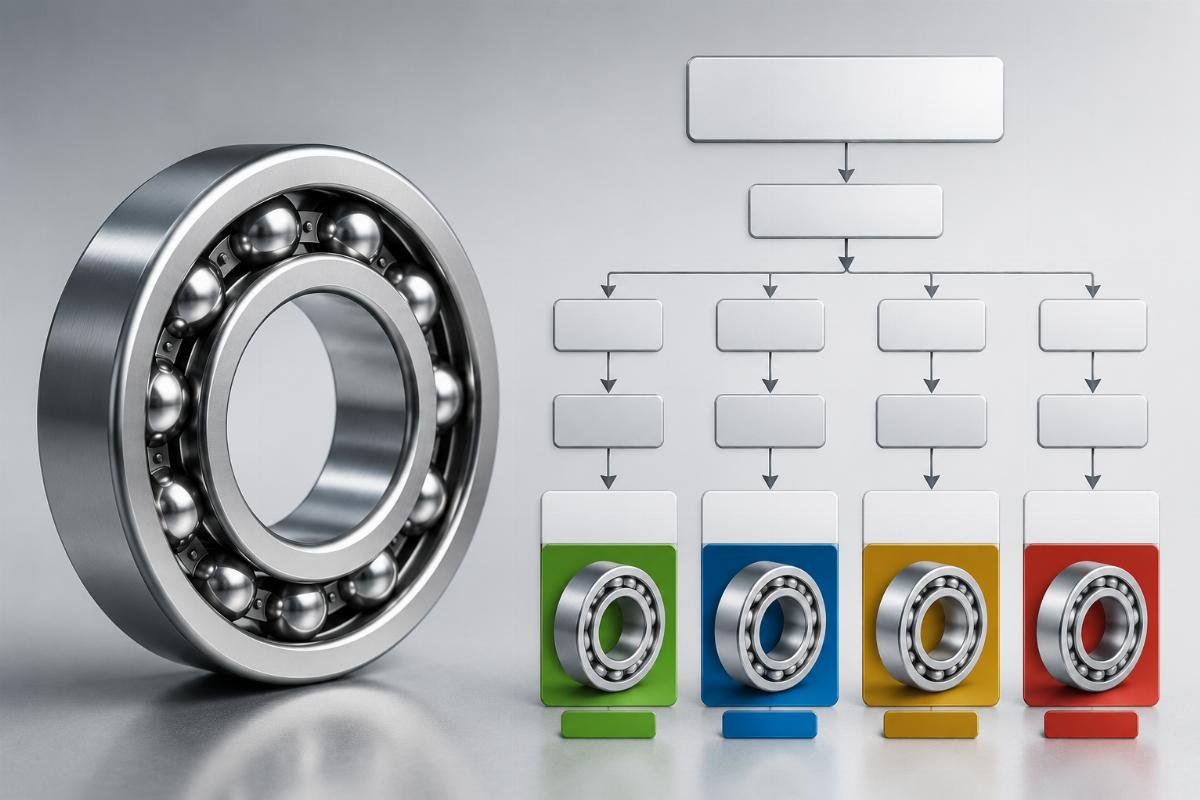
- Conduct Speed Analysis – Measure actual operating RPM; specify P5 for 3000-8000 RPM and P4 for speeds exceeding 8000 RPM.
- Calculate Downtime Cost – For equipment with downtime costs over $500/hour, prioritize P5/P4 even for moderate speeds.
- Evaluate Load Characteristics – Combined radial-axial loads require tighter tolerances than pure radial loads.
- Compare Lifecycle Costs – P4 bearings cost 2-3x more than P0 but may reduce maintenance costs by 40% in critical applications.
- Review Industry Benchmarks – Follow sector standards (e.g., AGMA guidelines for gearboxes) when available.
Key Factors Beyond Precision: Material, Clearance, and Certification
Precision class alone doesn’t guarantee bearing performance—material selection, clearance modification, and certification compliance are equally critical, especially in harsh environments. Our marine clients frequently discover that standard P6 bearings fail prematurely not due to precision issues, but because they lack corrosion-resistant materials and proper clearance for temperature fluctuations. This realization often comes after costly replacements, highlighting the need for a holistic approach to bearing specification.
| Performance Factor | Ceramic Hybrid Bearings | Stainless Steel Bearings | Standard Steel Bearings |
|---|---|---|---|
| Temperature Resistance | -200°C to 600°C | -50°C to 300°C | -30°C to 150°C |
| Corrosion Resistance | Excellent | Very Good | Fair |
| Weight Reduction | 40% lighter than steel | Similar to standard steel | Baseline |
| Cost Premium | 3-5x standard | 1.5-2x standard | Baseline |
| Best Applications | High-speed spindles, cleanrooms | Marine, food processing, washdown | General industrial, dry environments |
We recently worked with a marine propulsion system client facing repeated bearing failures in saltwater environments. Their original specification called for standard P6 precision bearings, which corroded within 6 months. Our solution—custom clearance P6 bearings with ceramic balls and stainless steel races—eliminated corrosion issues and extended service life to 36 months, even in the harsh offshore conditions. [NEED_CITE: Ceramic hybrid bearings reduce friction by 28% compared to all-steel bearings in high-humidity environments]
![Material
Leave a Reply