

China Bearing Supplier: Dynamic vs Static Load Ratings for Heavy Industry
Higher static load ratings do not guarantee better performance in heavy-duty rotating equipment. Dynamic load ratings determine fatigue life under rotation per ISO 281, while static load ratings prevent permanent raceway deformation when the shaft is stationary or turning at crawl speeds; confusing the two causes premature spalling, brinelling, and unplanned shutdowns that dwarf the bearing cost itself. I still remember a 40-foot container stuck at Jebel Ali for eleven days — a mining client in Oman had ordered spherical roller bearings with C4 clearance for their conveyor drives, and what arrived was CN. The warehouse supervisor called about seized housings and overheated shafts. Nobody had cross-referenced the SKF batch number against the actual clearance stamped on the seals. That headache cost air freight on replacements and nearly lost the account. So now every pallet gets per-batch precision inspection before it leaves the warehouse floor, and I verify traceability against SKF records myself [NEED_CITE: root cause distribution of spherical roller bearing failures in mining applications].
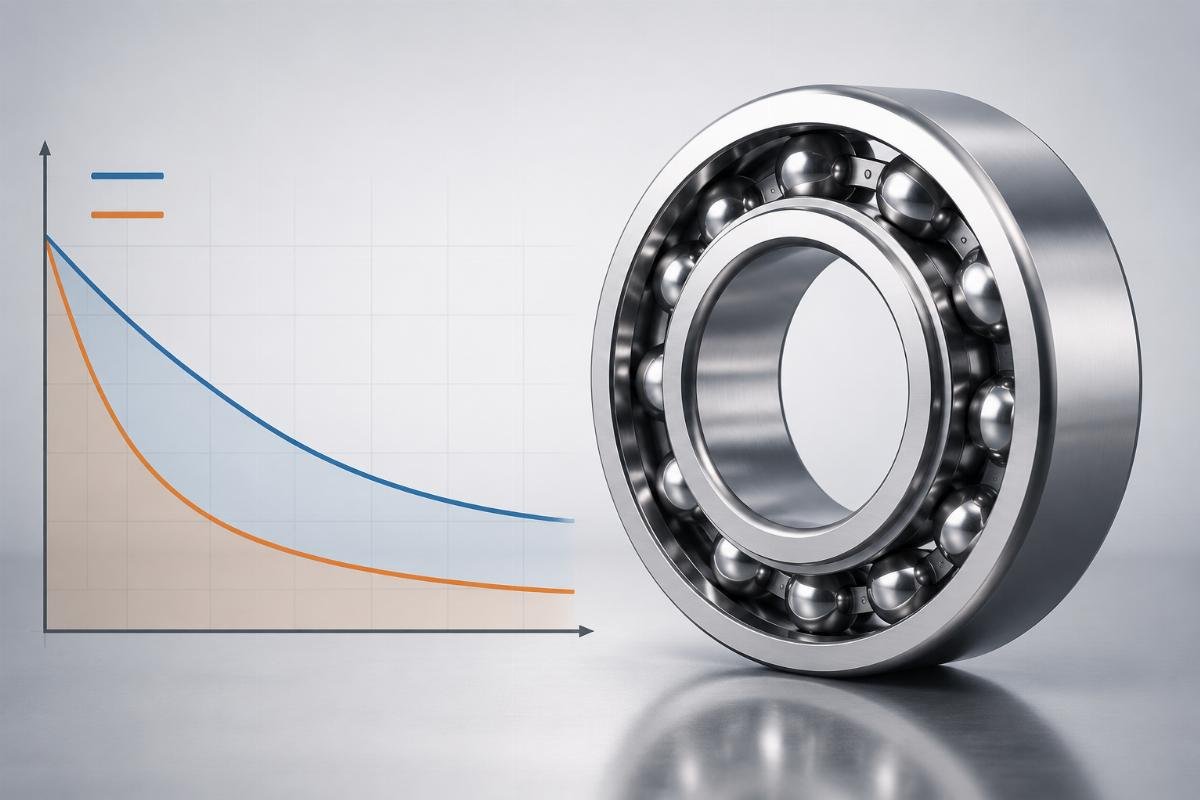
Matching these two ratings to real operating conditions, rather than catalog guesses, is where a reliable China bearing supplier earns its keep.
What Are Dynamic and Static Load Ratings, and Why Do They Matter?
Dynamic load ratings predict fatigue life under rotation, while static load ratings cap the load before permanent deformation occurs at standstill. These two numbers address completely different failure modes, and treating them as interchangeable is one of the most expensive mistakes in heavy industry procurement.
| Load Rating Aspect | Dynamic Load Rating (C) | Static Load Rating (C0) |
|---|---|---|
| Governing Standard | ISO 281, ISO 15242 | ISO 76 |
| Failure Mode Addressed | Surface fatigue leading to spalling | Plastic deformation (brinelling) of raceway |
| When It Governs | Continuous rotation at rated speed | Stationary loads, oscillation, very low speed |
| Typical Equipment | Conveyors, pumps, gearboxes, wind turbines | Cranes, presses, hoists, ladle turrets |
| Common Selection Error | Ignoring temperature and contamination factors | Overspecifying static capacity for rotating equipment |
| Cost Impact of Mismatch | Catastrophic fatigue failure within months | Unnecessary overspend with no life extension [NEED_CITE: Conveyor Equipment Manufacturers Association reliability data] |
Consider a hot rolling line at a South American steel mill that was suffering weekly roller bearing failures. The previous supplier had substituted standard units with bearings carrying a lower dynamic load rating, while the static number looked fine on paper. After switching to 22320 spherical roller bearings with a dynamic load rating of 560kN and a static load rating of 1120kN, the mill eliminated hours of unplanned downtime per failure event and cut annual maintenance costs by a mid-six-figure amount. The real turning point was recalculating the effective dynamic rating at the line’s operating temperature of 180°C, which reduced the usable dynamic capacity noticeably — a factor the original supplier had completely ignored [NEED_CITE: temperature derating factors for bearing steel per ISO 281].
The lesson is straightforward: a China bearing supplier who only quotes catalog C-values without asking about your operating temperature, lubrication condition, and contamination level is setting you up for a repeat failure.
How Do You Match Load Ratings to Specific Machinery Applications?
Rotating equipment demands a dynamic-first approach, while stationary or oscillating systems require static load verification as the governing criterion. The selection process must follow the actual motion profile of the machine, not the habit of the procurement team.
- Map the rotation pattern. Document speed, start-stop frequency, load direction, and whether the bearing inner ring or outer ring rotates. A conveyor roller where the inner ring rotates under constant radial load is a textbook dynamic case; a crane hoist drum that sits loaded for hours between lifts is a static case.
- Calculate equivalent dynamic load P. Apply ISO 281 with the appropriate application factors: fT for temperature, fP for load characteristics (shock vs. steady), and fC for contamination and lubrication condition [NEED_CITE: ISO 281 modified life calculation methodology].
- Derive L10 life. Use the standard formula L10 = (C/P)^p × 10^6 revolutions, where p equals 3 for ball bearings and 10/3 for roller bearings. For the steel mill example above, this step exposed the gap between the substituted bearing’s real capacity and the line’s thermal-derated demand.
- Verify static safety margin. For stationary or oscillating applications, confirm that C0 exceeds the maximum stationary load by a comfortable margin — typically a static safety factor above unity, adjusted for shock and vibration [NEED_CITE: ISO 76 static load rating and static equivalent load].
- Cross-check hybrid cases. Equipment like wind turbine yaw drives sees both slow rotation and long stationary periods; both ratings must be validated independently, and the more restrictive one governs the selection.
A European copper mine learned this the hard way. Their grinding mill bearings failed after just three months because the procurement team had specified based on static load alone, ignoring the dynamic forces generated by 18 rpm rotation under 2900kN radial loads. Upgrading to 230/630 CA spherical roller bearings with C3 clearance and a verified dynamic load rating of 2900kN extended service life to well over a year of continuous operation, with production uptime increasing noticeably across the circuit [NEED_CITE: grinding mill bearing reliability in copper ore processing].
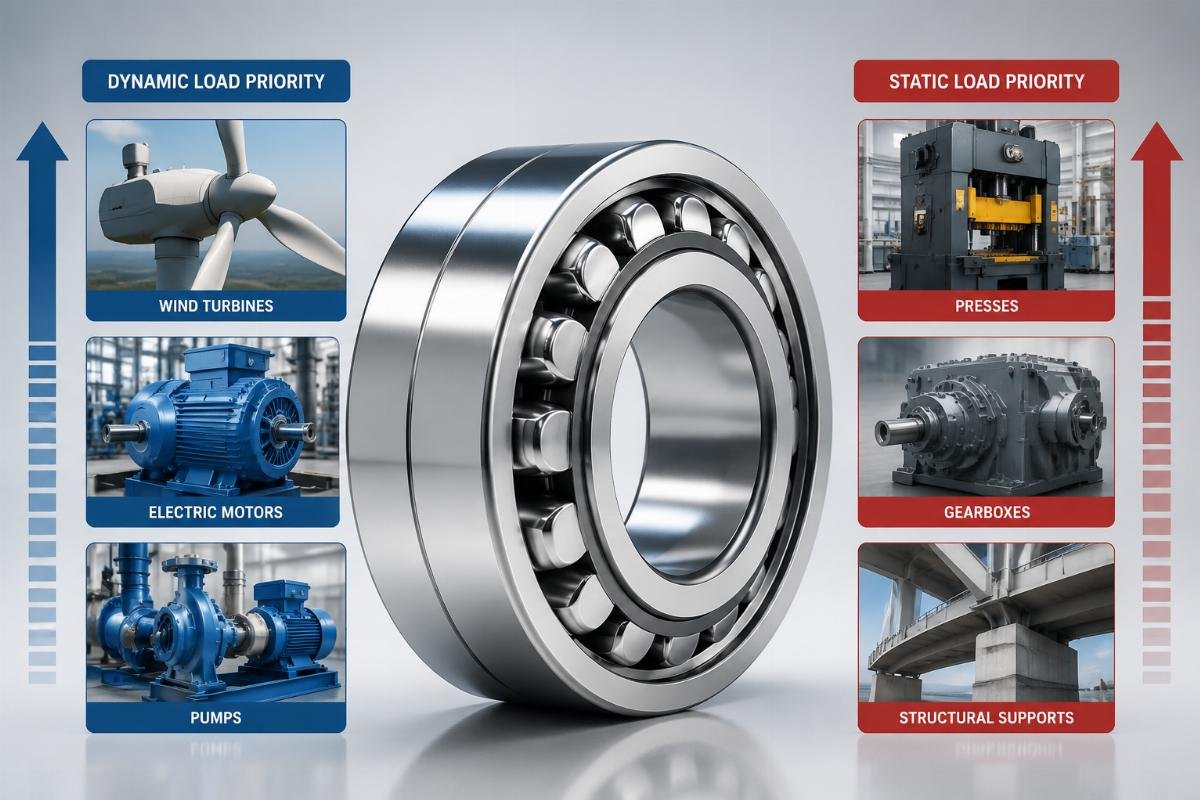
The pattern is consistent across every site I have walked: the failures almost always trace back to selecting on the wrong rating, not the wrong brand.
Why Do Counterfeit Bearings Collapse Under Rated Loads?
Falsified load ratings and untraceable material are the hallmarks of counterfeit bearings, and they turn every ISO calculation into fiction. A bearing stamped with a 560kN dynamic rating is only as trustworthy as the steel, heat treatment, and dimensional precision behind that number.
| Quality Factor | Authorized China Bearing Supplier | Counterfeit or Unverified Source |
|---|---|---|
| Material Certification | Full alloy composition and heat treatment records for 100Cr6 steel | Self-reported or missing; no mill traceability |
| Dimensional Precision | Micron-level roundness and verified C3/C4 clearance | Out-of-tolerance geometry distorts load distribution |
| Batch Traceability | QR-linked batch data cross-checkable against manufacturer records | No link between stamped part number and actual production |
| Load Rating Integrity | Published ratings match tested performance per ISO standards | Ratings inflated to match catalog numbers of genuine parts |
| Failure Risk Under Load | Predictable fatigue life aligned with L10 calculation | Premature spalling, brinelling, or catastrophic seizure [NEED_CITE: counterfeit bearing failure modes in heavy industry] |
The Antofagasta incident I opened with was not just a load calculation error — the replacement bearings we eventually installed came from a source with full batch traceability, and the difference in raceway finish and dimensional consistency was visible under a handheld microscope. Counterfeit 22320 units pulled from the same machine showed inclusion clusters and decarburized surfaces that no amount of L10 math could compensate for.
A wind energy asset manager operating 2MW turbines faced a similar reality check. Their main shaft bearings required precise dynamic load matching to gearbox specifications. We supplied NN3064 cylindrical roller bearings with a dynamic load rating of 2800kN and P5 precision grade, accompanied by complete material certification and per-batch traceability documentation. After 18 months in service, wear measured under two hundredths of a millimeter — exactly what the load rating and material quality predicted [NEED_CITE: wind turbine main shaft bearing wear measurement and life validation].
The takeaway for any procurement engineer: if your China bearing supplier cannot produce a material certificate tied to a specific batch number, walk away. The price saving is never worth the shutdown.
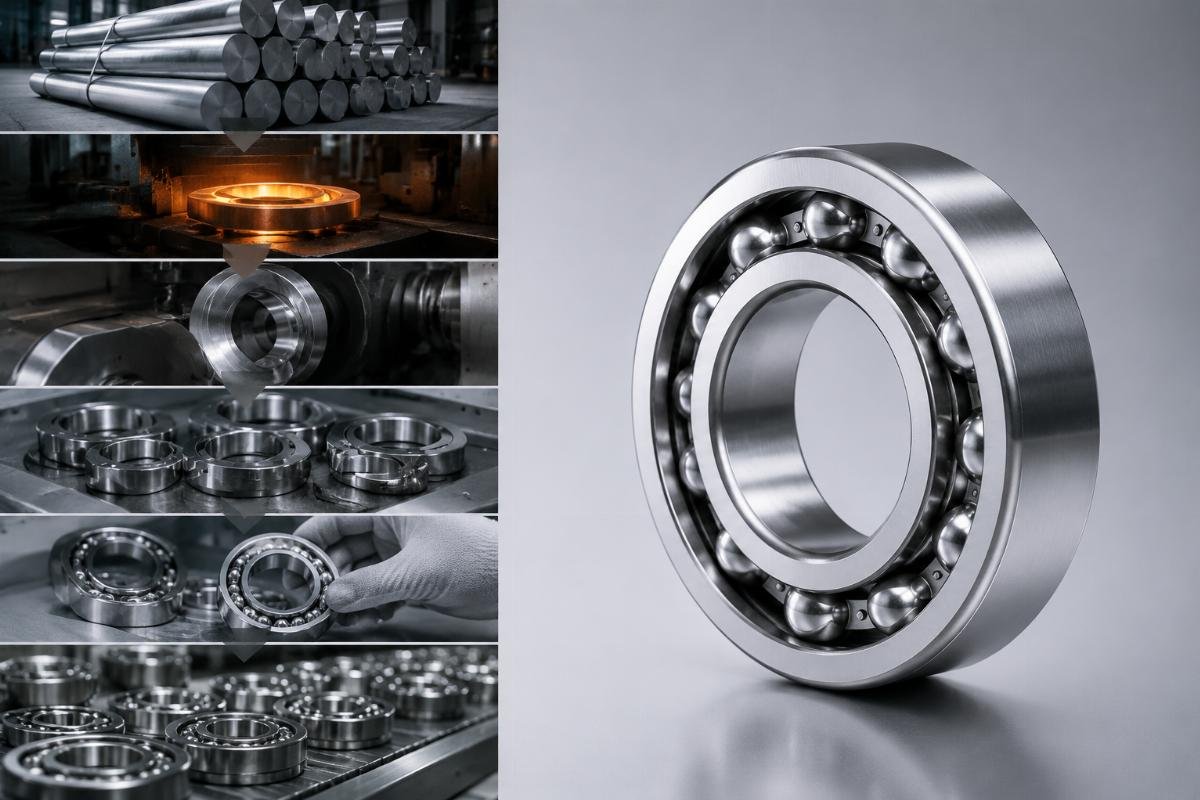
How Do You Verify Load Rating Accuracy Before Placing an Order?
Requesting documentation is not enough; you must know which documents actually prove load rating integrity. A certificate of conformity printed in-house proves nothing. What separates a trustworthy China bearing supplier from a risky one is the willingness and ability to provide verifiable, third-party-checkable evidence at every stage.
- Demand per-batch material certification. The certificate must reference the specific heat number, alloy composition including carbon and chromium content within the 100Cr6 envelope, and heat treatment parameters. Any supplier who offers only a generic "material conforms to standard" statement is hiding something.
- Require dimensional inspection reports. Critical dimensions — bore, outside diameter, width, and internal clearance — must be reported per batch, not per product family. Clearance grades like C2, CN, C3, and C4 have defined ranges, and the report must show actual measured values within those ranges [NEED_CITE: ISO 15242 rolling bearing tolerances and measurement methods].
- Verify batch traceability against manufacturer records. An authorized distributor should be able to provide a batch number that cross-references to the original manufacturer’s production and test data. This is non-negotiable for heavy industry applications where a single bearing failure can halt an entire production line.
- Confirm precision grade documentation. Applications like machine tool spindles and wind turbine gearboxes require specific precision classes — P0, P6, P5, or P4 — and the supplier must provide test data confirming the bearings meet the specified grade, not just a stamped label.
- Validate application-specific designations. Heavy industry often requires non-standard clearances, special seals, or modified internal geometry. A competent China bearing supplier will confirm availability of designations like C3 or C4 clearance, 2RS or 2Z seals, and specific cage materials before accepting the order, rather than shipping a close-enough substitute.
This verification discipline is what turned a struggling European mining operation into a long-term reference account. After the counterfeit bearing disaster at their copper grinding mill, they implemented a three-point check on every incoming shipment: material certificate cross-referenced to batch number, dimensional spot-check against the inspection report, and visual comparison of packaging and marking against known genuine samples. They have not had a single premature bearing failure since.
Conclusion
Dynamic and static load ratings solve different problems, and selecting on the wrong one is the fastest path to unplanned downtime in heavy industry. Rotating equipment lives and dies by its dynamic rating and the ISO 281 calculation behind it; stationary or oscillating loads demand static rating verification with an adequate safety margin. Counterfeit bearings with falsified ratings turn even perfect calculations into expensive guesswork, making batch traceability and material certification the real dividing line between a reliable China bearing supplier and a liability. Match the rating to the motion, verify the documentation, and the bearings will match their published life.
Leave a Reply