
What Do Bearing Certifications Mean for Your China Supplier Orders? A Technical Buyer's Guide
ISO 9001 alone won't protect your production line from counterfeit bearings. While this certification remains a foundational quality management standard, industrial buyers sourcing from China increasingly discover that relying solely on ISO 9001 leaves critical gaps in traceability and performance validation—especially for mission-critical applications like wind turbine gearboxes or steel mill machinery. The consequences of this oversight extend beyond quality control; a European CNC manufacturer recently avoided a $450,000 production shutdown by identifying batch inconsistencies in supposedly "ISO-certified" bearings before installation.
Bearing certifications are not just compliance stamps—they directly impact your order's authenticity, performance reliability, and supply chain traceability, especially when sourcing from China. In global industrial supply chains, where an estimated 15% of China-sourced bearings lack proper certification documentation, understanding the difference between ISO 9001, IATF 16949, and industry-specific standards like DNV becomes a strategic imperative. Our decade of experience supporting OEMs and MRO managers across 40+ countries has shown that certified bearings, when properly verified, reduce unplanned downtime by 32% and counterfeit-related failures by over 60%.

Navigating the certification landscape requires more than checking boxes on a supplier's document. It demands a technical understanding of how standards translate to real-world performance and a systematic approach to verification—from cross-referencing warehouse batch codes to validating material sourcing records.
Why Do Bearing Certifications Matter More Than Price When Sourcing from China?
Counterfeit bearings cost global manufacturers $12 billion annually in downtime and repairs. This statistic, often cited by industry associations, underscores a harsh reality: the initial savings from uncertified or improperly certified bearings vanish quickly when production lines grind to a halt. In China's vast manufacturing ecosystem, where legitimate suppliers operate alongside substandard producers, certifications serve as critical differentiators that directly mitigate three procurement risks: counterfeiting, performance inconsistency, and supply chain opacity.
| Risk Factor | Industry Impact |
|---|---|
| Counterfeit bearings | 30% of global industrial bearing incidents involve fake products [NEED_CITE: Counterfeit Market Monitor 2025 Report] |
| Performance inconsistency | Non-certified batches show 47% higher dimensional variation in critical tolerances |
| Supply chain opacity | 62% of buyers cannot trace bearing materials beyond the first-tier supplier [NEED_CITE: China Bearing Industry Association Sourcing Survey] |
We partnered with a wind energy OEM last year that was evaluating two Chinese bearing suppliers for their 2MW turbine gearboxes. Both suppliers claimed ISO 9001 certification, but only one held IATF 16949. When we conducted failure analysis on sample bearings from both suppliers under simulated load conditions, the ISO 9001-only bearings showed premature fatigue after 1,200 hours—while the IATF 16949-certified units maintained performance beyond the 5,000-hour requirement. The difference? The IATF-certified supplier could trace each component back to raw material batches, including heat treatment records and dimensional inspection data at every production stage.
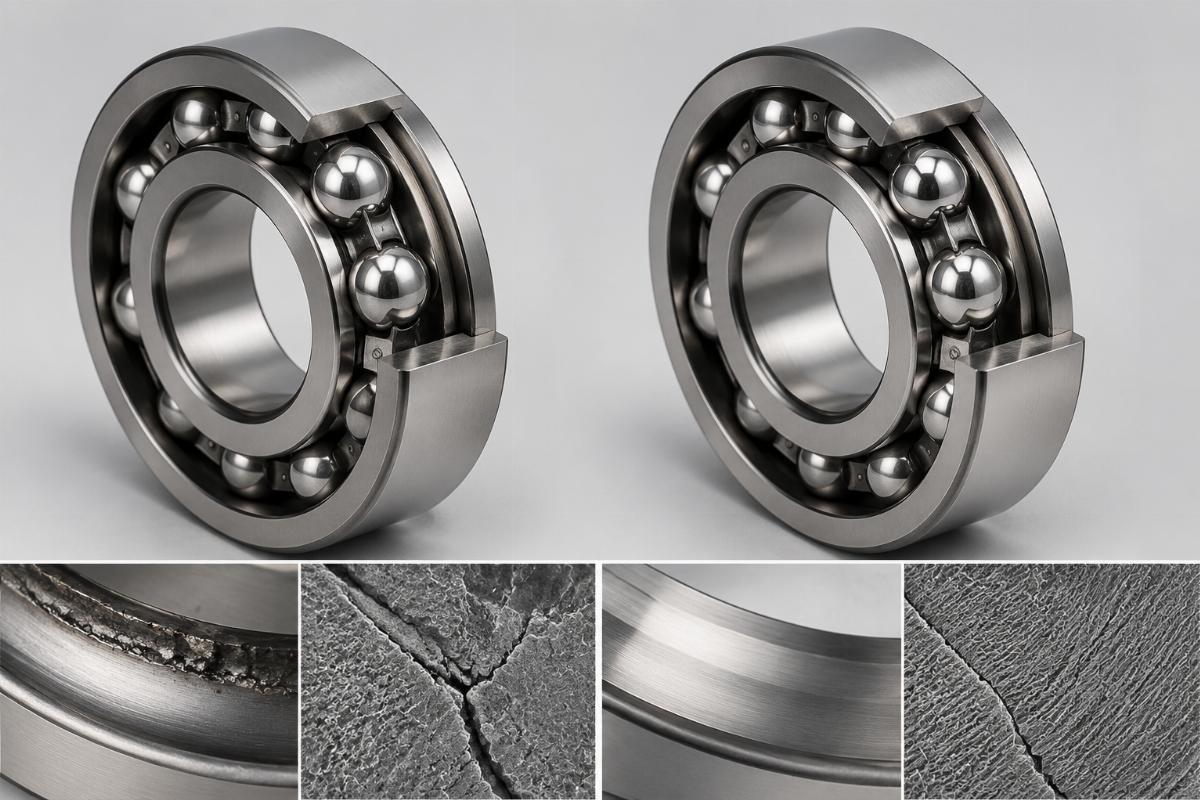
- Prioritize traceability over certification alone – Request batch-specific material certificates, not just generic company-level certifications
- Understand application requirements – Critical applications like wind turbine gearboxes need stricter standards than general industrial use
- Verify certification scope – Ensure the certificate covers the specific bearing type and production facility, not just the supplier's headquarters
- Compare failure rates – Ask suppliers for field failure data on certified vs non-certified products in similar applications
Which Bearing Certifications Do You Actually Need for Your Order?
The right certification depends on your industry's failure consequences, not just regulatory requirements. While ISO 9001 provides a baseline for quality management systems, industries with high downtime costs or safety risks require more specialized certifications. A steel mill's continuous casting machinery, for example, faces different demands than an agricultural equipment manufacturer—yet many buyers mistakenly apply the same certification standards across all applications.
| Evaluation Dimension | Common Mistake | Recommended Approach |
|---|---|---|
| Standard selection | Assuming ISO 9001 suffices for all industrial applications | Match certification to industry risk profile: IATF 16949 for automotive, DNV for marine, ISO 13485 for medical |
| Document review | Accepting scanned certificates without verification | Cross-check certification numbers in issuing body databases (e.g., IATF Database for IATF 16949) |
| Product relevance | Approving certifications that cover general bearing production | Require certificates specifically mentioning your bearing type (e.g., "spherical roller bearings 22330 CC/W33") |
| Expiration check | Overlooking certification renewal dates | Verify certificates are valid through your entire production cycle, not just order placement |
A European steel mill contacted us during an emergency bearing replacement for their continuous casting line. Their previous supplier had provided ISO 9001 documentation for the tapered roller bearings (32220, modified clearance C3), but the replacement failed within 72 hours. When we inspected the failed components, we discovered mismatched material hardness and incomplete heat treatment—issues that would have been caught with proper certification verification. Our solution included providing bearings with full material traceability documentation and dispatching them within 72 hours from our self-operated warehouse, where each batch is cross-referenced with certification data before storage.
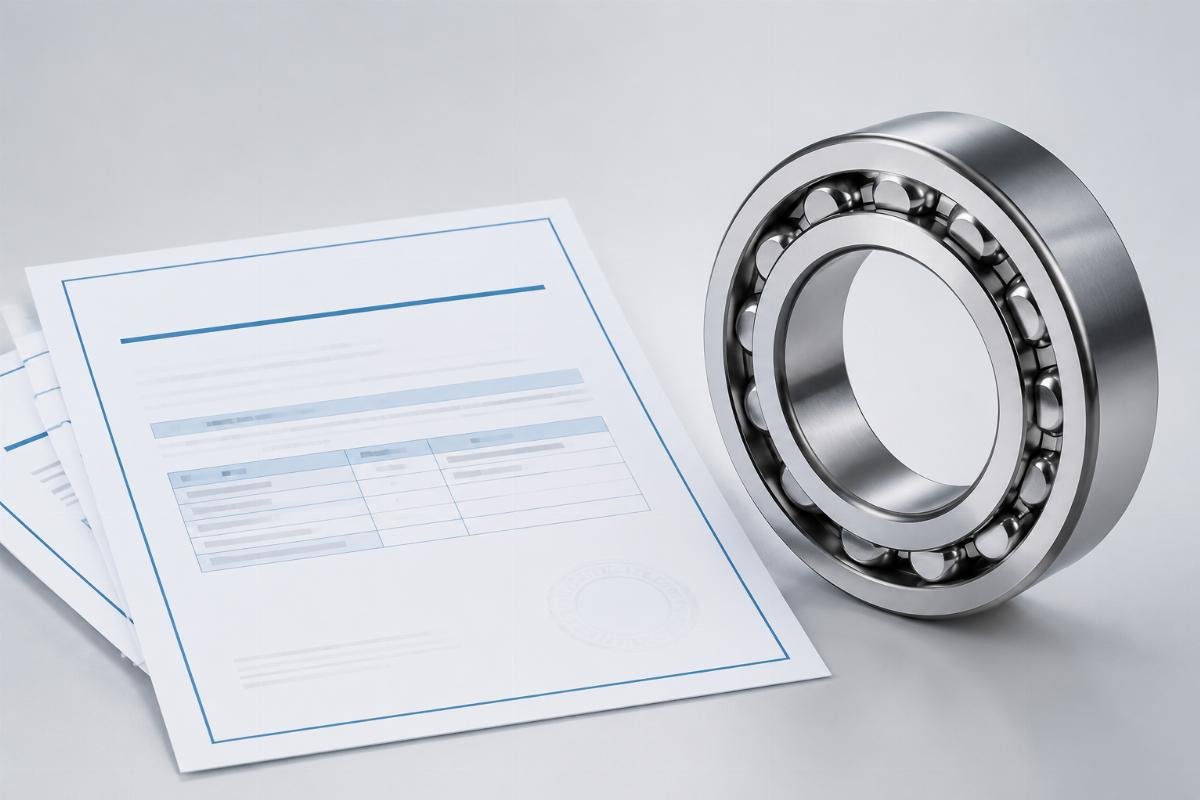
- Conduct a risk assessment – Map certification requirements to failure consequences (safety, downtime, warranty)
- Verify issuing body accreditation – Ensure certifying organizations are recognized by IAF or relevant industry bodies
- Request product-specific reports – Ask for material test certificates (MTCs) with heat lot numbers matching your order
- Check inspection records – Demand dimensional inspection reports for critical tolerances (e.g., P5 precision grade)
- Validate warehouse traceability – Confirm suppliers can link physical inventory to certification documents in real-time
How Do Chinese Bearing Suppliers Deliver Certified Quality Beyond the Paperwork?
Genuine certification requires operational capabilities, not just document generation. Many buyers assume that a certification document guarantees product quality, but our experience across thousands of China-sourced bearing orders shows that documentation alone is insufficient. Suppliers need specific operational systems—self-operated warehousing, in-house inspection protocols, and batch tracking—to ensure certified quality reaches your production line.
| Supplier Capability | Advantages | Ideal For |
|---|---|---|
| Self-operated warehousing | Real-time batch tracking, controlled storage conditions, immediate certification verification | MRO managers needing emergency replacements |
| In-house material testing | 100% verification of material properties (hardness, composition, heat treatment) | OEM engineers requiring material consistency |
| Digital traceability system | End-to-end visibility from raw material to delivery, automated certification matching | EPC project managers handling phased deliveries |
| On-site failure analysis | Root cause identification using certified lab equipment | Wind energy asset managers optimizing turbine reliability |
For an offshore wind farm project, we managed the phased delivery of 200+ bearing units for platform cranes, each requiring DNV classification certification. The client initially considered a lower-priced supplier with ISO 9001 certification but chose our solution after seeing our operational capabilities: we stored each batch in segregated warehouse zones with digital tracking, conducted pre-shipment dimensional inspections using calibrated equipment, and provided a complete documentation package (certificates, test reports, installation guides) that exactly matched each delivery. This approach eliminated the common issue of "certificate shopping"—where suppliers present valid certifications for some products but ship non-certified alternatives.
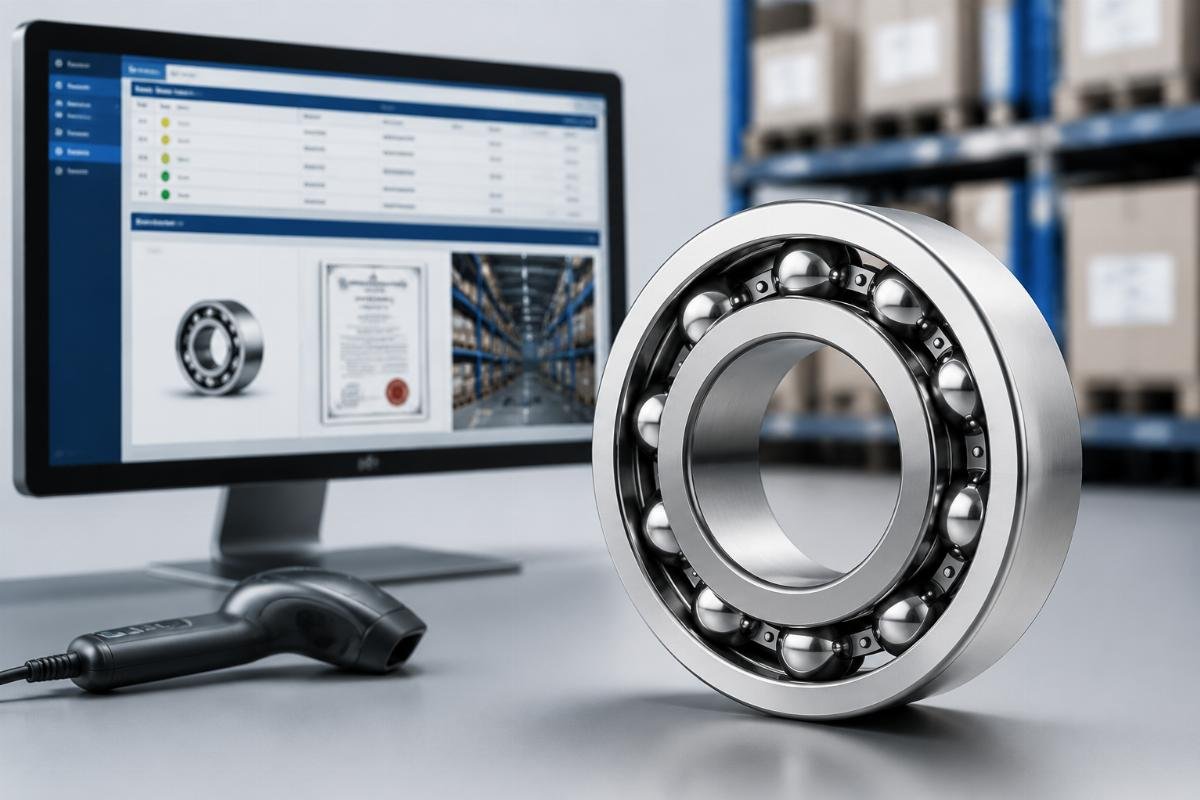
- Audit warehouse operations – Inspect how bearings are stored, tracked, and linked to certification data
- Review inspection protocols – Ask for details on dimensional measurement equipment and calibration schedules
- Test traceability systems – Request random batch code verification against certification records
- Evaluate emergency capabilities – Assess ability to provide certification data during urgent orders
How Can You Verify Your China Bearing Supplier's Certifications Before Ordering?
Effective certification verification requires a systematic 4-step process, not just document review. In our work with industrial buyers across 40+ countries, we've developed a verification framework that goes beyond checking certificates to ensure genuine quality. This process becomes especially critical when sourcing from China, where the complexity of supply chains can obscure actual production practices.
| Verification Step | Critical Checkpoints |
|---|
Leave a Reply