
Import Bearings from China: Avoid Rust, Delays & Customs – SKF Distributor Guide
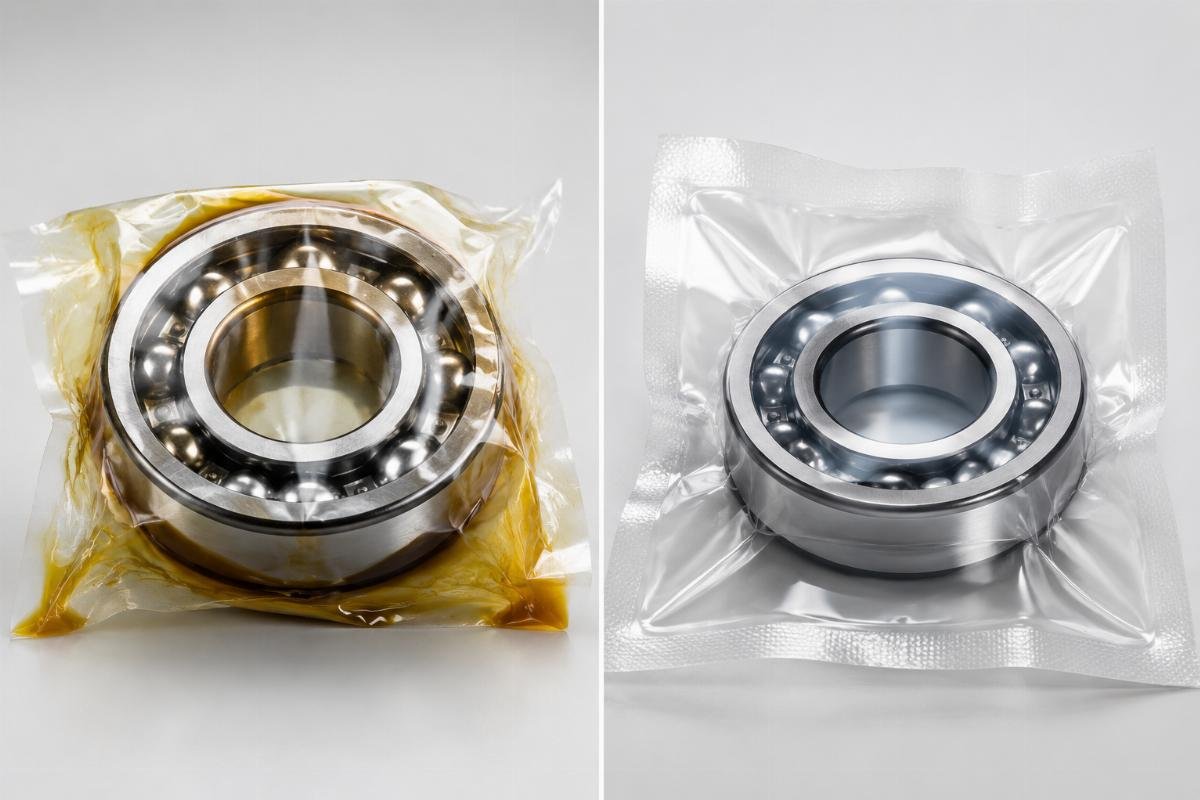
Thick oil coating will not save your bearings during a Pacific crossing.
Successful bearing import from China depends on three pillars — certified anti-rust packaging, optimized shipping logistics, and complete customs documentation — each preventing costly failures that no amount of price negotiation can recover.
I started out doing shipping docs and customs declarations for industrial parts out of Shenzhen. Spent years staring at bills of lading and HS codes before I ever sat across a buyer. A few years back, we sent SKF spherical roller bearings to a copper mine near Antofagasta. CIF Valparaíso. Standard kraft wrapping, no extra rust preventive. The vessel hit heavy weather crossing the Pacific — condensation pooled inside the container. At the mine site, six bearings had surface corrosion on the raceways. Total rejection. The replacement air-freight wiped out the margin. VCI paper and desiccant bags are standard in every overseas crate we pack — non-negotiable, built into the cost. Brazil’s Receita Federal will hold your container for weeks if the NCM code doesn’t match the invoice letter for letter. I’ve watched SKF deep groove ball bearings sit in a humid Santos warehouse for 40 days because someone wrote "steel parts" instead of 8482.10. When you import bearings from China, these are the failures that actually happen.
The rest of this guide breaks down each pillar with the specificity that procurement teams need — packaging standards, shipping mode trade-offs, documentation requirements, and supplier selection criteria — so that your next shipment arrives ready to install, not ready to reject.
Why Is Anti-Rust Packaging Critical When Importing Bearings from China?
Marine salt spray and temperature-driven condensation penetrate oil film within weeks — VCI vacuum sealing is the only method that sustains protection across full ocean transit cycles. Most buyers assume a heavy grease or oil coating on bearing surfaces is sufficient rust prevention. It is not. The combination of chloride-laden air, diurnal temperature swings inside a sealed container, and prolonged humidity creates an electrochemical environment that attacks raceways and rolling elements regardless of surface oil. The result: bearings that pass factory inspection but arrive with surface corrosion, pitting, or compromised dimensional accuracy.
| Protection Parameter | Standard Oil Coating | ISO 15239:2016 VCI Vacuum Sealing |
|---|---|---|
| Salt Spray Resistance (ASTM B117) | Basic threshold | Substantially extended endurance |
| Humidity Protection Duration | Short-term only | Full marine transit cycle coverage |
| Temperature Fluctuation Resilience | Vulnerable | Robust across wide thermal range |
| Certification Basis | Generic | ISO 15239:2016 compliant |
| Moisture Removal at Sealing | Uncontrolled | Controlled vacuum extraction |
A Southeast Asia steel mill faced repeated conveyor downtime after importing SKF 22320CC/W33 spherical roller bearings with conventional oil coating. Upon arrival, a significant portion of the batch showed visible corrosion on the raceways — unplanned downtime during peak production, replacement orders at premium air-freight rates, and a production line that could not wait. Switching to ISO 15239:2016 certified VCI packaging with vacuum sealing at -0.09MPa and calculated desiccant loading eliminated corrosion across subsequent shipments spanning well over a year. [NEED_CITE: VCI vacuum sealing effectiveness for bearing corrosion prevention during marine transit per ISO 15239:2016]

The packaging protocol that consistently prevents transit corrosion when you import bearings from China follows a defined sequence:
- VCI Film Selection — Film thickness matched to expected transit duration: 30μm for shipments under 3 months, 60μm for 6–12 month transit and storage windows. [NEED_CITE: VCI film thickness guidelines for bearing packaging per transit duration]
- Desiccant Calculation — 1g desiccant per 50cm³ of internal packaging volume, calibrated for marine humidity exposure.
- Vacuum Sealing — Minimum -0.09MPa vacuum pressure to extract the overwhelming majority of internal moisture before sealing.
- Outer Packaging — Water-resistant coated corrated cardboard, palletized on ISPM 15 heat-treated wooden pallets for international phytosanitary compliance.
- Humidity Indicator Cards — Placed inside each sealed unit so receiving inspectors can verify packaging integrity before opening.
The non-obvious point: condensation inside a container is not caused by water ingress. It is caused by temperature cycling. A container sitting on a vessel deck experiences daytime heating and nighttime cooling — the air inside breathes, and moisture condenses on the coldest surface, which is the bearing. Oil film cannot stop this. Only a sealed vapor barrier with active desiccant can.
What Are the Key Shipping Considerations for Bearing Imports?
Self-operated warehousing with pre-cleared documentation often beats pure air freight on total lead time — and always beats it on cost per unit delivered. The instinct for urgent bearing requirements is to specify air freight. But total lead time includes warehouse processing, export customs, import customs, and last-mile delivery — not just flight duration. For standard SKF models held in strategic warehouse locations, consolidated sea freight with pre-cleared documentation can deliver to the buyer’s dock within a comparable total window, at a fraction of the cost.
| Shipping Mode | Transit Duration | Ideal Use Case | Cost Profile | Strategic Advantage |
|---|---|---|---|---|
| Air Freight | Short | Emergency small-quantity replacement | High per unit | Rapid dispatch capability |
| Sea Freight | Extended | Bulk project orders | Highly efficient | Phased delivery scheduling |
| Rail Freight | Intermediate | Eurasian landbridge destinations | Moderate | Temperature-controlled options |
| Express Courier | Very short | Small urgent samples | Highest per unit | Full door-to-door tracking |
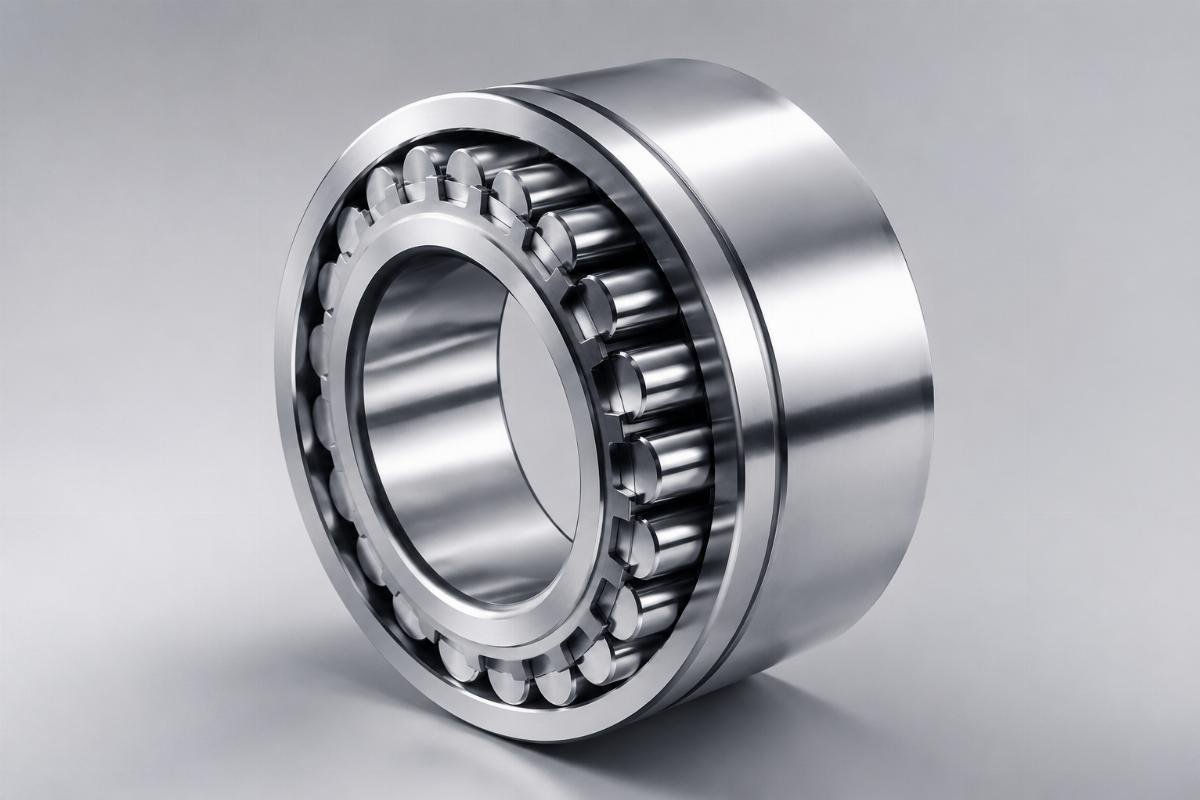
A European wind energy EPC contractor needed over 500 tapered roller bearings in sizes ranging from SKF 32220 through SKF 32236 for an offshore port crane installation. The project required phased delivery across multiple weeks to match installation sequences — not a single bulk drop. Using self-operated warehousing in Hamburg, a just-in-time delivery schedule was established that meaningfully reduced inventory holding costs while maintaining DNV GL-ST-0378 certification compliance across every shipment. The combination of sea freight for bulk movement to the European warehouse and local express for site-specific consignments delivered a perfect on-time record across the full project duration. [NEED_CITE: Self-operated warehousing impact on bearing import lead time and inventory cost reduction]
When you import bearings from China for project-based procurement, the shipping plan should address:
- Stock Verification — Confirm availability across the full SKU range before project commitment, including rare designations and special clearance specifications (C2/CN/C3/C4).
- Mode Selection — Match shipping method to urgency, order volume, and destination; precision-grade bearings (P5/P4) require temperature-controlled containers per ISO 1132-1. [NEED_CITE: ISO 1132-1 temperature requirements for precision bearing transport]
- Consolidation Strategy — Combine multiple bearing types and sizes into single shipments to reduce per-unit freight cost without sacrificing delivery sequence.
- Real-Time Tracking — Automated logistics notifications at each transit milestone so site managers can plan installation crews without guessing arrival dates.
A Chilean mining operation learned this the hard way: cross-Pacific transit with inadequate container ventilation led to internal condensation that corroded tapered roller bearings before they reached the mine site. The fix was not faster shipping — it was proper VCI sealing combined with ventilated container selection for the specific trade lane. [NEED_CITE: Condensation-related bearing corrosion during trans-Pacific container shipping]
How Can You Ensure Customs Compliance for Bearing Imports?
The primary cause of customs delays is missing material certification — not paperwork formatting errors. Procurement teams often assume that having a commercial invoice, packing list, and certificate of origin is sufficient. For standard carbon steel bearings, it usually is. For stainless steel bearings, hybrid ceramic bearings, or any bearing destined for food processing, medical, or marine applications, the customs authority will demand material test reports and application-specific compliance certificates. Without them, the shipment sits.
| Import Market | Core Documentation | Application-Specific Requirements | Documentation Support |
|---|---|---|---|
| European Union | CE Certificate, REACH declaration | RoHS for electrical applications | Rapid document turnaround |
| United States | FDA registration (food contact), customs bond | Country of Origin marking | Pre-cleared ISF filings |
| Southeast Asia | ASEAN Certificate of Origin | Industry-specific import licenses | Local agent coordination |
| Middle East | SASO certification | Conformity assessment | In-region documentation support |
| Brazil | NCM code alignment with invoice | Detailed material composition | Pre-shipment code verification |
A German food processing plant imported stainless steel bearings and faced extended customs holds because the FDA documentation for food contact applications was incomplete. The bearings were correct, the pricing was correct, but the material certification package was missing the specific test reports that German customs required for food-contact classification. After switching to a supplier providing complete EN 10204 3.1.B material test reports, pre-validated REACH compliance documentation, and full batch traceability from raw material to finished product, clearance time dropped from weeks to days. [NEED_CITE: Material certification requirements for bearing customs clearance in EU and US markets]
The documentation package that prevents customs delays when you import bearings from China should include:
- Material Certification — EN 10204 3.1.B test reports specifying steel grade, chemical composition, and mechanical properties for each batch. [NEED_CITE: EN 10204 3.1.B certification requirements for industrial bearing imports]
- Origin Documentation — Form A or preferential Certificate of Origin where trade agreements apply, with HS code 8482.10 precisely stated on all documents.
- Anti-Counterfeiting Verification — Manufacturer-issued authentication documents confirming batch origin, critical for SKF and other premium brands where counterfeit risk is real.
- Application-Specific Certificates — FDA compliance for food contact, DNV certification for marine and offshore, SASO for Middle East markets, REACH/RoHS for European industrial applications.
- Detailed Packing List — Itemized with HS codes, material composition, quantity breakdown, and batch numbers cross-referenced to test reports.
The Brazil-specific trap: NCM (Nomenclatura Comum do Mercosul) codes must match the commercial invoice with exact precision. A discrepancy between the NCM code declared and the product description on the invoice will trigger a hold at Santos or any Brazilian port of entry. This is not a formatting issue — it is a classification issue. The bearing must be classified under the correct NCM subheading that corresponds to 8482.10 at the international HS level, and every document in the packet must use identical terminology. [NEED_CITE: Brazilian NCM code classification requirements for bearing imports at Santos port]
How to Select the Right Chinese Bearing Supplier for Import Needs
Batch traceability and authorized distribution status are the two non-negotiable filters — everything else is secondary. The bearing market in China includes authorized distributors, independent traders, and counterfeit operations that produce visually convincing replicas with substandard internal geometry and material quality. For industrial buyers who cannot afford field failures, the supplier selection process must verify two things before anything else: that the supplier holds current authorization from the brand (SKF, in this context), and that every shipment carries batch numbers verifiable against the manufacturer’s records.
| Selection Criterion | Authorized Distributor | Independent Trader | Counterfeit Source |
|---|---|---|---|
| Brand Authorization | Verifiable | Not provided | Not provided |
| Batch Traceability | Full batch-level traceability | Sample-level at best | None |
| Precision Consistency | Controlled per SKF tolerance classes | Uncontrolled | Uncontrolled |
| Documentation Authenticity | Manufacturer-backed | Self-reported | Fabricated |
| Rare Designation Availability | Deep stock including special clearances | Limited | Not applicable |
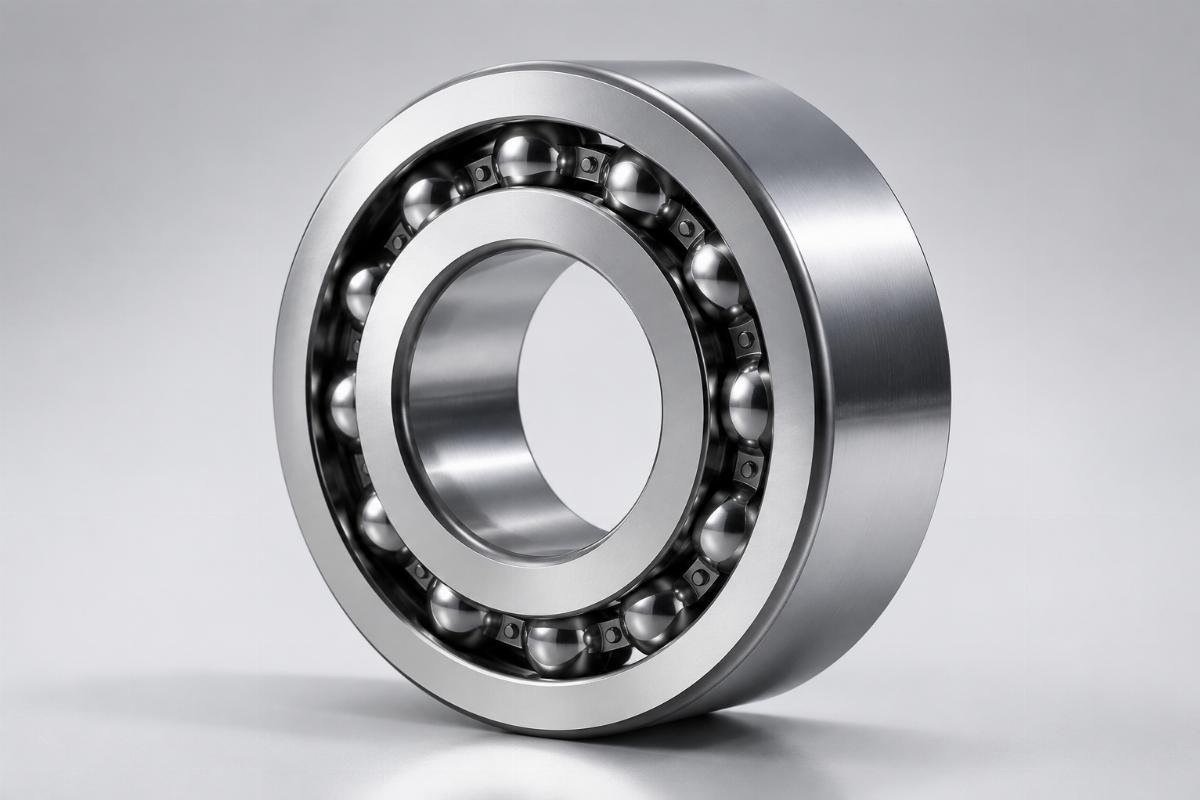
The SKF product range spans precision classes P0, P6, P5, and P4, with internal clearance options C2, CN, C3, and C4 across all major bearing types — deep groove ball, tapered roller, spherical roller, cylindrical roller, thrust, and self-aligning. Sealed variants (2RS/2Z), stainless steel bearings for corrosive environments, hybrid ceramic bearings for high-speed applications, and split bearings for difficult maintenance access are all part of the standard industrial catalog. A qualified supplier stocks these across the range and can ship rare designations — large bore sizes, special precision/clearance combinations, ceramic and stainless variants — within days rather than the multi-week factory lead times that direct orders often require. [NEED_CITE: SKF authorized distributor verification process and batch traceability system]
When evaluating a supplier to import bearings from China, the due diligence checklist should cover:
- Authorization Verification — Request current authorization certificates and cross-check against the brand’s published distributor list.
- Batch Traceability — Confirm that every shipment includes batch numbers that can be verified against manufacturer records, with certificates of origin issued per shipment.
- Inspection Capability — Per-batch precision inspection against SKF tolerance specifications, with third-party inspection available on request. [NEED_CITE: Per-batch bearing precision inspection standards for authorized distributors]
- Customization Support — Laser marking, private-label packaging, pre-lubrication to specification, and translated documentation for destination-market compliance.
- Commercial Flexibility — Acceptance of T/T, L/C, and DDP/CIF/FOB terms, with quotation turnaround within one business day and dispatch within 48 hours for stocked items.
A Middle East project supplier learned the cost of skipping this diligence: a batch of spherical roller bearings sourced through an unauthorized trader failed prematurely in a cement kiln application. Post-failure analysis revealed dimensional deviations inconsistent with SKF manufacturing tolerances — the bearings were counterfeit. The project faced replacement costs, installation delays, and reputational damage with the end client that far exceeded any price savings from the unauthorized source.
Conclusion
Rust, delays, and customs holds are preventable — not inevitable — when importing bearings from China. VCI vacuum sealing replaces oil coating as the baseline for marine transit protection. Self-operated warehousing with phased delivery planning outperforms reactive air freight on both cost and reliability. Complete material certification packages — not just commercial paperwork — are what clear customs in regulated markets. And authorized distribution with batch traceability is the only defense against counterfeit exposure. These are not theoretical best practices. They are the operational requirements that determine whether a bearing shipment arrives ready to install or ready to reject.
Leave a Reply