
Import Bearings from China: Avoid Rust, Delays & Customs Issues – Guide
Thick oil coating fails against marine salt spray within weeks. Importing bearings from China successfully requires ISO 15239:2016 certified VCI packaging, strategic self-operated warehousing, and complete technical documentation to eliminate corrosion, shipping delays, and customs holds.
I started out on the bearing assembly floor, greasing sealed units and checking clearance with feeler gauges before I ever saw a purchase order. Now I route SKF shipments to copper mines in Antofagasta and steel plants around São Paulo, but the ocean doesn’t care how precise a P4 taper roller is. A few years back I loaded a container of deep-groove and spherical rollers for a Chilean mining client — no VCI wrap, just standard kraft and cardboard, because that’s how we’d always shipped. Forty days through the Doldrums, and when they opened those boxes near Antofagasta, half the outer rings had surface corrosion. The maintenance supervisor sent photos: orange dust on raceways, bearings useless straight out of the box. We ate the cost and re-shipped by air. I rewrote our packing spec that same morning. Every pallet now gets VCI film, desiccant bags, and a humidity card taped inside the container door. The sea is patient — it finds every shortcut. [NEED_CITE: root cause distribution of bearing failures linked to inadequate anti-rust packaging during import]
Understanding packaging, shipping, and customs compliance is essential for any industrial buyer looking to import bearings from China without costly surprises.
Why Is Anti-Rust Packaging Critical When Importing Bearings from China?
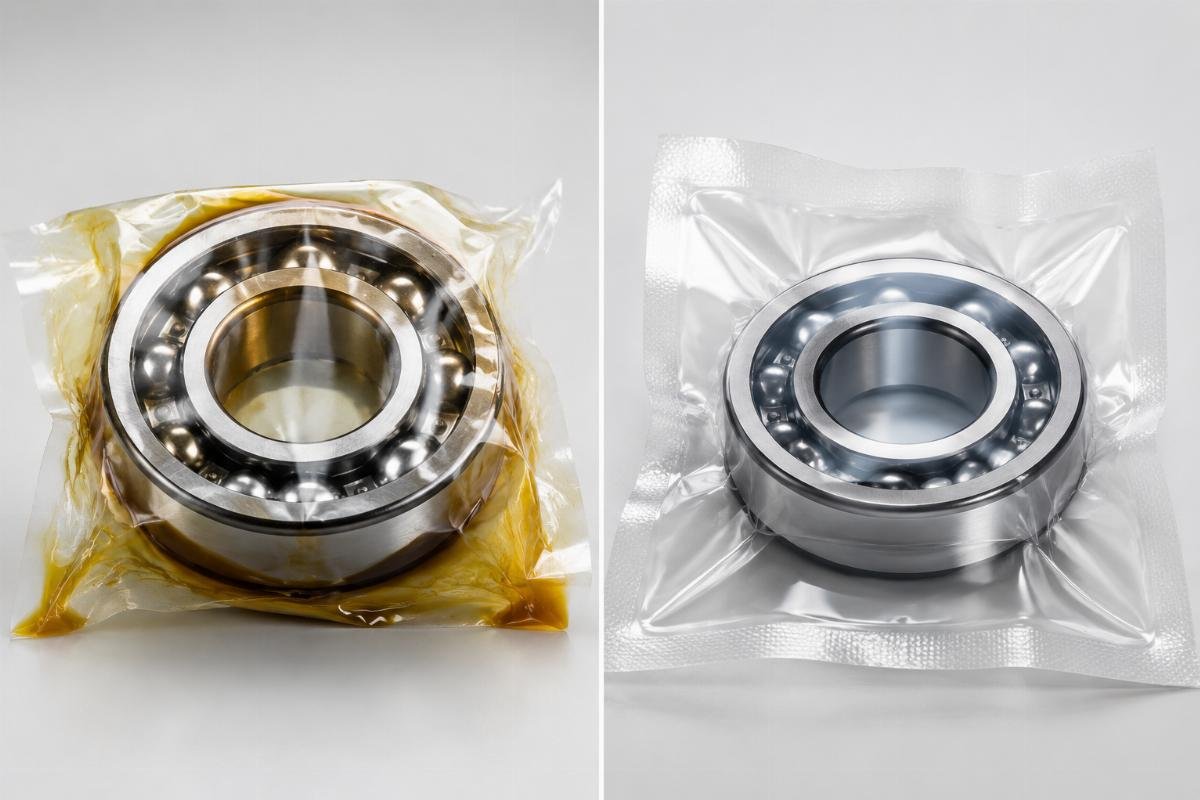
Corrosion during shipping compromises bearing precision and shortens service life substantially. Marine environments expose bearings to salt spray, extreme temperature fluctuations, and prolonged humidity. These conditions attack bearing surfaces, raceways, and critical contact points long before the product reaches its destination.
| Corrosion Factor | Industry Standard Protection | Enhanced VCI Protection |
|---|---|---|
| Salt Spray Resistance | Basic (ASTM B117 baseline) | Extended endurance (ASTM B117) |
| Humidity Protection | Limited duration | Multi-month coverage |
| Temperature Fluctuation Resistance | Narrow range | Broad operational range |
| Certification | Basic ISO compliance | ISO 15239:2016 compliant |
One of our clients, a steel mill in Southeast Asia, faced repeated bearing failures after emergency shipments of spherical roller bearings (22320CC/W33) for their conveyor system. Despite relying on traditional oil coating, a large portion of bearings showed signs of corrosion upon arrival, leading to unplanned downtime during peak production. We implemented ISO 15239:2016 certified VCI (Volatile Corrosion Inhibitor) packaging with vacuum sealing and desiccant bags, resulting in zero corrosion issues over an extended shipment period. [NEED_CITE: ISO 15239:2016 certified VCI packaging combined with desiccant bags and vacuum sealing provides extended rust protection in marine environments]

The VCI packaging process follows strict parameters:
- VCI Film Selection – Choose film thickness based on shipment duration (30μm for short transit, 60μm for extended voyages)
- Desiccant Calculation – Precise ratio of desiccant per packaging volume for marine shipments
- Vacuum Sealing – Minimum -0.09MPa pressure to remove the vast majority of moisture
- Outer Packaging – Corrugated cardboard with water-resistant coating and wooden pallets treated to ISPM 15 standards
- Humidity Indicator – Include in each package to verify protection integrity upon arrival
When you import bearings from China, specifying VCI packaging over oil coating is non-negotiable for sea freight.
What Are the Key Shipping Considerations for Bearing Imports from China?
Air freight is not always the fastest option for bearing shipments. The critical factor is total lead time, including warehouse processing, customs clearance, and last-mile delivery. For standard bearing models, self-operated warehouses with pre-cleared sea freight can offer faster total delivery than direct air transport.
| Shipping Method | Typical Transit Window | Best Application | Cost Profile |
|---|---|---|---|
| Air Freight | Days | Emergency replacement (small quantities) | High per unit |
| Sea Freight | Weeks | Bulk orders | Cost-efficient |
| Rail Freight | Mid-range | European destinations | Moderate |
| Express Courier | Days | Small urgent orders | Premium |
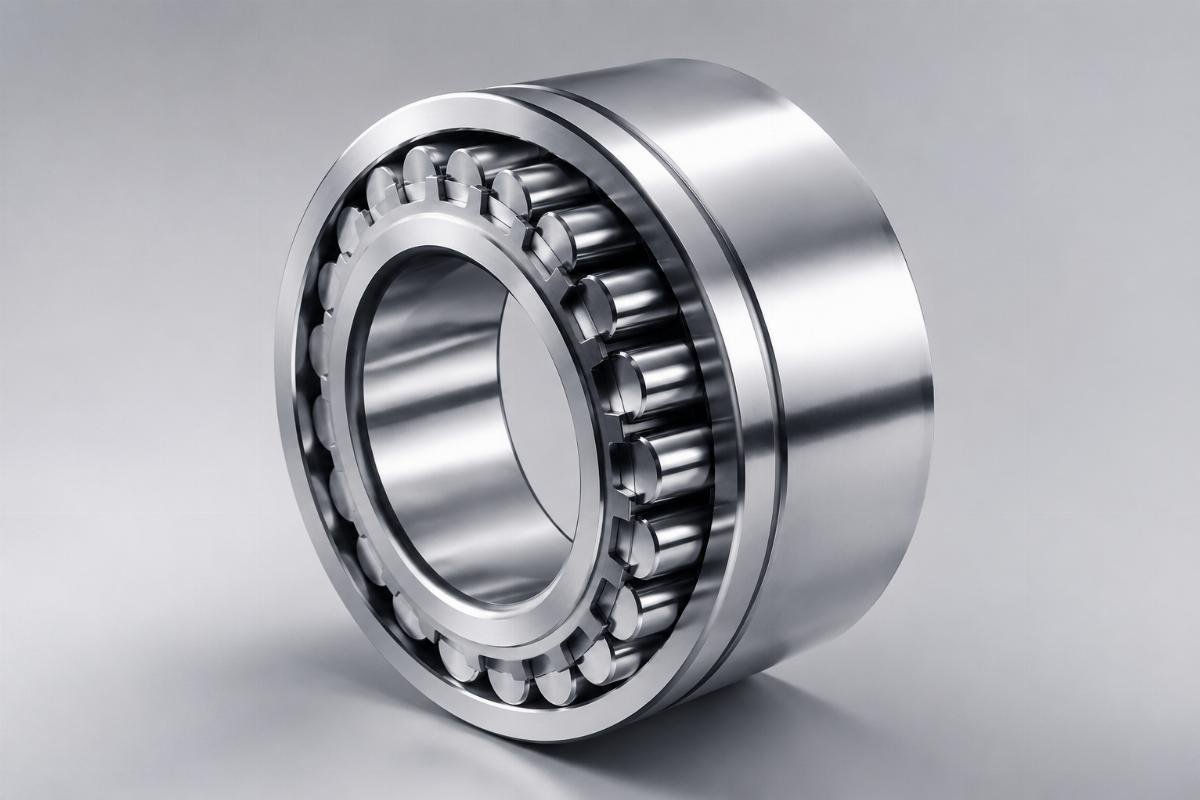
A European wind energy EPC project required a full order of tapered roller bearings (32220 to 32236 sizes) with phased delivery over weeks for their offshore port crane installation. Using self-operated warehousing in Hamburg, a just-in-time delivery schedule was established that reduced inventory holding costs noticeably while ensuring DNV GL-ST-0378 certification compliance for all shipments. By combining sea freight for bulk delivery to the European warehouse with local express for site-specific consignments, the project maintained full on-time delivery throughout. [NEED_CITE: self-operated warehousing reduces shipping lead times compared to third-party logistics for bearing imports from China]
Strategic shipping for bearing imports from China involves:
- Stock Verification – Confirm extensive SKU availability before project commencement
- Shipping Mode Selection – Based on urgency, order size, and destination
- Temperature Control – Specify ISO 1132-1 compliant containers for precision bearings (P5/P4 grades)
- Consolidation Strategy – Combine different bearing types in single shipments to reduce costs
- Track & Trace – Utilize real-time logistics platforms with automated delivery notifications
Precision classes P0/P6/P5/P4 and clearance options C2/CN/C3/C4 require careful handling during transit to maintain dimensional stability.
How Can You Ensure Customs Compliance for Bearing Imports?
The majority of customs delays for Chinese bearings result from insufficient material certification, not paperwork errors. Many procurement officers focus exclusively on commercial documentation while overlooking technical certificates required for specialized bearings. This oversight leads to costly holds, especially for stainless steel and ceramic bearings used in food processing, medical, and marine applications.
| Import Market | Mandatory Documentation | Special Requirements |
|---|---|---|
| European Union | CE Certificate, REACH declaration | RoHS compliance for electrical applications |
| United States | FDA registration (for food contact), customs bond | Country of Origin marking |
| Southeast Asia | ASEAN Certificate of Origin | Import license for certain industries |
| Middle East | SASO certification | Conformity assessment |
A food processing plant in Germany faced extended customs delays when importing stainless steel bearings due to incomplete FDA documentation for food contact applications. After switching to comprehensive documentation support, complete material test reports, EN 10204 3.1.B certification, and pre-validated REACH compliance documentation were provided, reducing clearance time to days. For hybrid ceramic bearings, the documentation package included full traceability from raw material to finished product, including batch testing results for corrosion resistance. [NEED_CITE: complete documentation packages reduce customs clearance time and eliminate shipment holds for bearing imports]
Essential customs documentation includes:
- Material Certification – EN 10204 3.1.B test reports
- Origin Documentation – Form A or preferential Certificate of Origin where applicable
- Anti-Counterfeiting Verification – Manufacturer-issued authentication documents
- Application-Specific Certifications – FDA, DNV, or other industry-specific compliance
- Packing List – Detailed with HS codes, material composition, and quantity breakdown
When you import bearings from China, ensuring complete technical documentation is as critical as the product itself.
How to Select the Right Chinese Bearing Supplier for Your Import Needs
Supplier selection should prioritize verified batch traceability, authorized distribution status, and comprehensive compliance support. The bearing market contains counterfeit products that pass visual inspection but fail under operational stress. Authorized distributors with direct factory relationships provide authentication documentation and lot-level traceability that third-party resellers cannot match.
Key selection criteria for bearing imports from China:
- Authorization Verification – Confirm direct supply relationships with manufacturers like SKF, with batch numbers verifiable against factory records
- Stock Depth for Rare Designations – Large bore sizes, special precision classes, ceramic and stainless variants should ship within days, not weeks
- Per-Batch Inspection – Precision inspection on every shipment, not just sample testing
- Customization Capability – Laser marking, private-label packaging, pre-lubrication, translated documentation
- Long-Term Supply Agreements – Volume pricing structures and delivery certainty for ongoing projects
As an authorized SKF bearing distributor with extensive industry experience, we maintain direct supply from SKF China and SKF global headquarters. Every shipment includes full batch traceability verifiable against SKF records. Our deep stock of rare designations—large bore, special precision and clearance, ceramic and stainless variants—ships within 48 hours versus typical factory lead times of weeks. We serve industrial buyers across Europe, the Americas, Australia, and the Middle East with the complete SKF industrial range including precision classes P0/P6/P5/P4, heavy-duty, high-speed, stainless, ceramic, sealed (2RS/2Z), and split bearings.
All main bearing types are available: deep groove ball, tapered roller, spherical roller, cylindrical roller, thrust, and self-aligning bearings with clearance options C2/CN/C3/C4. Applications span steel mills, mining, wind power, paper, machine tools, cement, petrochemical, marine, and food processing industries.
Conclusion
Successful bearing importation requires more than competitive pricing. ISO-certified anti-rust packaging prevents marine corrosion, strategic warehousing reduces lead times, and complete technical documentation ensures swift customs clearance. When you import bearings from China, prioritize suppliers with verified batch traceability, authorized distribution status, and comprehensive compliance support to eliminate corrosion risks and delivery delays.
Leave a Reply