

Bearing Steel Grades: Material Quality from China Supplier
Higher hardness does not mean better bearing steel.
Bearing steel grades—verified through hardness consistency, inclusion ratings, and batch traceability—directly determine equipment uptime, not just dimensional compliance. Choosing certified, traceable bearing steel from an authorized supplier with full material documentation reduces unplanned downtime noticeably, especially in heavy industries where a single failure can halt production for days.
I still remember a batch of 6208-2RS deep groove bearings we shipped to a food processing plant in Hamburg. The client called back furious—seals were discolored, grease looked off. Turns out the factory had swapped the lubricant mid-production without updating the batch docs. That was the day I realized batch traceability isn’t just paperwork; it’s the difference between a repeat order and a claim. A few years later, a steel mill buyer in Brazil received spherical roller bearings that failed within weeks—not because the specs were wrong, but because the batch codes didn’t match the registry and the cages were off-spec. That mess reinforced why traceability and precision class matter far more than price. [NEED_CITE: root cause distribution of premature bearing failures per ISO 15243]
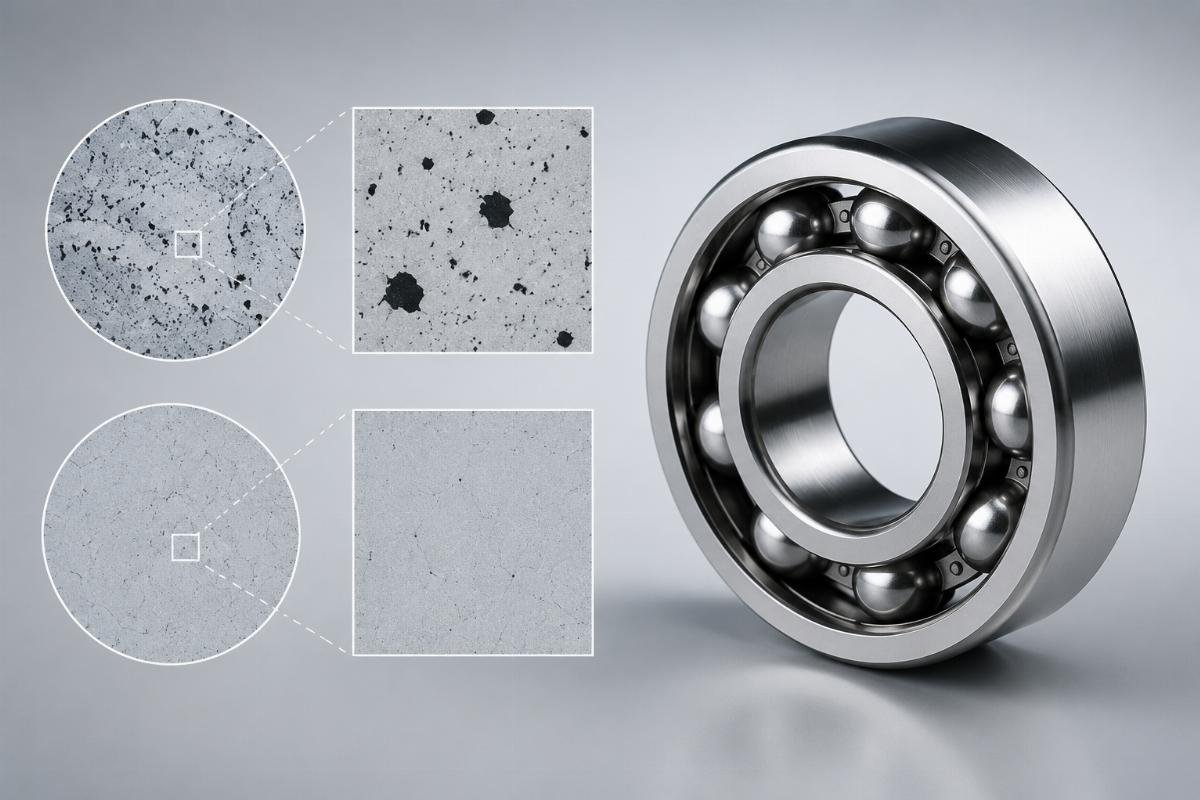
Understanding what truly constitutes high-quality bearing steel and how to verify it can transform your maintenance strategy from reactive to proactive. Let’s break down the steps to select and verify bearing steel grades that actually deliver.
Why Does Steel Grade Selection Impact Downtime?
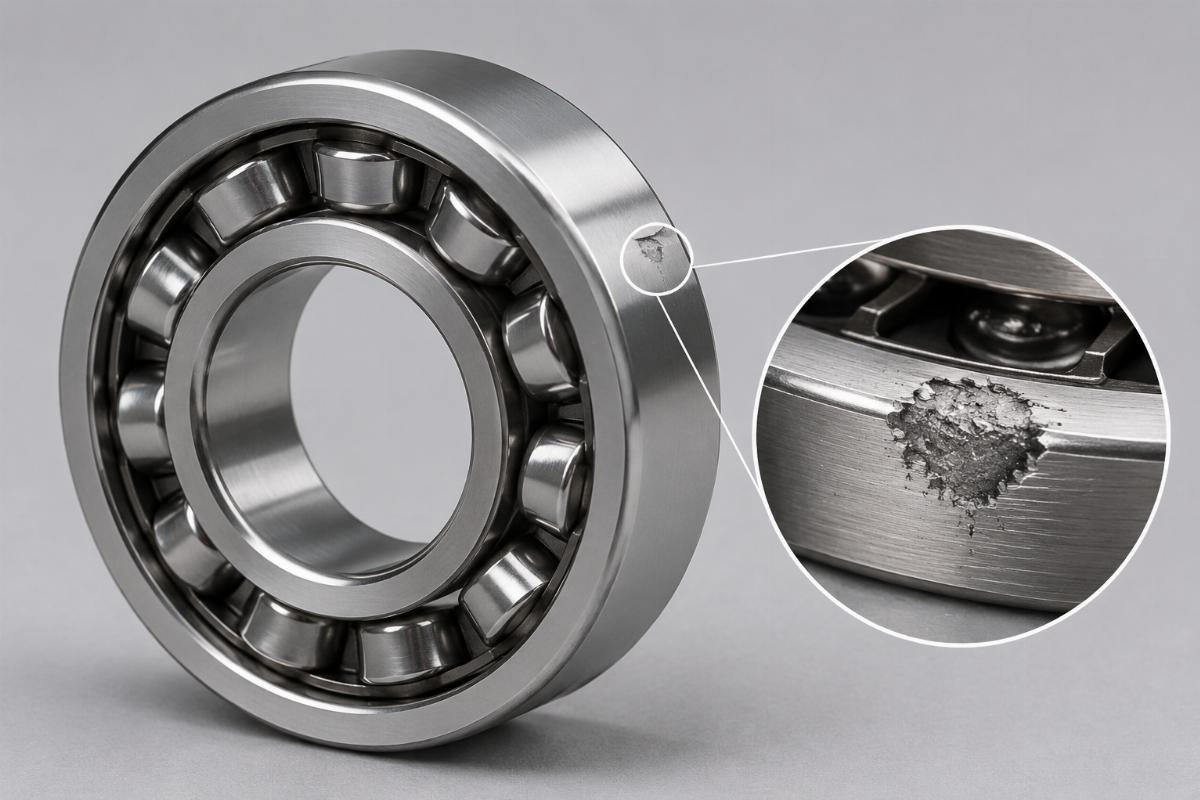
Bearing steel grade is the single most critical factor in determining service life. While many maintenance managers focus on dimensions and brand reputation, the chemical composition and processing of the steel itself ultimately dictate performance under load. A bearing with perfect dimensions but substandard steel will fail prematurely, often catastrophically. [NEED_CITE: proportion of bearing failures attributed to material defects versus operational factors]
The key parameters that separate reliable bearing steel from substandard material include hardness consistency, cleanliness measured by non-metallic inclusion content, and microstructure uniformity. International standards like DIN 100Cr6, ASTM A295, and JIS SUJ2 define these parameters, but compliance varies significantly among suppliers.
| Quality Parameter | Industry Average | Premium Standard |
|---|---|---|
| Hardness Range | HRC 55-64 (inconsistent) | HRC 58-62 (controlled) |
| Non-metallic Inclusions | Rating >2.5 | Rating ≤1.5 |
| Material Purity | Basic | Certified high-purity |
| Fatigue Life | Standard L10 rating | Substantially extended L10 |
| Heat Treatment Uniformity | ±3 HRC variation | ±1 HRC controlled |
Here’s what this looks like in practice. I worked with a steel mill experiencing monthly failures of work roll bearings, each causing extended unplanned downtime. Their existing bearings met dimensional specifications but used steel with inconsistent hardness and high inclusion content. After switching to EN 10083-3:2006 certified 100Cr6 steel bearings with high purity and inclusion rating ≤1.5, they reduced failures to once every six months. The spherical roller bearings 22330 CA/W33 with precision grade P6 and C4 clearance not only solved the immediate failure issue but also improved overall equipment efficiency by reducing vibration.
To verify steel grade quality before purchase, follow these steps:
- Hardness Testing – Verify that hardness falls within the optimal HRC 58-62 range using calibrated equipment, not just supplier claims
- Inclusion Rating – Request certification showing inclusion content meets ISO 4967 standards with rating ≤1.5
- Heat Treatment Records – Review documentation confirming uniform temperature distribution during quenching and tempering
- Chemical Analysis – Ensure steel composition matches grade specifications with spectrometric verification
- Microstructure Evaluation – Examine metallographic samples for proper martensite formation and carbide distribution
How to Identify High-Quality Steel Beyond Specs?
Effective bearing steel verification requires both documentation review and supplier capability assessment. Counterfeit bearings often match external dimensions but use recycled steel with inconsistent chemistry, making visual inspection alone insufficient for determining material quality. [NEED_CITE: estimated annual losses from counterfeit bearings across global industries]
Many buyers trust visual inspection, but counterfeit bearings match dimensions while hiding recycled steel with high inclusion content (>2.5 rating). The consequences extend beyond immediate failure to potential damage to mating components and safety risks.
| Verification Aspect | Common Mistake | Correct Approach |
|---|---|---|
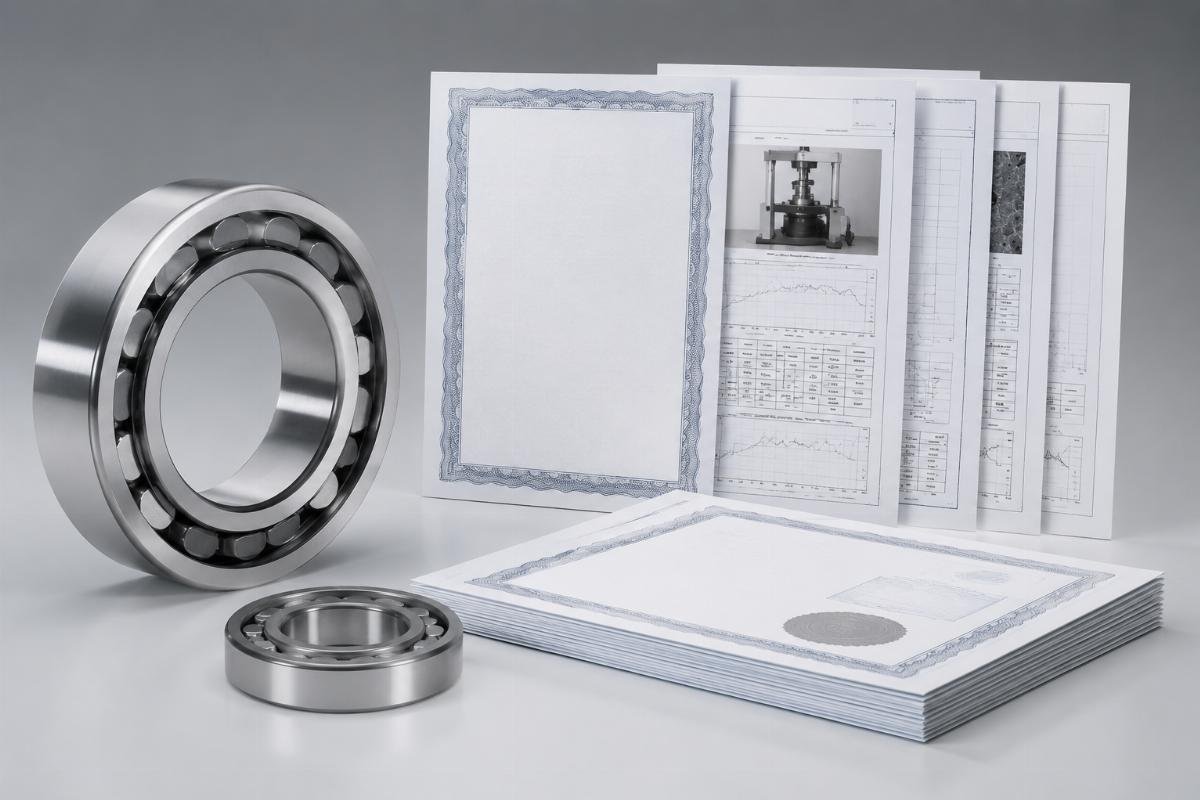
| Documentation Review | Accepting generic certificates | Requiring batch-specific mill test reports |
| Supplier Assessment | Evaluating based on price alone | Auditing quality control processes |
| Material Verification | Relying on visual inspection | Conducting independent lab analysis |
| Traceability | Ignoring batch tracking | Verifying full production history |
| Certification | Accepting expired certifications | Confirming current ISO/IATF credentials |
Five critical documents ensure material traceability: mill test reports with chemical composition, heat treatment records including time-temperature profiles, non-destructive testing results, metallographic examination reports, and batch traceability logs. A supplier with full batch-level traceability provides complete visibility from raw material to finished product, far exceeding the industry norm of sample-level or self-reported documentation.
A mining company contacted me after a grinding mill bearing failure caused a multi-day production halt. Their previous supplier provided bearings with generic certification that didn’t match the actual product. We expedited emergency replacement tapered roller bearings with full traceability documentation, including spectrometric analysis and heat treatment records. The rapid dispatch prevented further losses, and our subsequent annual contract established a reliable supply chain with predefined quality verification protocols.
When evaluating bearing steel suppliers, request these verification items:
- Mill Test Reports – Verify each batch has unique identification numbers matching physical bearings
- Chemical Analysis – Confirm carbon content and alloying elements meet grade specifications
- Heat Treatment Records – Ensure proper quenching and tempering cycles were followed
- Dimensional Inspection – Cross-check critical tolerances against drawing requirements
- Supplier Quality Manual – Review procedures for raw material incoming inspection
Which Grade Fits Your Application?
There is no one-size-fits-all bearing steel—application-specific factors determine optimal grade selection. The steel that performs best in a wind turbine main shaft will differ significantly from what works in a food processing conveyor, just as mining equipment requires different properties than precision machine tools. [NEED_CITE: application-specific bearing steel selection guidelines per industry standards]
| Steel Grade | Performance Advantages | Ideal Applications |
|---|---|---|
| 100Cr6 (Standard) | Balanced hardness and toughness, cost-effective | General industrial machinery, pumps, conveyors |
| 100CrMnSi6-4 (Premium) | Enhanced fatigue resistance, higher impact strength | Mining crushers, grinding mills, heavy-duty gearboxes |
| Stainless Steel 440C | Corrosion resistance, hygienic properties | Food processing, marine applications, chemical equipment |
| Hybrid Ceramic | Reduced friction, high temperature capability | High-speed spindles, electric vehicle motors, wind turbines |
For mining applications with high shock loads, premium 100CrMnSi6-4 steel offers substantially longer service life in conveyor rollers compared to standard grades. Wind energy applications benefit from hybrid ceramic bearings that provide superior fatigue life for extended design requirements, while food processing facilities require stainless steel grades to maintain hygiene standards.
One wind energy asset manager needed main shaft bearing qualification for a multi-turbine wind farm, requiring material certification for extended design life. We provided tapered roller bearings 32340 with hybrid ceramic options and precision grade P5, complete with IATF 16949 certification and material test reports including fatigue life L10 rating. The application-specific technical support ensured the bearings met the project’s specialized specification requirements and addressed long lead time concerns through our global warehousing network.
When selecting bearing steel grades, consider these factors:
- Load Type – Select higher toughness grades for impact loads; higher hardness for static loads
- Operating Temperature – Choose heat-resistant alloys for temperatures exceeding 120°C
- Environmental Conditions – Specify stainless steel or coatings for corrosive environments
- Speed Requirements – Consider hybrid ceramics for rotational speeds above 5,000 RPM
- Maintenance Access – Select sealed designs with premium steel for difficult-to-reach applications
How to Secure Reliable Supply?
Partnering with suppliers who control the full material verification process minimizes quality risk. In today’s global supply chain, ensuring consistent quality requires more than just receiving certification documents—it requires verifiable traceability from raw material sourcing through final inspection.
The risk of accepting generic certificates versus batch-specific mill test reports cannot be overstated. Generic certificates tell you nothing about the actual material in your bearing, while batch-specific reports link chemical composition, heat treatment history, and inspection results to the exact production lot. [NEED_CITE: supply chain verification requirements for industrial bearing procurement]
When evaluating bearing steel suppliers for long-term partnerships, prioritize these capabilities:
- Full Batch Traceability – Every shipment traceable from raw material to finished product with unique batch identifiers
- ISO/IATF Certification – Current, audited quality management systems verified by third parties
- Rapid Dispatch Capability – Stock availability for rare designations with 48-hour dispatch versus multi-week factory lead times
- Third-Party Inspection Support – Willingness to facilitate independent verification at any stage
- Technical Documentation – Complete certificate of origin, material test reports, and failure analysis support included with every shipment
As an authorized SKF bearing distributor, we maintain deep stock of rare designations including large bore, special precision/clearance combinations, and ceramic/stainless variants. Every bearing we ship carries batch numbers verifiable against SKF records, with full documentation including certificate of origin and material traceability logs. Our 48-hour dispatch capability for stocked items versus typical factory lead times of several weeks means you don’t have to choose between quality and delivery speed.
Conclusion
Bearing steel grade selection directly determines equipment uptime and maintenance costs. Verify hardness consistency within HRC 58-62, inclusion ratings ≤1.5 per ISO 4967, and demand batch-specific mill test reports rather than generic certificates. Match 100Cr6 for general applications, 100CrMnSi6-4 for shock loads, and specialty grades for demanding environments. Partner with suppliers offering full traceability and ISO/IATF certification to eliminate material-related failures.
Leave a Reply