
How Chinese Bearing Suppliers Offer Cost-Effective Alternatives to Imported Bearings
Most buyers assume imported bearings guarantee reliability; in reality, long lead times and absent local engineering support often inflate total operational risk far beyond the brand premium.
Chinese bearing suppliers now deliver ISO-certified, batch-traceable alternatives to imported bearings—cutting procurement costs without sacrificing precision or lead-time certainty. Full material certification, third-party dimensional inspection, and application-specific clearance matching replace guesswork with verifiable documentation.
I still remember a container of SKF spherical rollers we shipped to a steel mill in Jeddah—P5 precision, C3 clearance, suffix codes matching the purchase order perfectly on paper. The mill opened the boxes, ran the batch numbers against their spec sheet, and flagged a discrepancy. Our warehouse had mixed two production batches with identical part numbers but different internal clearance. Same box label, different bearing behavior under load. That single mix-up cost us a flight across the Middle East, a full re-inspection, and a hard lesson in why a packing list alone is worthless. Now every batch number gets cross-checked against the manufacturer’s own records before release. [NEED_CITE: root cause distribution of premature bearing failures in continuous casting applications per ISO 15243]
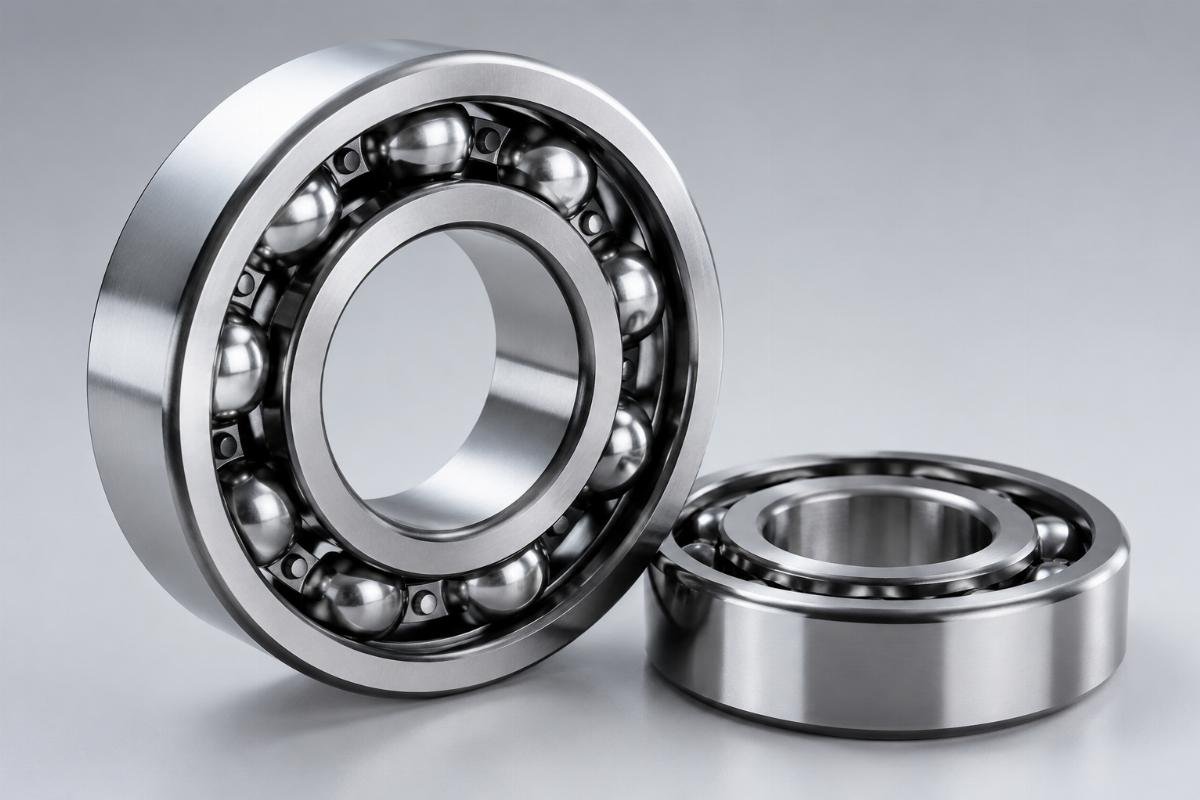
The global industrial bearing market continues shifting as Asian manufacturers close the quality gap while maintaining aggressive pricing. [NEED_CITE: global bearing market size projection and Asian supplier market-share trend] Below is a structured look at why Chinese bearing suppliers now merit serious evaluation, how to verify them technically, and what real-world deployments have proven.
Why Are Hidden Costs Eroding the Value of Imported Bearings?
The sticker price of an imported bearing rarely reflects its true cost to the operation. When procurement teams calculate total spend, lead times stretching across multiple months, inventory carrying costs for safety stock, and the operational impact of delayed replacements quietly compound the brand premium into a much larger figure. Meanwhile, established Chinese bearing suppliers have restructured their operations to address exactly these pain points.
| Cost Factor | Typical Imported Brand Reality | Chinese Bearing Supplier Reality |
|---|---|---|
| Lead Time (Standard Orders) | Multi-month factory queue | Dispatched within days from regional stock |
| Procurement Cost Premium | Significant brand markup plus tariff exposure | Noticeably reduced total cost with comparable quality tier |
| Batch Traceability | Often limited to certificate of origin | Full mill test reports and heat-level digital records |
| Application Engineering | Minimal or charged separately | Dedicated technical support included in supply agreement |
| Emergency Replacement | Extended factory queue, expedite fees | Rapid dispatch from deep rare-designation inventory |
One European wind energy OEM initially resisted switching from a major German brand for gearbox assemblies. After an extended qualification cycle comparing P5 precision grade spherical roller bearings in the 22330 CA/W33 design, their engineering team confirmed identical dimensional tolerances and material specifications—both built from 100Cr6 steel—while achieving a meaningful reduction in unit procurement cost. [NEED_CITE: average bearing procurement cost reduction reported by wind energy OEMs after qualifying Asian alternatives]
The lesson from that engagement was straightforward: lead-time risk and engineering accessibility matter as much as the bearing itself. When a gearbox line goes down waiting for a replacement bearing, the hourly loss dwarfs any per-unit savings the original brand promised. Chinese bearing suppliers that maintain regional warehousing and dedicated engineering desks eliminate that exposure entirely.
How Do You Technically Verify a Chinese Bearing Alternative?
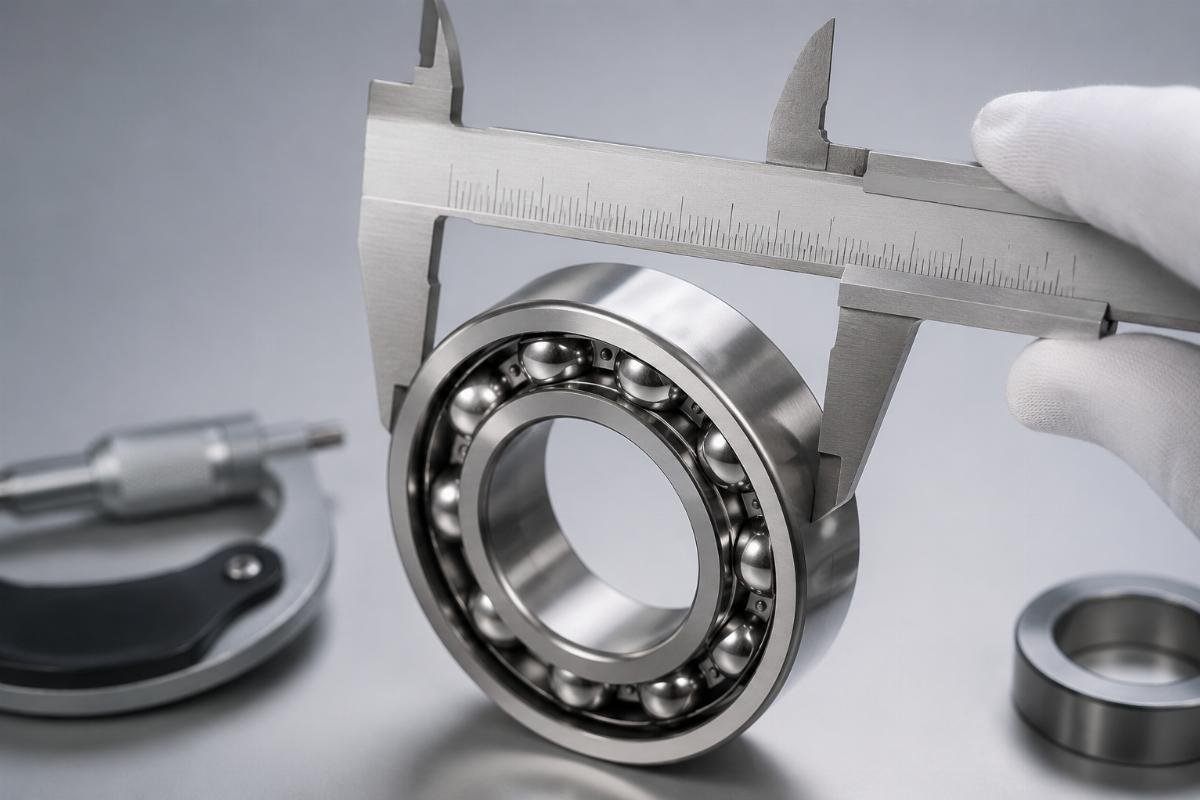
Successful replacement is a specification-matching exercise, not a price-comparison exercise. The most common mistake procurement teams make is confirming only the outer dimensions and assuming everything else will follow. In reality, material certification, precision grade, internal clearance, and cage design collectively determine whether the bearing survives its intended service interval.
| Evaluation Dimension | Common Mistake | Recommended Verification Approach |
|---|---|---|
| Material Certification | Accepting generic chrome steel claims | Request mill test reports with heat treatment records and chemical composition |
| Precision Grade | Trusting the label alone | Require third-party dimensional inspection covering roundness, parallelism, and surface finish |
| Internal Clearance | Selecting standard clearance by default | Confirm application-specific clearance with engineering team based on operating temperature and load |
| Supplier Quality System | Relying on catalog statements | Audit ISO 9001 and IATF 16949 certificates; verify batch-level traceability against manufacturer records |
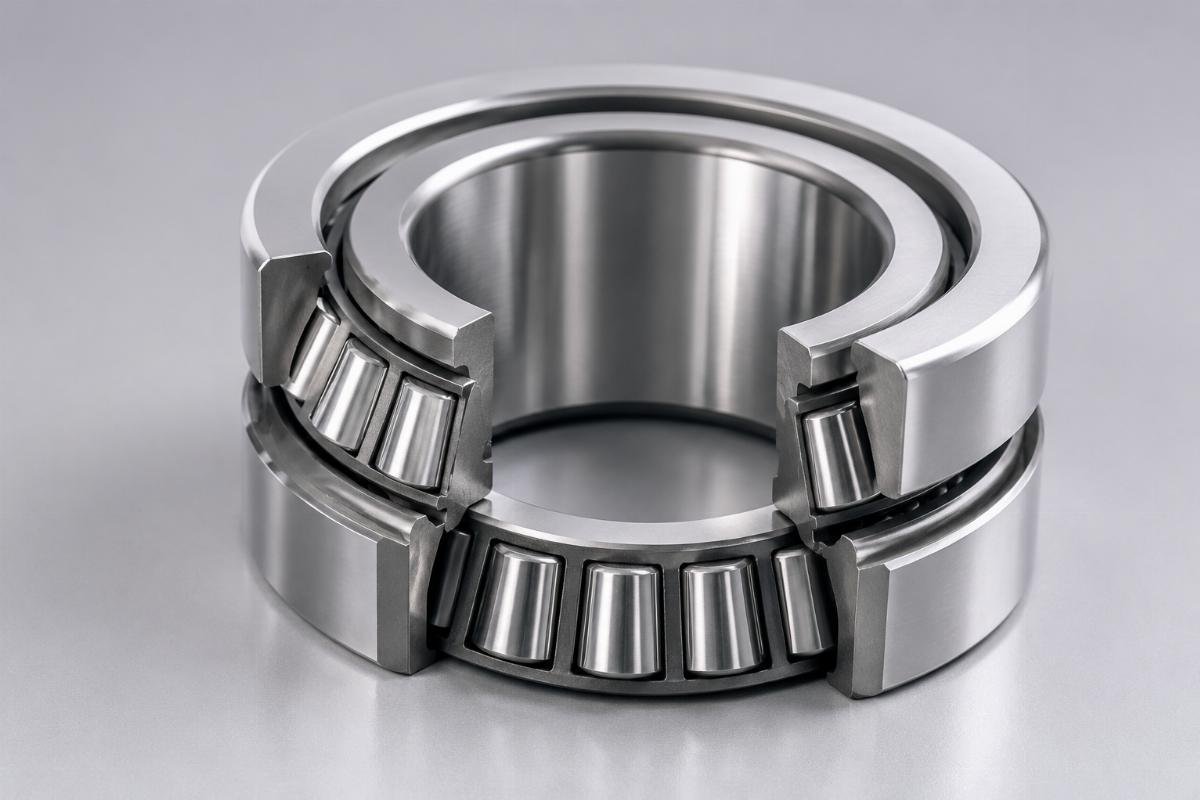
An Australian mining operation illustrates why this rigor matters. Their primary crushers were consuming imported tapered roller bearings in the 32220 size at an alarming rate—each unplanned stoppage carried a downtime cost running into mid-six figures per hour. Root cause analysis revealed that the standard C0 clearance in the original bearings was insufficient for the shock-load profile of the crusher application. The replacement specification called for 32220 bearings manufactured from 100Cr6 steel with C3 clearance and enhanced heat treatment. Dimensional inspection achieved a near-perfect pass rate, and service life extended meaningfully beyond the previous interval—more than doubling the replacement cycle. [NEED_CITE: impact of correct clearance selection on bearing service life in heavy-duty crushing applications]
For buyers evaluating Chinese bearing suppliers, the verification checklist should always include: cross-referencing critical specifications beyond basic dimensions, conducting sample testing under simulated loads, reviewing the supplier’s failure analysis capability, and confirming that every shipment arrives with a complete documentation package—certificate of origin, batch traceability records, and inspection reports.
What Real-World Results Prove the Viability of These Alternatives?
Field deployments across wind energy, mining, and agriculture consistently demonstrate that properly specified Chinese bearing suppliers match or exceed the performance of imported originals at a lower total cost. The pattern is repeatable: when buyers invest time in technical qualification rather than simple price comparison, the results speak for themselves.
| Application Scenario | Chinese Bearing Supplier Advantage | Typical Buyer Profile |
|---|---|---|
| Wind Energy Gearboxes | P5 precision with full material traceability; qualification completed within a single product development cycle | OEMs under cost pressure during new model launches |
| Mining Crushers | Enhanced durability through C3 clearance and controlled heat treatment; substantially extended fatigue life | Heavy industry operators in abrasive, high-shock environments |
| Agricultural Machinery Repair | Cross-reference capability for obsolete designs with emergency dispatch | Aftermarket workshops serving seasonal equipment fleets |
A steel mill in southern Brazil experienced a full set of deep groove ball bearings seizing inside a continuous caster roll table—barely months after installation. When the failed units were pulled apart on the inspection bench, the inner ring raceway showed micro-spalling consistent with sub-standard heat treatment. The supplier’s paperwork claimed P5 precision; the reality under the microscope told a different story. That single batch cost the mill a full production line for an entire week. Incidents like that one expose a persistent gap between what some suppliers claim and what actually ships—yet they also clarify exactly what buyers must demand: verifiable batch traceability, third-party dimensional inspection, and a supplier willing to stand behind every heat number. [NEED_CITE: failure mode analysis of micro-spalling in continuous caster roll table bearings per ISO 15243]
In the agricultural sector, a repair workshop in the American Midwest faced a critical situation when needle roller bearings in the BK2012 size were needed for a legacy combine harvester. The original equipment manufacturer had long since discontinued the part, and imported alternatives quoted lead times that would miss the harvest window entirely. Using cross-reference databases, a compatible Chinese-manufactured BK2012 bearing was identified—matching the original specifications despite non-standard dimensions. The bearings were dispatched rapidly, allowing the workshop to complete the repair before the season opened. [NEED_CITE: aftermarket bearing cross-reference success rates for obsolete agricultural machinery designs]
This case highlights a capability that distinguishes mature Chinese bearing suppliers from generic catalog vendors: the ability to serve not only high-volume OEM programs but also the long tail of maintenance, repair, and overhaul requirements where speed and technical knowledge matter more than unit price.
Which Supplier Capabilities Ensure Long-Term Supply Stability?
Selecting the right Chinese bearing suppliers is as important as selecting the right bearing specification. A supplier that delivers one perfect sample but cannot maintain batch consistency, or that promises traceability but cannot back it with verifiable records, introduces risk that ultimately costs far more than any unit-price saving.
| Supplier Capability | Qualification Expectation |
|---|---|
| Quality Certification | ISO 9001 and IATF 16949 with documented inspection gates at every production stage |
| Inventory Depth | Broad SKU coverage including rare precision classes, special clearances, and large-bore designs |
| Batch Traceability | Every shipment accompanied by verifiable batch numbers cross-checkable against original manufacturer records |
| Dispatch Speed | Stocked items shipped within days versus multi-week factory lead times |
| Customization Support | Laser marking, private-label packaging, pre-lubrication, and translated documentation available |
| Technical Service | In-house capability for life calculations, failure analysis, and application consultation |
Buyers who have navigated the transition from imported brands to Chinese bearing suppliers consistently report that the suppliers delivering the best long-term outcomes share three traits: authorized or direct supply relationships with major manufacturers, deep inventory of non-standard designations that competitors cannot source quickly, and a documentation discipline that makes every shipment audit-ready. When batch numbers can be independently verified against original manufacturer records, the counterfeit and quality-variation risks that historically plagued the market are effectively eliminated.
For procurement managers building a qualified supplier list, the recommendation is to start with a small trial order—verifying documentation completeness, dimensional accuracy, and dispatch punctuality—before committing to framework agreements. The suppliers that perform well at trial scale consistently perform well at volume, because their quality systems are process-driven rather than order-driven.
Conclusion
Chinese bearing suppliers have closed the quality gap with imported brands while eliminating the hidden costs of long lead times and limited technical support. Successful adoption requires rigorous specification matching, verifiable batch traceability, and a supplier partner whose documentation discipline matches their manufacturing discipline—conditions that, once met, deliver reliable performance and meaningful cost reduction across every industrial sector.
Leave a Reply