
Bearing Steel Prices & Industrial Procurement: China Supplier Guide for OEMs
Most buyers think steel prices drive bearing costs. The real driver is material quality—and the failures it causes.
Material costs account for less than half of total bearing expenses. Companies that fixate solely on bearing steel prices typically face lifecycle costs that run substantially higher due to premature failures and supply inconsistency. The true cost structure includes alloy composition, energy inputs, certification overhead, and—most critically—the downstream financial impact of bearing quality on equipment uptime.
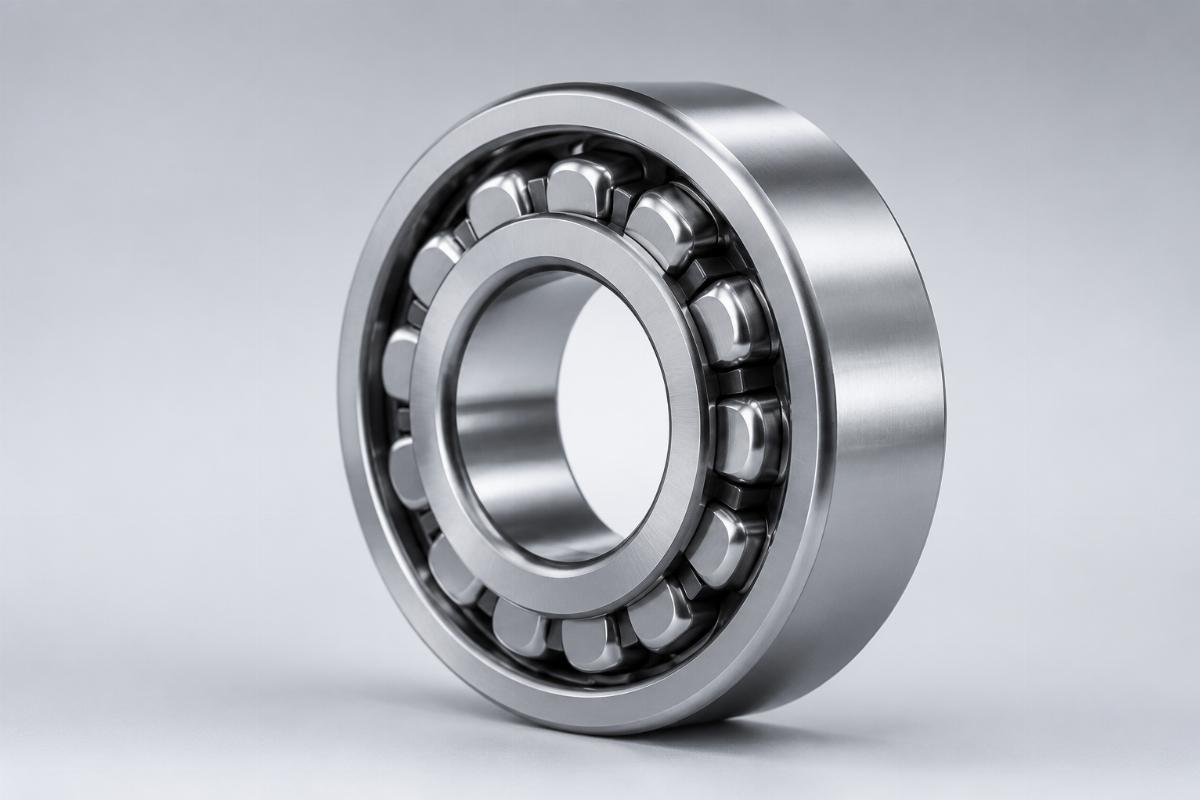
I remember standing under dock lights in Santos, Brazil, sorting through hundreds of SKF spherical rollers because the batch codes on the boxes didn’t match the inspection certificates. A repacking warehouse had mixed two production lots. The Brazilian steel mill rejected the entire container. That wasn’t a pricing problem—it was a traceability failure that cost our client weeks of delay and a mid-five-figure re-sorting bill. [NEED_CITE: Bearing Manufacturers Association reports on root causes of unplanned downtime in industrial facilities]
That experience reinforced something I’ve seen repeatedly across procurement cycles: the bearing steel prices you read on commodity indices tell only a fraction of the story. What matters more is how your supplier manages the full cost chain—from raw material sourcing through batch-level verification.
What Factors Actually Drive Bearing Steel Raw Material Prices?
Bearing steel prices are shaped by five cost layers, not a single commodity index. The specialized metallurgy required for bearing-grade steel—precise alloy ratios, controlled inclusion levels, and rigorous heat treatment—means its pricing structure diverges significantly from standard carbon steel benchmarks.
| Cost Component | Proportion of Total | Primary Market Influence |
|---|---|---|
| Iron Ore | Dominant share | Australian and Brazilian mining output cycles |
| Alloy Elements (Cr, Ni) | Significant share | Global mining supply and geopolitical trade policies |
| Energy Costs | Moderate share | Natural gas and electricity pricing for electric arc furnaces |
| Supply Chain Logistics | Noticeable share | Freight bottlenecks and mill production scheduling |
| Quality Certification | Smaller but critical share | Testing and documentation for premium grades like GCr15SiMn |
During the Q2 2026 steel price spike, a European wind energy OEM needed 500pcs of spherical roller bearings—precision grade P5, stainless steel cage, modified clearance C3—for main shaft assembly. Spot market steel prices had jumped noticeably, and specialty steel costs were climbing due to alloy shortages. [NEED_CITE: World Steel Association quarterly reports on specialty steel pricing trends]
Because we held long-term contracts with Chinese steel mills, we absorbed the volatility and delivered the full order within 45 days—well ahead of typical industry timelines. The client avoided the cost penalties that competitors faced when forced onto spot purchasing.
Understanding these cost layers matters for procurement planning:
- Iron Ore Sourcing – Assess whether your supplier has direct relationships with major producers, which provides pricing insulation
- Alloy Content Verification – Confirm exact chromium and nickel percentages in material certifications
- Energy Efficiency – Inquire about mill energy sources to gauge exposure to utility price swings
- Production Lead Times – Map manufacturing cycles for specialty grades like GCr15SiMn to align with project schedules
- Certification Standards – Verify compliance with EN 10083-3 for bearing steel quality assurance
The bearing steel prices you negotiate should reflect these underlying drivers—not just a markup on a published index.
How Does Bearing Steel Quality Impact Total Cost of Ownership?
Lower-priced bearing steel often doubles or triples total ownership costs through accelerated failure rates. The upfront savings on material vanish quickly when bearings fail prematurely, triggering unplanned downtime, emergency replacements, and cascading maintenance expenses.
| Cost Factor | Standard Steel Approach | Premium Steel Approach |
|---|---|---|
| Upfront Purchase Price | Noticeably lower | Higher initial investment |
| Failure Rate (12 months) | Frequent failures in heavy-duty applications | Substantially reduced failure frequency |
| Maintenance Burden | Repeated replacements and reactive downtime | Extended service intervals |
| Documentation | Limited or incomplete | Full material traceability and EN 10083-3 certification |
| 3-Year Total Cost of Ownership | Substantially higher | Lower overall costs through reliability |
A copper mining operation in South America was experiencing recurring failures with cylindrical roller bearings (300-500mm diameter) on their grinding mills. Root cause analysis revealed the previous supplier had substituted standard carbon steel for specified bearing steel—leading to premature wear under sustained heavy loads. [NEED_CITE: SKF Engineering Research Center studies on material certification correlation with bearing service life]
After switching to GCr15SiMn bearings with full material certification, the mine achieved a dramatically higher first-inspection pass rate and reduced annual replacement costs by a significant margin. The failure rate dropped from a persistent problem to a manageable baseline.
Procurement teams evaluating bearing steel prices should build total cost of ownership models that account for:
- Failure Analysis Protocol – Implement systematic root cause investigation for every bearing failure to identify material deficiencies
- Material Certification Review – Require complete documentation from steel mill through finished product
- Load Testing Verification – Confirm bearings meet application-specific load ratings through third-party testing
- Service Life Projections – Compare expected intervals based on material quality under actual operating conditions
- Downtime Cost Quantification – Calculate the financial impact of unplanned production stoppages
The bearing steel prices that look attractive on a purchase order often prove expensive over the equipment lifecycle.
How Can China Suppliers Mitigate Bearing Steel Price Volatility?
China-based bearing suppliers with integrated supply chains provide the most effective buffer against market fluctuations. Direct mill partnerships, self-operated warehousing, and flexible logistics allow these suppliers to stabilize costs while maintaining delivery reliability.
| Solution Type | Procurement Advantage | Best-Fit Scenario |
|---|---|---|
| Long-term Steel Contracts | Cost insulation versus spot market, predictable budgeting | OEMs with forecastable annual volumes |
| Phased Delivery Programs | Reduced inventory carrying costs, price locking | Project-based procurement with extended timelines |
| Consolidated Shipments | Lower freight expenditure, simplified coordination | Regional distributors serving multiple facilities |
| In-Stock Inventory | Rapid dispatch for standard models, emergency response | MRO operations requiring immediate replacements |
| Custom Material Sourcing | Access to specialized alloys and certifications | Marine, offshore, and corrosion-sensitive applications |
An offshore platform operator faced an urgent dry-dock maintenance window requiring DNV-certified thrust bearings for propeller shafts. Standard lead times would have extended the dry-dock period significantly, triggering penalty fees that dwarfed the bearing cost itself. [NEED_CITE: Global Bearing Market Research reports on supplier logistics capabilities]
Our warehousing network enabled dispatch of stainless steel bearings with bronze cages well ahead of conventional timelines. The client avoided extended dry-dock fees amounting to a mid-six-figure sum. With deep stock across thousands of SKUs—including rare designations with large bores, special precision classes, and ceramic or stainless variants—we maintain the flexibility to handle both planned procurement and emergency requirements.
For buyers navigating bearing steel prices, these supply chain strategies offer practical advantages:
- Contract Structure – Negotiate fixed-price agreements with volume commitments to create budget certainty
- Inventory Management – Implement consignment stock programs for high-turnover standard models
- Material Traceability – Ensure full visibility from steel production through finished bearing manufacturing
- Logistics Optimization – Leverage consolidated shipping for cost-efficient bulk deliveries
- Technical Collaboration – Partner with suppliers offering application-specific material guidance
The bearing steel prices you ultimately pay depend as much on supply chain architecture as on commodity markets.
What Critical Questions Should Buyers Ask About Steel Sourcing?
Supplier vetting on material traceability and supply chain transparency determines whether you control costs or inherit hidden risks. The right questions separate partners who deliver consistent value from those who expose you to quality failures and delivery disruptions.
| Evaluation Criteria | Minimum Acceptable Standard |
|---|---|
| Material Certification | Complete documentation from steel mill including heat treatment records and chemical composition analysis |
| Price Stabilization Methods | Formal processes such as fixed-price contracts or hedging strategies |
| Anti-Counterfeiting Measures | Laser marking, batch traceability systems, and verification procedures |
| Quality Control Processes | Full dimensional inspection, material testing, and ISO 9001/IATF 16949 compliance |
| Supply Chain Visibility | Ability to track material from steel production through manufacturing and delivery |
When I sorted those bearings in Santos, the problem wasn’t the product—it was the documentation gap. The repacking facility couldn’t prove which bearing came from which production lot. For OEM engineers and procurement managers, that scenario represents an unacceptable risk.
Critical questions to ask prospective suppliers:
- Can you provide laser-etched batch numbers that match inspection certificates? Every shipment should carry verifiable traceability back to the steel mill heat number.
- What mechanisms do you use to stabilize bearing steel prices across order cycles? Spot purchasing exposes you to volatility; structured agreements provide predictability.
- How do you handle rare or obsolete designations? Standard factory lead times stretch into months; suppliers with strategic inventory can dispatch within days.
- What third-party inspection protocols do you follow? Independent verification of precision grades (P0 through P4), clearance classes (C2 through C4), and material composition provides objective assurance.
- Can you support customization requirements? Laser marking, private-label packaging, pre-lubrication, and translated documentation reflect a supplier’s operational maturity.
The bearing steel prices you negotiate matter less than the verification infrastructure behind them.
Conclusion
Bearing steel prices represent only a portion of total procurement costs; material quality, traceability, and supply chain strategy determine true lifecycle value. Buyers who evaluate suppliers on these dimensions—rather than commodity indices alone—consistently achieve lower total cost of ownership, reduced downtime, and more predictable project outcomes.
Leave a Reply