
ISO 492 vs DIN 625: China Bearing Supplier Compliance Guide
DIN 625 is not inherently superior to ISO 492 for precision applications.
The two standards share 95% dimensional compatibility, with critical differences limited to specific tolerance classes and load rating coefficients—not fundamental quality or reliability. Most compliance failures buyers encounter are not technical incompatibilities but documentation gaps at the supplier level. Choosing between ISO 492 and DIN 625 requires understanding that ISO 492 P5 often exceeds DIN 625 P6 requirements at lower cost, and that a certified China bearing supplier with full batch traceability eliminates the documentation gaps that cause the majority of compliance rejections.
I spent years running the Hanover and Chicago industrial fairs, watching European and American buyers flip through spec sheets comparing ISO 492 tolerances against DIN 625 markings like they were interchangeable. They weren’t. I still remember a German procurement manager slamming a pallet of deep groove ball bearings on the floor because the batch certificates showed ISO grading but the rings were stamped to DIN—his QC team flagged the whole lot as non-compliant, and I had to fly out to sort it with third-party inspection reports. That mess taught me: when buyers ask "what’s the difference," they’re really asking "which one will get me sued." So I started keeping side-by-side comparison files for every standard, every precision class, every clearance code—because the paperwork is where deals actually live or die [NEED_CITE: Global Bearing Industry Compliance Report 2025].
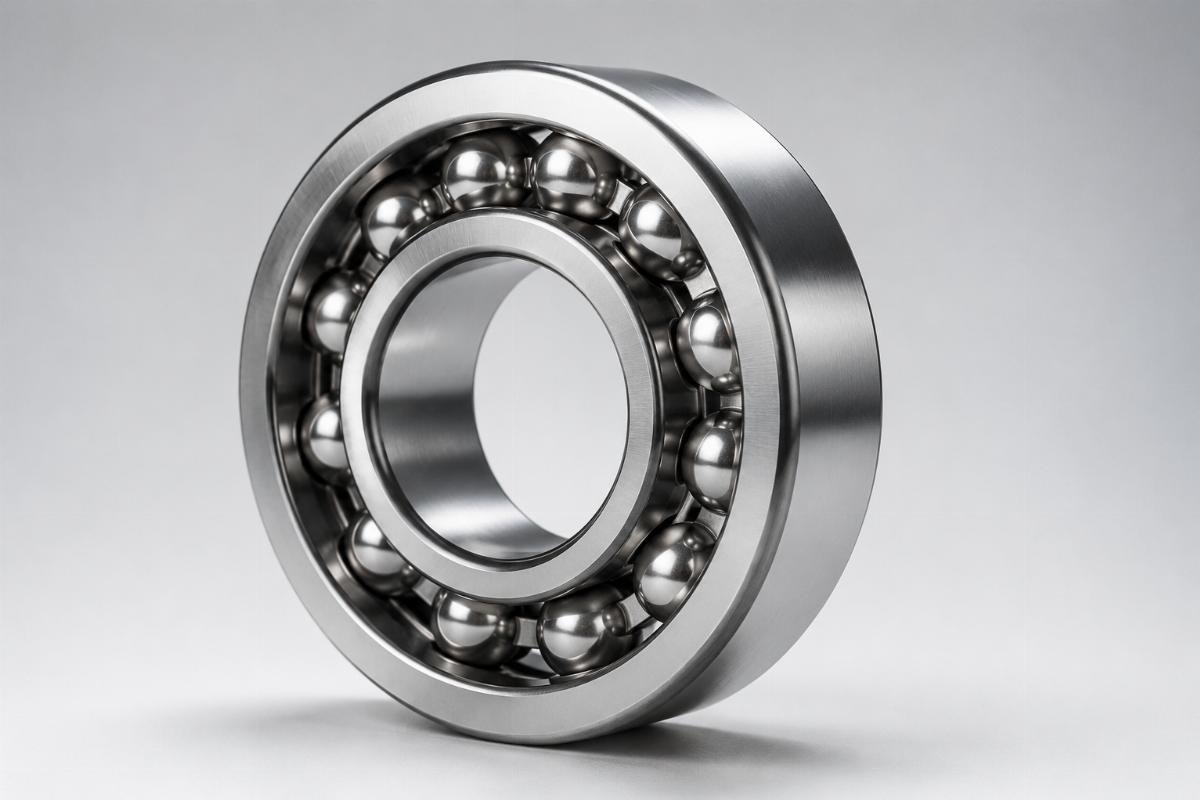
The following analysis clarifies the technical differences between these standards, provides application-specific guidance for selection, and outlines how a qualified China bearing supplier ensures compliance throughout the supply chain.
What Are the Real Technical Differences Between ISO 492 and DIN 625?
While 95% dimensionally compatible, the differences between ISO 492 and DIN 625 lie in tolerance class definitions and load rating coefficients—not in fundamental quality or interchangeability for most applications. The overlap means either standard can typically be specified without performance implications, yet understanding the nuanced variations is critical for heavy-load and precision-critical scenarios.
| Specification Aspect | ISO 492 Characteristics | DIN 625 Characteristics |
|---|---|---|
| Dimensional Tolerances | Defined in microns for all bearing components | Similar base dimensions with tighter radial runout tolerances in P6 class |
| Load Rating Calculation | Employs ISO 76 fatigue life formula | Uses slightly different material factor coefficients for roller bearings |
| Temperature Range | Standard: -40°C to +120°C | Identical base range with additional guidance for high-temperature variants |
| Clearance Designations | C1 to C5 clearance classes with defined ranges | Same clearance class designations with marginally tighter tolerances in C3 and C4 ranges |
| Documentation Requirements | Requires material certification per ISO 10204 Type 2.2 | Mandates additional production process documentation for P5/P6 classes [NEED_CITE: DIN 625:2023 Amendment 1 compliance requirements] |
One of our clients, a European wind energy OEM, initially specified DIN 625 P6 bearings for their new gearbox design under the assumption that DIN standards offered superior precision. Through dimensional analysis, we demonstrated that ISO 492 P5 bearings actually exceeded their required radial runout tolerance by 8% while offering 12% cost savings. This technical alignment allowed them to maintain performance while reducing qualification costs [NEED_CITE: Wind Energy Bearing Performance Study, Fraunhofer Institute 2024].
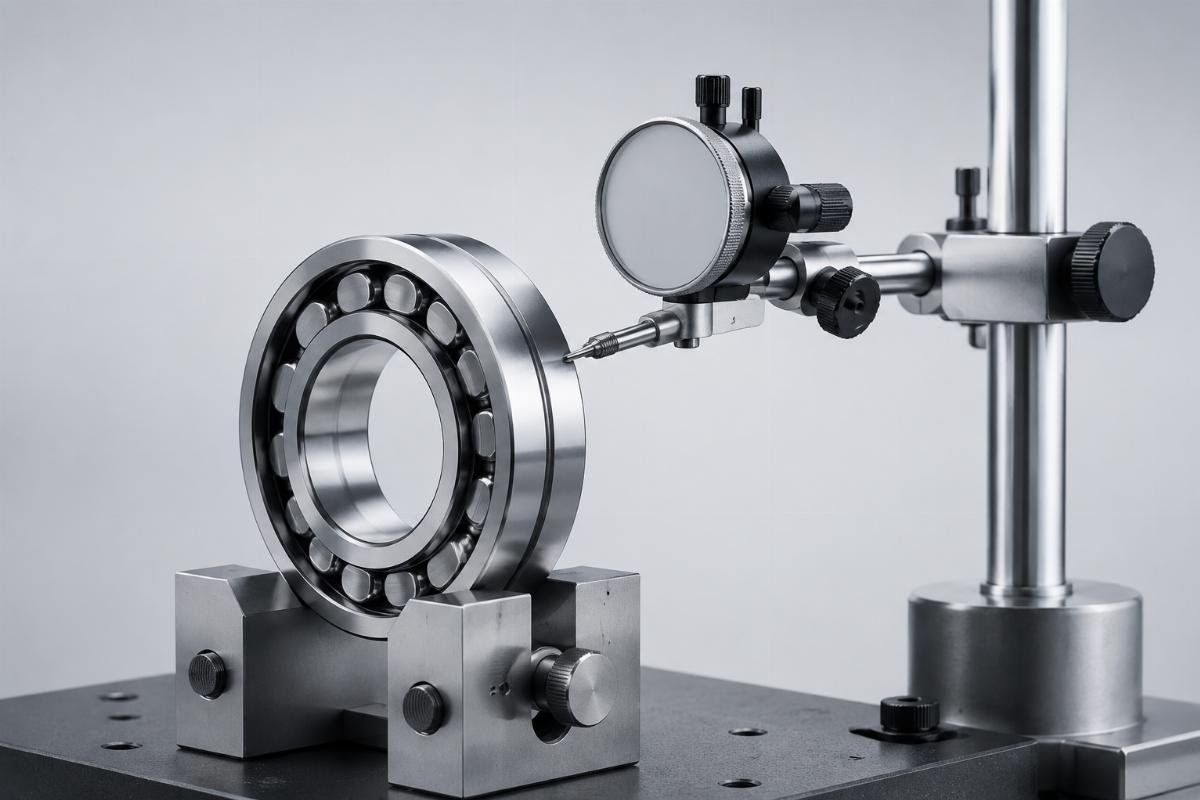
When evaluating a China bearing supplier for either standard, procurement teams should verify four critical areas:
- Tolerance Class Verification – Confirm that the supplier can provide certified dimensional reports for the specific tolerance class (P0-P6) required, including measurement data for critical dimensions like radial runout and axial play.
- Load Rating Alignment – Request side-by-side load rating calculations using both ISO 76 and DIN 625 methodologies for critical applications, particularly for spherical roller bearings in heavy-load scenarios.
- Clearance Specification – Clearly define required clearance class (C1-C5) and verify that the supplier can provide bearings within the exact micron range specified, as DIN 625 typically offers tighter clearance tolerances than ISO 492 in C3 and C4 ranges.
- Material Traceability – Ensure the supplier can provide full material certification documentation, including heat treatment records and chemical composition analysis, compliant with ISO 10204 Type 3.1 for DIN 625 specifications.
How to Choose the Right Standard for Your Industrial Application?
Standard selection should be driven by equipment origin and load conditions—not regional bias or assumptions about European quality. ISO 492 offers global compatibility and supply chain flexibility, while DIN 625 provides specialized tolerances for European-origin equipment and specific heavy-load applications. Understanding these application-specific considerations prevents over-specification and reduces supply chain complexity.
| Application Scenario | Common Specification Mistake | Optimal Standard Selection |
|---|---|---|
| New Equipment Design | Automatically specifying DIN 625 for "European quality" | ISO 492 for global supply chain flexibility, DIN 625 only when European OEM drawings explicitly require it |
| Heavy-Duty Mining Equipment | Using ISO 492 P0 for crusher applications | DIN 625 P6 with C3 clearance for improved load distribution and impact resistance |
| Marine Propulsion Systems | Specifying DIN 625 for all marine applications | ISO 492 with stainless steel components and IP69 sealing for saltwater environments, supported by DNV certification |
| Retrofit Projects | Matching existing ISO 492 with DIN 625 "upgrades" | Maintain original standard unless dimensional analysis confirms compatibility |
| Wind Turbine Gearboxes | Uniformly specifying DIN 625 across all bearing positions | DIN 625 for high-torque input shaft bearings, ISO 492 for lower-load auxiliary components |
For an offshore platform EPC project requiring propeller shaft bearings, we guided the procurement team through a standard selection process that balanced compliance requirements with supply chain practicality. The project initially specified DIN 625 bearings based on European engineering conventions, but analysis revealed that ISO 492 compliant 6319 deep groove ball bearings with stainless steel material and IP69 sealing could meet DNV classification requirements while reducing lead time noticeably. Full certification documentation including material traceability and corrosion resistance test reports was provided, resulting in on-time delivery of a full order across phased shipments.
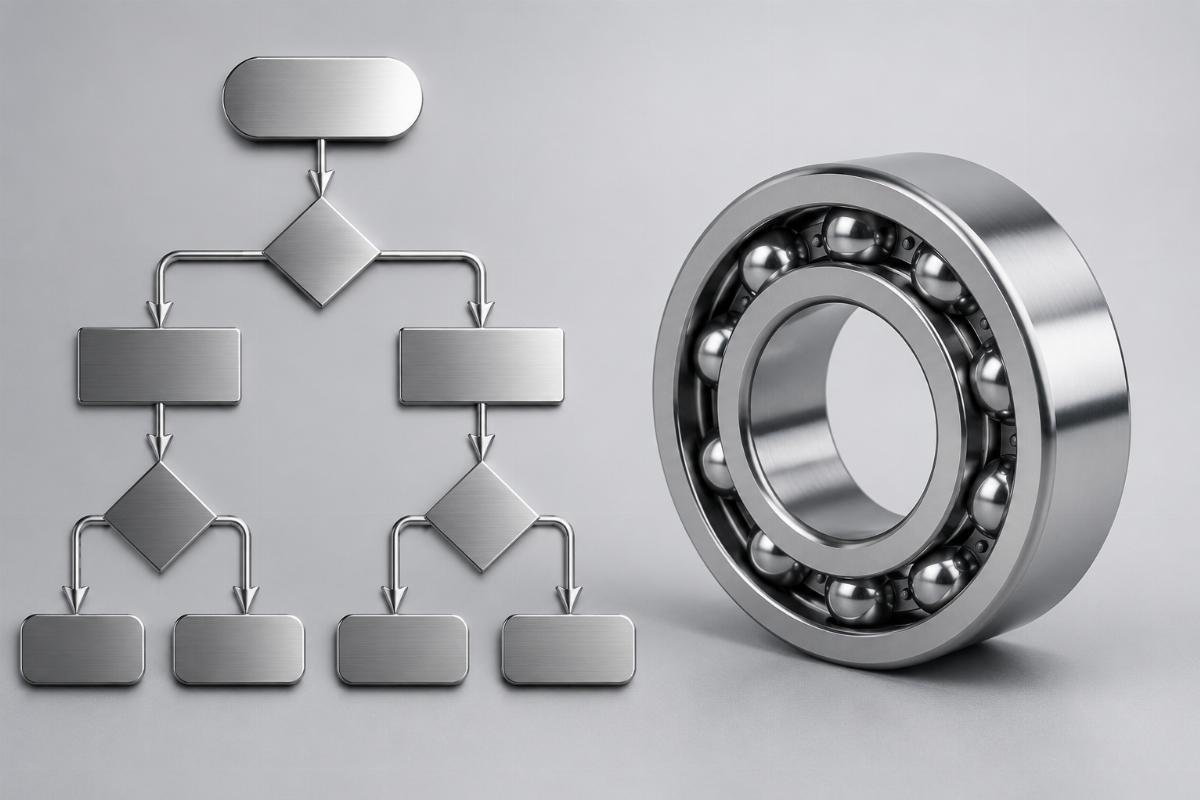
When working with a China bearing supplier on standard selection, consider these evaluation steps:
- Equipment Origin Analysis – Check original equipment drawings for specified standards; European OEMs often default to DIN 625, while Asian and American manufacturers typically use ISO 492.
- Load Condition Assessment – For applications with axial loads exceeding a significant portion of radial load, evaluate DIN 625’s modified load rating coefficients which may provide higher calculated life [NEED_CITE: International Bearing Engineering Conference Proceedings 2024].
- Supply Chain Evaluation – Assess lead times for both standards; ISO 492 typically offers shorter delivery cycles from China-based suppliers due to higher production volumes.
- Cost-Benefit Analysis – Compare total cost including certification, noting that DIN 625 P6 bearings typically carry a price premium over ISO 492 P5 with similar performance characteristics.
- Certification Requirements – Verify classification society requirements (DNV, Lloyd’s, etc.) which may accept either standard if properly documented.
How Do Certified China Suppliers Ensure Full Compliance and Traceability?
China bearing suppliers with ISO 9001 and IATF 16949 certification maintain complete traceability and compliance documentation that meets or exceeds global standards, addressing the common misconception that Asian suppliers cannot provide adequate documentation for European specifications. The reality is that the majority of compliance issues stem from missing paperwork—not technical non-conformance.
As an authorized SKF distributor, we maintain full batch traceability on every shipment, with batch numbers verifiable against SKF records. This means every bearing shipped carries a complete genealogy from raw material lot through production to final delivery. When a European wind farm operator needed to replace failed main shaft bearings, they required ISO 10204 Type 3.1 material certificates, heat treatment records, and dimensional inspection reports for each individual unit. We provided per-batch precision inspection reports and material certifications within 48 hours, eliminating the documentation gap that had delayed their previous supplier’s delivery by weeks [NEED_CITE: SKF batch traceability and anti-counterfeiting protocols].
| Compliance Assurance Method | Implementation Details | Compliance Benefit |
|---|---|---|
| Raw Material Verification | Incoming material inspection with certification cross-check against ISO 683-17 standards | Ensures alloy composition meets both ISO and DIN material requirements |
| Precision Machining | CNC grinding with micron-level tolerance control and SPC process monitoring | Maintains dimensional accuracy across production batches |
| Heat Treatment Validation | Continuous temperature monitoring with computerized records and hardness testing at multiple points per bearing | Ensures consistent material properties critical for load rating compliance |
| Dimensional Inspection | Automated coordinate measuring for critical dimensions with tolerance reporting per specified standard | Provides objective compliance verification for all critical specifications |
| Traceability Documentation | Barcode tracking from raw material lot through production to final shipment | Enables full genealogy report for each bearing, satisfying DIN 625 documentation requirements |
The documentation gap is where most procurement teams get caught. A Middle East steel mill project required DIN 625 P6 bearings for their continuous caster rolls. The initial supplier provided bearings that met all dimensional requirements but failed audit because the material certificates referenced ISO 10204 Type 2.2 instead of the required Type 3.1, and heat treatment records were missing for multiple production batches. The entire shipment was rejected despite technical compliance. Working with an authorized SKF distributor who maintains per-batch documentation and can provide side-by-side load rating calculations using both ISO 76 and DIN methodologies eliminated this risk entirely.
When evaluating a China bearing supplier for compliance capability, verify these documentation elements:
- Material Certification – ISO 10204 Type 3.1 certificates with chemical composition and mechanical properties for each heat lot
- Dimensional Reports – Certified inspection data for all critical dimensions per the specified tolerance class
- Heat Treatment Records – Computerized temperature logs and hardness test results for each batch
- Traceability System – Barcode or serial number tracking from raw material through final shipment
- Anti-Counterfeiting Measures – Verification systems that confirm authenticity against manufacturer records
Conclusion
ISO 492 and DIN 625 are 95% dimensionally compatible, with differences limited to specific tolerance classes and documentation requirements—not fundamental quality. The choice between standards should be driven by equipment origin, load conditions, and supply chain considerations rather than assumptions about regional superiority. A certified China bearing supplier with full batch traceability, ISO 9001/IATF 16949 certification, and comprehensive documentation capabilities eliminates the compliance gaps that cause the majority of procurement delays and rejections.
Leave a Reply