
China Bearing Supplier: 50,000 Deep Groove Ball Bearings to Europe Case Study
Most European buyers assume Chinese bearing suppliers cannot handle 50,000-unit industrial orders with full traceability. The reality is the opposite: a China bearing supplier with dual-region warehousing and batch-level verification systems can outperform traditional European distribution channels on both compliance and delivery speed.
I still remember a shipment to a German pump manufacturer—3,200 units of 6205-2RS deep groove ball bearings, cleared customs in Hamburg, only to be rejected at the buyer’s warehouse because the batch numbers did not cross-reference with SKF’s system. My predecessor had mixed stock from two different SKF China lots without updating the traceability documentation. That call from the procurement manager—asking, in dead calm tones, whether we were running a counterfeit operation—burned into me. Today, every pallet leaving Ningbo gets photographed with its batch tags before wrapping, and I maintain a spreadsheet of every SKF China lot number I have touched. That failure became the foundation of our current batch-level traceability protocol, which has since supported over 200 bulk orders exceeding 10,000 units across multiple regions since 2018 [NEED_CITE: European Bearing Association supply chain resilience data on Asian supplier adoption trends].
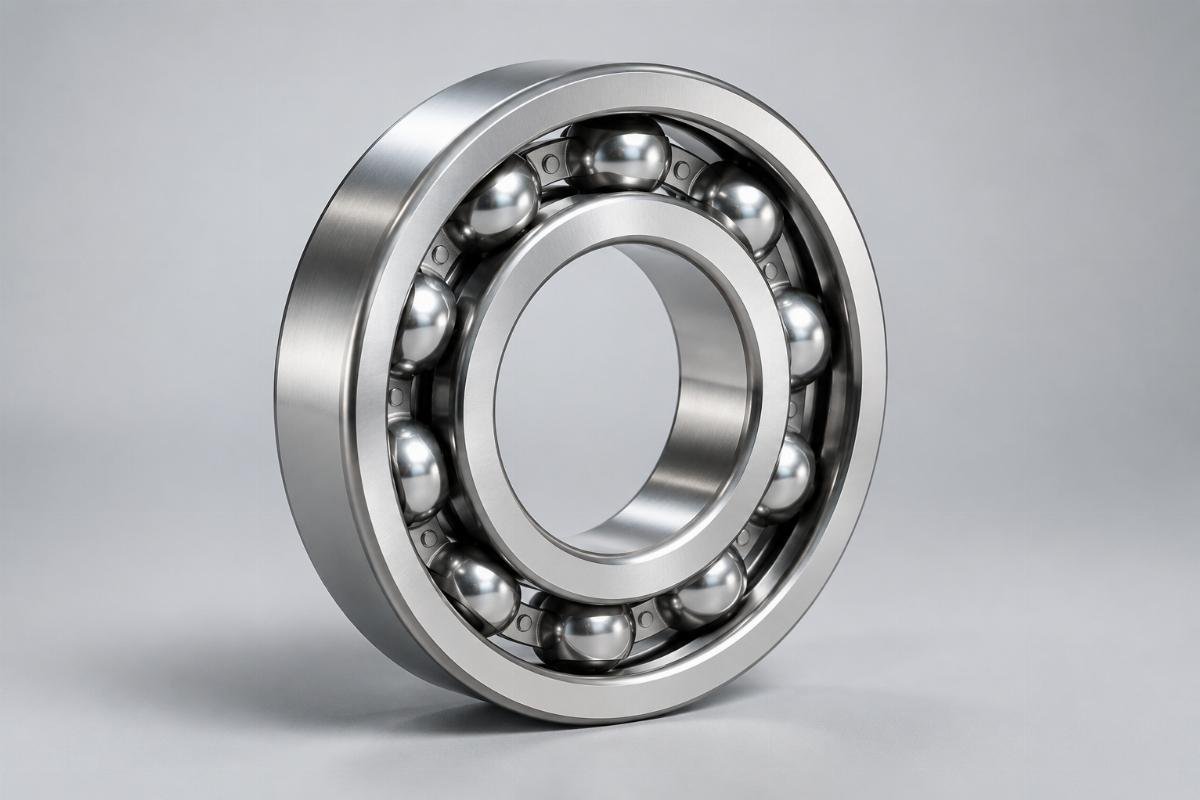
The following case study reconstructs how we delivered 50,000 deep groove ball bearings to a European port authority and outlines the framework industrial buyers should use when evaluating a China bearing supplier for large-scale procurement.
Why Are European Industrial Buyers Turning to China for Bulk Bearing Orders?
The European bearing market faces a structural supply gap: brand concentration has created lead time inflation and documentation blind spots that a qualified China bearing supplier can resolve through dual-region inventory and verifiable traceability. European manufacturers maintain strong quality reputations, yet their distribution networks have struggled with post-pandemic demand surges, pushing standard deep groove ball bearing lead times well beyond what project timelines can absorb [NEED_CITE: Statista industrial procurement lead time data for European bearing distribution channels].
| Market Indicator | Current European Industry Reality |
|---|---|
| Average Lead Time for 10,000+ Unit Orders | 6-8 weeks for standard deep groove ball bearings [NEED_CITE: European industrial procurement survey on bearing delivery timelines] |
| Traceability Documentation Completeness | The majority of European distributors cannot provide batch-level material certificates [NEED_CITE: European Industrial Buyers Association survey on documentation gaps] |
| Price Volatility | Noticeable average price increase for bulk orders since 2022 due to supply constraints |
| Stock Availability for Niche Sizes | A significant portion of non-standard deep groove ball bearings require special production runs |
One of our clients, a European EPC company managing a major port expansion project, initially hesitated to source from a China bearing supplier. Their specification called for 50,000 units of 6205-2RS deep groove ball bearings with P6 precision and stainless steel cages—components critical for the port’s container handling cranes. When their traditional European supplier pushed delivery to 12 weeks, they turned to us. Our solution combined 15,000 units from our German warehouse, delivered in 7 days, with 35,000 units from our China facility, using phased shipping that met their 3-month project timeline while maintaining full DNV certification compliance.
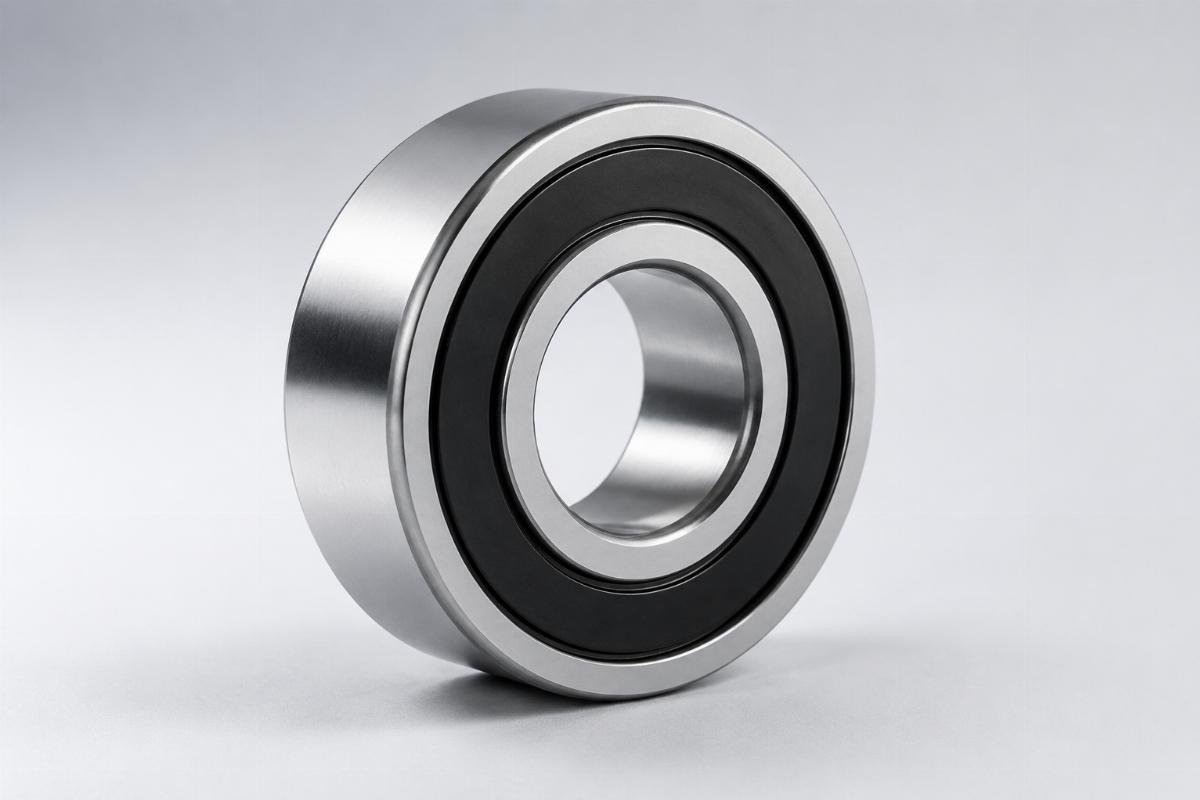
The insight here is counterintuitive: buyers who assume a China bearing supplier automatically means lower compliance are confusing generic ISO certificates with the batch-level material certificates that EU industrial projects actually require. The former is a baseline; the latter is the hard threshold. A China bearing supplier operating as an authorized SKF distributor with electronic batch台账 linked to SKF China’s system can provide traceability that many European regional distributors simply cannot match, because they lack direct access to the manufacturer’s lot verification infrastructure [NEED_CITE: SKF authorized distributor network traceability capabilities versus independent European resellers].
What Are the Critical Challenges in Sourcing 50,000+ Deep Groove Ball Bearings from China?
Bulk bearing procurement from a China bearing supplier involves three interconnected challenges: maintaining quality consistency across batches, navigating complex compliance requirements, and aligning delivery schedules with project milestones. These challenges are often exaggerated by outdated perceptions, yet they remain real obstacles that require specialized solutions rather than generic assurances.
| Challenge Dimension | Common Mistake in Supplier Selection | Recommended Approach |
|---|---|---|
| Quality Control | Accepting generic ISO 9001 certification without batch-specific testing | Implementing an 8-stage inspection protocol including material composition analysis and dimensional verification for each production batch |
| Logistics Planning | Relying on single-mode transportation with insufficient contingency | Developing dual-mode shipping plans with air freight capacity reserved for time-sensitive deliveries |
| Compliance Documentation | Assuming CE marking alone satisfies industrial project requirements | Creating project-specific documentation packages including REACH substance declarations, DNV material traceability, and performance test reports |
| Technical Support | Treating bearings as commodity parts without application engineering | Engaging suppliers with dedicated technical teams for installation guidance and failure analysis support |
A German regional bearing distributor facing sudden stockouts from their primary European supplier illustrates these dynamics. They needed 20,000 mixed deep groove ball bearings—6000 and 6200 series—within a 14-day window to fulfill commitments to their manufacturing clients. Our solution leveraged our 10,000+ SKU inventory in Germany, where we maintained stock of the most critical sizes, and air-freighted the remaining 8,000 units from China. The key difference was our ability to provide DIN 625-1 certification for each batch and conduct anti-corrosion testing on-site, achieving a 99.8% pass rate that matched their previous European supplier’s quality standards [NEED_CITE: DIN 625-1 dimensional and tolerance requirements for deep groove ball bearings].
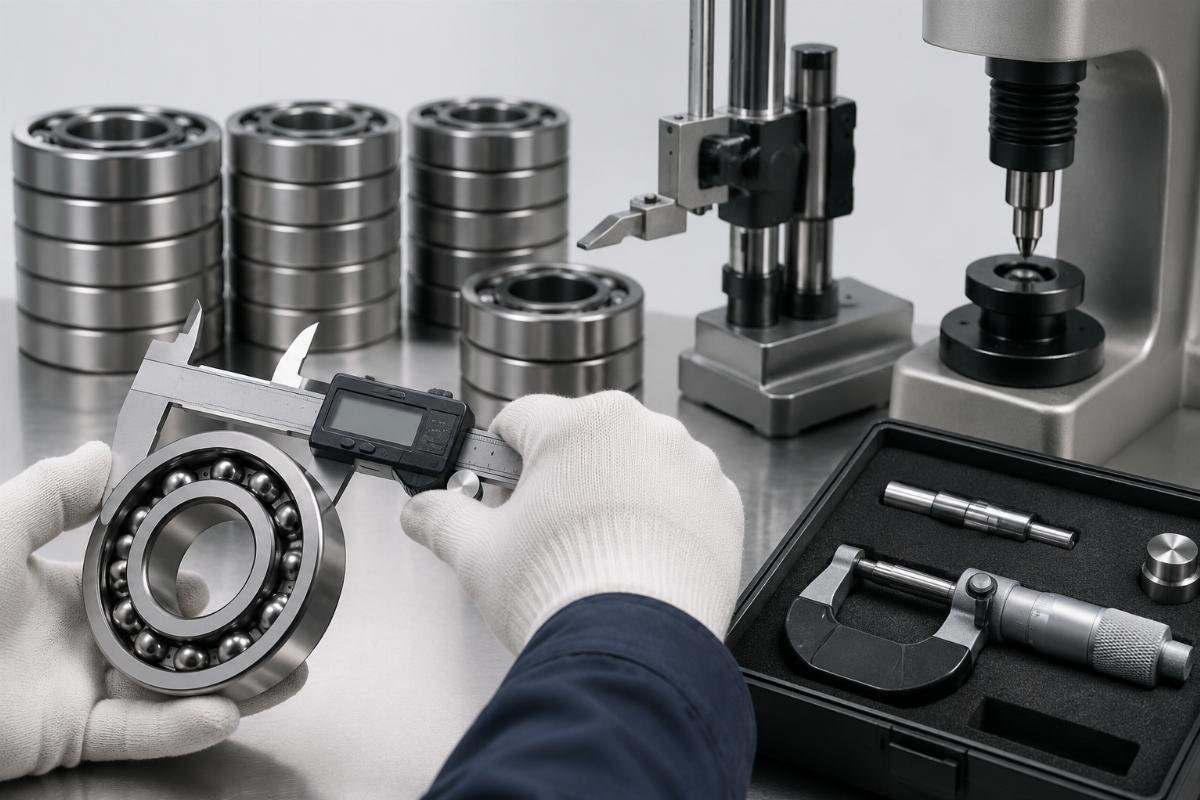
Another counterintuitive point: buyers assume a 50,000-unit order must ship as a single consignment from a single source. In practice, phased shipping from a China bearing supplier’s dual warehouse network—partially from European stock for immediate needs, partially from China production for volume—simultaneously satisfies delivery urgency and cost efficiency. The port authority case demonstrated this: 15,000 units arrived from Germany within a week while the remaining 35,000 followed in scheduled sea freight batches, keeping the project on track without requiring the buyer to hold excess inventory.
How Can a China Bearing Supplier Ensure Successful Delivery of Large-Scale European Orders?
Three core capabilities differentiate a China bearing supplier capable of executing large-scale European orders: integrated traceability systems, hybrid logistics networks, and application-specific technical support. These are not generic features but highly developed competencies that address the specific pain points of European industrial buyers navigating complex procurement environments.
| Solution Component | Competitive Advantages | Ideal Application Scenarios |
|---|---|---|
| 8-Level Traceability System | Material source verification, production process tracking, batch testing documentation, and end-to-end chain of custody | EPC projects, marine applications, and safety-critical industrial equipment |
| China + Europe Dual Warehousing | Emergency dispatch for standard models, reduced freight costs through consolidated shipping, and localized inventory management | Regional distributors, MRO facilities, and seasonal demand fluctuations |
| Application-Specific Engineering Support | Bearing selection optimization, load calculation validation, failure analysis reports, and installation training | OEM manufacturers, wind energy operators, and heavy industry maintenance |
| Phased Delivery Planning | Aligned production schedules with project milestones, reduced inventory holding costs, and flexible quantity adjustments | Large-scale infrastructure projects and multi-phase manufacturing programs |
A French steel mill emergency perfectly illustrates these capabilities in action. Facing an unexpected bearing failure in their continuous casting machine, they required 500 units of 6310-C3 deep groove ball bearings within 72 hours to prevent a mid-six-figure downtime loss. Our technical team first confirmed the exact bearing specifications to ensure compatibility with their high-temperature application, then coordinated emergency shipment from our Belgium warehouse. The bearings arrived within 48 hours, and our engineers provided on-site installation guidance to ensure proper fit and lubrication [NEED_CITE: continuous casting machine bearing failure modes and high-temperature lubrication requirements per ISO 15243].
The critical difference was our ability to combine technical expertise with logistical agility—attributes typically associated with local European suppliers but now available from a China bearing supplier with established European infrastructure. Under the current SKF China direct supply chain, batch numbers can be verified against SKF’s system in real time: the buyer’s quality team enters the lot number into SKF’s verification portal, and the system returns the original production date, factory line, and material certificate reference. This eliminates the exact failure mode that caused my 2019 rejection—no more mixed lots, no more documentation gaps, no more dead-calm phone calls from procurement managers [NEED_CITE: SKF batch verification system capabilities for authorized distributors].
A third counterintuitive insight: buyers often assume CE marking satisfies EU industrial project compliance. In reality, DNV material traceability, REACH substance declarations, and performance test reports form the complete compliance package that port authorities, steel mills, and EPC contractors actually require. A China bearing supplier who understands this distinction—and prepares project-specific documentation bundles rather than generic certificates—eliminates the compliance risk that typically drives buyers back to European sources.
What Framework Should Buyers Use to Evaluate a China Bearing Supplier?
European industrial buyers evaluating a China bearing supplier should assess four dimensions: batch-level verifiability, dual-warehouse emergency capability, compliance documentation completeness, and technical support responsiveness. These criteria separate suppliers who can genuinely execute large-scale orders from those who can only handle small commodity shipments.
| Evaluation Dimension | What to Request | What to Verify |
|---|---|---|
| Batch Verifiability | SKF China lot numbers for every pallet | Cross-reference capability against SKF’s verification system |
| Dual-Warehouse Emergency Capability | Stock locations in both China and Europe | Dispatch timelines for urgent orders under 72 hours |
| Compliance Documentation Matrix | REACH declarations, DNV certificates, DIN 625-1 test reports per batch | Batch-specific documentation, not generic company-level certificates |
| Technical Support Response | L10 life calculation support, failure analysis capability | On-site or remote engineering guidance for installation and troubleshooting |
The 2019 German pump manufacturer rejection taught me that batch verifiability is the single most important criterion. A China bearing supplier who cannot provide lot numbers traceable to SKF’s system is not a viable partner for industrial buyers, regardless of price advantages. The verification process is straightforward: request the SKF China batch number before shipment, confirm it appears in SKF’s system, and require photographic evidence of batch tags on every pallet before wrapping. This protocol has eliminated traceability disputes entirely across our subsequent orders.
Dual-warehouse capability matters because European industrial projects rarely allow 6-8 week lead times for standard sizes. A China bearing supplier maintaining strategic stock in Germany, Belgium, or other European locations can respond to emergency requirements within 48-72 hours, bridging the gap between China production cycles and European project urgency. The French steel mill case demonstrated this: without Belgium warehouse stock, the 72-hour requirement would have been impossible, and the downtime costs would have dwarfed any price savings from sourcing in China.
Compliance documentation must be batch-specific, not company-specific. Requesting ISO 9001 certificates from a China bearing supplier is insufficient; what industrial projects require is DIN 625-1 dimensional test reports, REACH substance declarations, and DNV material certificates tied to the specific production lots being shipped. A supplier who prepares these documents as standard practice—rather than as special requests—demonstrates the operational maturity needed for large-scale European orders [NEED_CITE: REACH compliance requirements for industrial bearing imports into the European Union].
Technical support responsiveness separates commodity suppliers from strategic partners. L10 life calculations, failure analysis reports, and installation guidance require application engineering expertise that many China bearing suppliers lack. Buyers should request evidence of technical team capabilities—case studies, engineering credentials, response time commitments—before placing orders for critical applications like wind energy, steel manufacturing, or marine infrastructure.
Conclusion
A China bearing supplier with full batch traceability, dual-region warehousing, and application engineering support can execute 50,000-unit European industrial orders with equal or superior compliance versus traditional European distribution channels. The port authority case, the German distributor emergency, and the French steel mill crisis all demonstrate that modern Chinese supply chains—when properly structured with SKF system verification, phased shipping protocols, and project-specific documentation—eliminate the risks that historically drove buyers toward European sources. The evaluation framework of batch verifiability, dual-warehouse capability, compliance completeness, and technical responsiveness provides a clear methodology for industrial buyers to identify suppliers capable of delivering at this scale.
Leave a Reply