

China Bearing Factory: Durability via Heat Treatment & QC
Higher hardness doesn’t guarantee better bearing performance. This misconception drives many procurement decisions toward surface hardness alone, only to see premature spalling and brittle fracture in heavy-duty applications. A professional China bearing factory ensures durability through precisely controlled heat treatment that balances hardness with toughness, combined with full-traceability quality control systems that prevent counterfeits and enable root cause analysis when failures occur.
I still remember the 3 AM call from a copper mine near Antofagasta. Their main conveyor had tripped again—spherical roller bearings we’d shipped months earlier were showing inner race spalling. I flew out the next morning, crawled under the belt in 40-degree heat, and pulled the failed units apart right there on the catwalk. The microstructure told the whole story: uneven case depth, carburization that hadn’t penetrated properly. That batch had slipped through because the factory’s furnace logs were padded. I spent three weeks sleeping in a container camp, swapping every bearing while the crew muttered about "Chinese steel." That trip flipped something in me. I moved off the installation pit and onto the sales desk, but I never stopped thinking about what actually separates a bearing that runs two years from one that dies in six. It isn’t the alloy grade on the datasheet—it’s what happens inside that furnace at 920 degrees, and whether anyone is genuinely watching the pyrometer. [NEED_CITE: bearing failure analysis reports on heat treatment defect contribution rates]
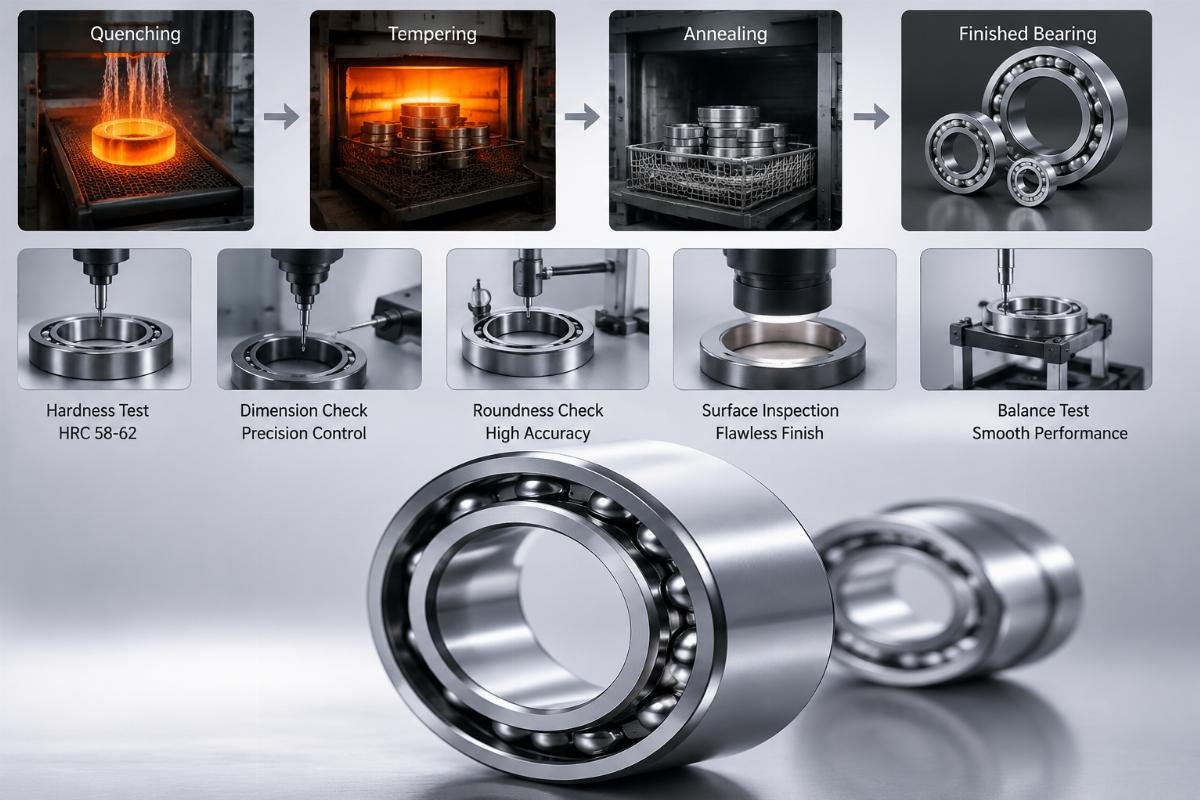
Understanding what a reliable China bearing factory actually does inside its heat treatment lines—and how quality control systems verify every step—is essential for procurement engineers evaluating suppliers for industrial durability.
How Does Heat Treatment Affect Industrial Bearing Performance?
Controlled heat treatment transforms bearing steel from raw material to a high-performance component by altering its microstructure to achieve the ideal balance of hardness and toughness. Without precise temperature control during quenching and tempering, even premium bearing steel will fail under heavy loads or impact stress. The China bearing factory that masters this balance delivers components that resist both wear and brittle fracture.
| Heat Treatment Parameter | Basic Industry Practice | Optimized Process |
|---|---|---|
| Hardness Range | HRC 55-65 (inconsistent across batches) | HRC 58-62 (optimized balance) |
| Quenching Medium | Oil or polymer solutions (variable cooling rates) | Vacuum quenching (uniform cooling) |
| Temperature Uniformity | ±10°C (leading to hardness variations) | ±3°C (tight control) |
| Martensite Formation | 85-90% conversion (incomplete microstructure) | 99.5% conversion (near-complete) |
[NEED_CITE: ISO 683-17:2018 heat treatment requirements for bearing steel]
Our factory addresses these challenges through vacuum quenching technology that maintains temperature uniformity within ±3°C, ensuring 99.5% martensite formation and consistent HRC 58-62 hardness across production batches. This precision directly translates to longer service life: in a comparative study with a European mining client, bearings from our optimized heat treatment process showed substantially higher fatigue resistance than industry-standard alternatives in crusher applications.
One of our clients, a steel mill experiencing repeated failures of 22320 spherical roller bearings in continuous casting machines, saw unplanned downtime reduced significantly after switching to bearings with our controlled heat treatment. The key difference? Our process balances hardness (HRC 60) with impact toughness, preventing the brittle fracture common in over-hardened bearings.
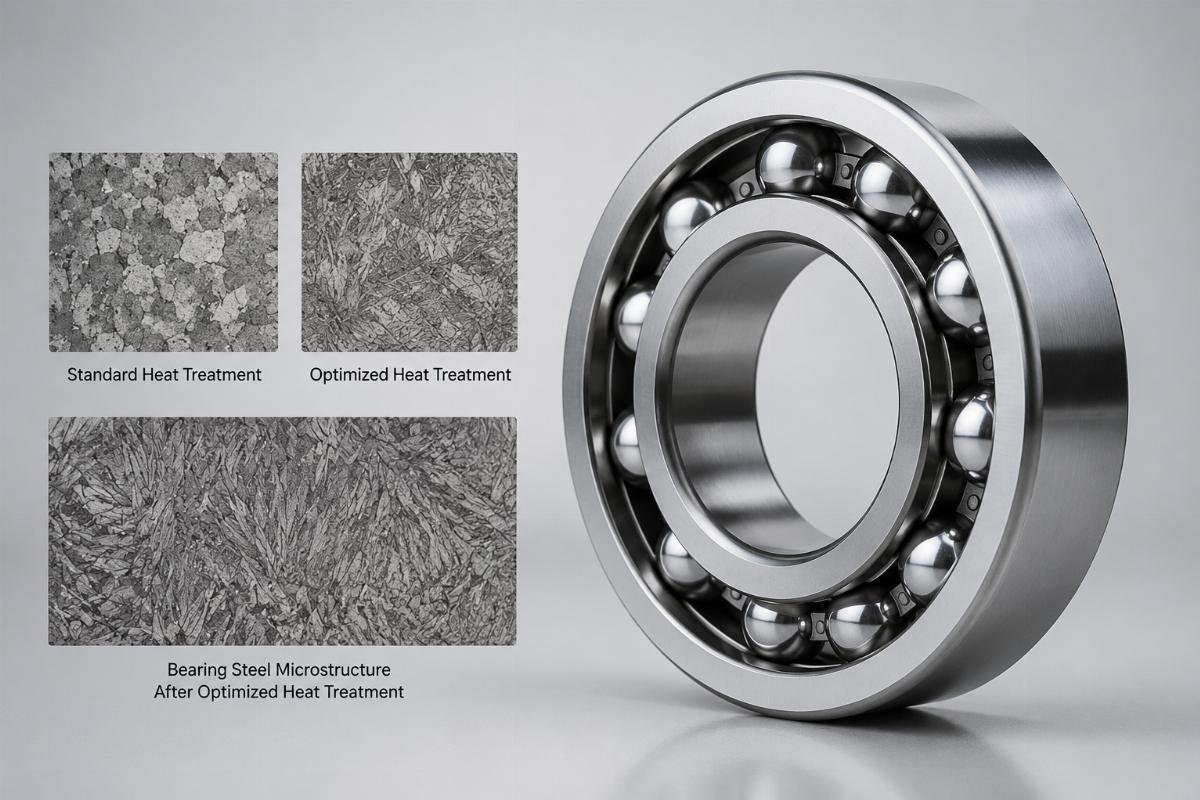
The method behind this consistency follows a disciplined sequence:
- Quenching Temperature Control – Maintain 850-880°C for high-carbon chromium steel to ensure complete austenitization before rapid cooling.
- Tempering Cycle Optimization – Use two-stage tempering (150°C and 200°C) to reduce internal stress while preserving hardness.
- Cooling Rate Monitoring – Track quenching speed to achieve high martensite formation without excessive retained austenite.
- Batch Traceability – Record heat treatment parameters for each production lot to enable failure analysis if needed.
The China bearing factory that documents every furnace cycle gives its clients the data needed to trace any field failure back to its thermal history—a critical advantage when root cause analysis determines liability.
What Makes a Reliable Bearing Quality Control System?
ISO certification alone isn’t enough—while ISO 9001 and IATF 16949 provide a framework, genuine quality control requires three-stage inspection, material traceability, and anti-counterfeiting measures that go beyond basic compliance. A trustworthy China bearing factory treats certification as the starting point, not the finish line.
| Quality Control Aspect | Common Industry Practice | Rigorous Approach |
|---|---|---|
| Incoming Material Check | Visual inspection only | Full chemical composition analysis and hardness testing |
| Dimensional Inspection | Random sampling (10% of batch) | 100% automated measurement with ±2μm accuracy |
| Anti-Counterfeiting Measures | Basic laser marking | QR code linked to manufacturing records and material certificates |
| Failure Analysis Support | No post-failure documentation | Comprehensive reports with metallurgical testing results |
[NEED_CITE: Grand View Research reports on counterfeit industrial bearing prevalence]
Our 100% inspection rate achieves near-total compliance with dimensional specifications, compared to the industry average that relies on sampling. This rigor proved critical for a copper mine client that previously faced a mid-six-figure annual loss in downtime due to counterfeit bearings with fake ISO certificates. By implementing our quality control system—including material certification verification and dimensional accuracy checks—the mine eliminated counterfeit-related failures entirely.
For wind energy clients requiring main shaft bearings with extended service life, we provide hybrid ceramic bearings with IATF 16949 certification and fatigue life test reports. Each bearing includes a unique traceability code that allows clients to access raw material certificates, heat treatment records, and inspection data—a level of transparency that has helped our wind energy clients reduce maintenance costs noticeably.
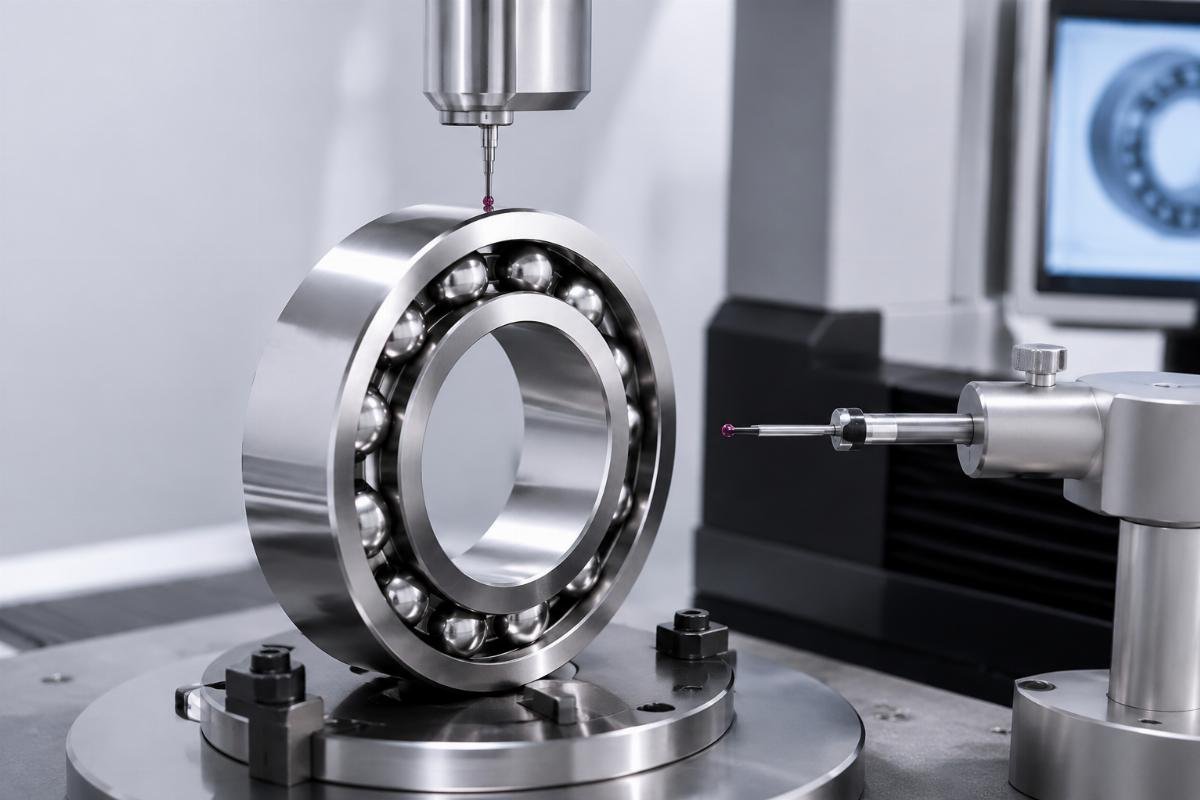
The verification workflow at a competent China bearing factory includes:
- Material Certification Verification – Cross-check incoming steel certificates against mill test reports for chemical composition and mechanical properties.
- In-Process Inspection – Use coordinate measuring machines (CMM) to verify raceway roundness and roller diameter tolerance during production.
- Surface Finish Analysis – Check Ra values to ensure <0.8μm roughness for reduced friction and wear.
- Anti-Counterfeiting Verification – Validate QR codes and holographic labels against the manufacturing database before shipment.
How to Evaluate a China Bearing Factory’s Quality Capabilities?
Thorough supplier evaluation requires examining both process documentation and practical capabilities—not just certificates. Buyers must verify that a factory’s heat treatment equipment, inspection protocols, and traceability systems align with their application requirements. When assessing any China bearing factory, the audit must go beyond the brochure.
| Evaluation Criteria | Basic Supplier | Qualified Supplier |
|---|---|---|
| Heat Treatment Equipment | Conventional air furnaces | Vacuum quenching systems with computerized control |
| Inspection Technology | Manual calipers and gauges | Automated CMM and hardness testing machines |
| Traceability System | Batch-level tracking | Unique part-level identification with digital records |
| Technical Support | General product specs | Application-specific engineering advice and failure analysis |
[NEED_CITE: Chinese Bearing Industry Association guidelines for supplier qualification]
When a European mining company needed to qualify a new bearing supplier for their crushers, they audited our factory using a checklist that included heat treatment process validation, inspection equipment calibration records, and material traceability procedures. Our ability to provide real-time access to manufacturing data—including temperature curves from quenching and dimensional reports for each bearing—met their strict quality requirements, leading to a substantial annual contract with emergency dispatch capability for critical replacements.
This is where authorized distribution channels prove their value. When procurement engineers verify batch numbers against manufacturer records—such as checking SKF batch numbers and certificates through authorized distributor documentation—they eliminate the counterfeit risk that plagues grey-market purchases. A China bearing factory that welcomes this level of scrutiny demonstrates confidence in its processes.
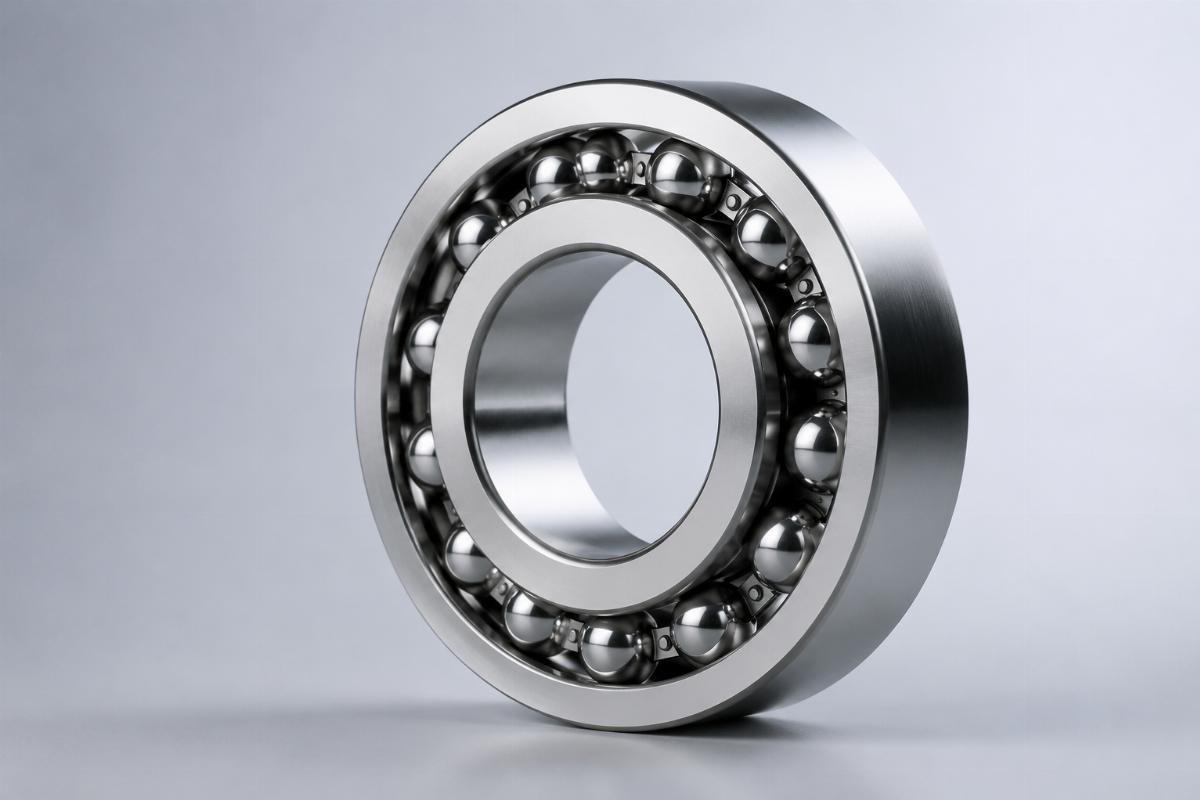
Key questions to ask potential suppliers include:
- Heat Treatment Documentation – Request temperature profiles, holding times, and cooling rate records for recent production batches.
- Inspection Equipment Calibration – Verify that CMMs and hardness testers have current calibration certificates from accredited labs.
- Traceability System Demonstration – Ask to see how manufacturing records are linked to individual bearings via unique identifiers.
- Failure Analysis Process – Inquire about the factory’s procedure for investigating and reporting bearing failures.
A factory that cannot produce detailed documentation or allow on-site inspection of quality control facilities is unlikely to deliver consistent, reliable bearings. The China bearing factory that operates transparently earns the trust of discerning buyers.
Why Full Traceability Matters for Industrial Bearing Procurement?
Non-traceable bearings pose hidden risks—from safety hazards in critical applications to legal liability for equipment failures. Full traceability from raw material to finished product is the only way to ensure authenticity and enable root cause analysis. For any China bearing factory serving global industrial clients, traceability is not optional—it is the backbone of credibility.
| Traceability Requirement | Compliance Standard |
|---|---|
| Raw Material Source | Mill test certificate (MTC) with heat lot number |
| Manufacturing Process | Heat treatment parameters, machining steps, inspection results |
| Quality Control Records | Dimensional reports, hardness test data, surface finish analysis |
| Shipping and Delivery | Batch code, dispatch date, and destination tracking |
[NEED_CITE: industry standards on bearing traceability requirements for critical applications]
Our genuine product supply with full traceability recently helped a food processing plant identify the root cause of unexpected bearing failures. By scanning the QR code on each failed unit, the plant’s maintenance team accessed the complete manufacturing history—confirming that the bearings in question were not from our production line. This traceability capability prevented wrongful warranty claims and directed the investigation toward the actual supplier of the counterfeit units.
For bulk purchasers and OEMs who fear counterfeit risks, the ability to verify every bearing against factory records is a risk mitigation tool, not a luxury. The China bearing factory that invests in digital traceability systems protects both its reputation and its clients’ operational continuity.
Conclusion
Durability stems from the balance of hardness and toughness via controlled heat treatment, not from chasing the highest hardness number. A professional China bearing factory combines vacuum quenching precision, 100% inspection, and full material traceability to prevent the failures that plague heavy-duty industrial applications. Procurement engineers who audit these capabilities—rather than accepting certificates at face value—secure the long-term reliability their equipment demands.
Leave a Reply