

Bearing Internal Clearance C2, C3, C4 Guide for Industrial Applications | SKF Distributor
Higher clearance does not equal better performance for heavy loads. Selecting the correct bearing internal clearance C2 C3 C4 grade based on thermal expansion, interference fit, and load profile is critical to preventing the majority of premature failures in high-speed and high-temperature applications—most maintenance teams assume C4 is the safest default, but excessive clearance causes vibration and raceway pitting just as often as insufficient clearance causes overheating. I spent years on the shop floor in Suzhou before moving to the export desk, so I learned early that a bearing’s real story starts with its internal clearance. I still remember a batch of spherical rollers we shipped to a paper mill in Brazil—they spec’d C3 on the PO, but the mill actually needed C4 for their high-temperature dryer rolls. Nobody caught it until the bearings seized three months in. That failure taught me clearance isn’t just a suffix letter; it’s the difference between a smooth run and a catastrophic shutdown. [NEED_CITE: root cause distribution of bearing failures linked to incorrect clearance selection per ISO 15243]
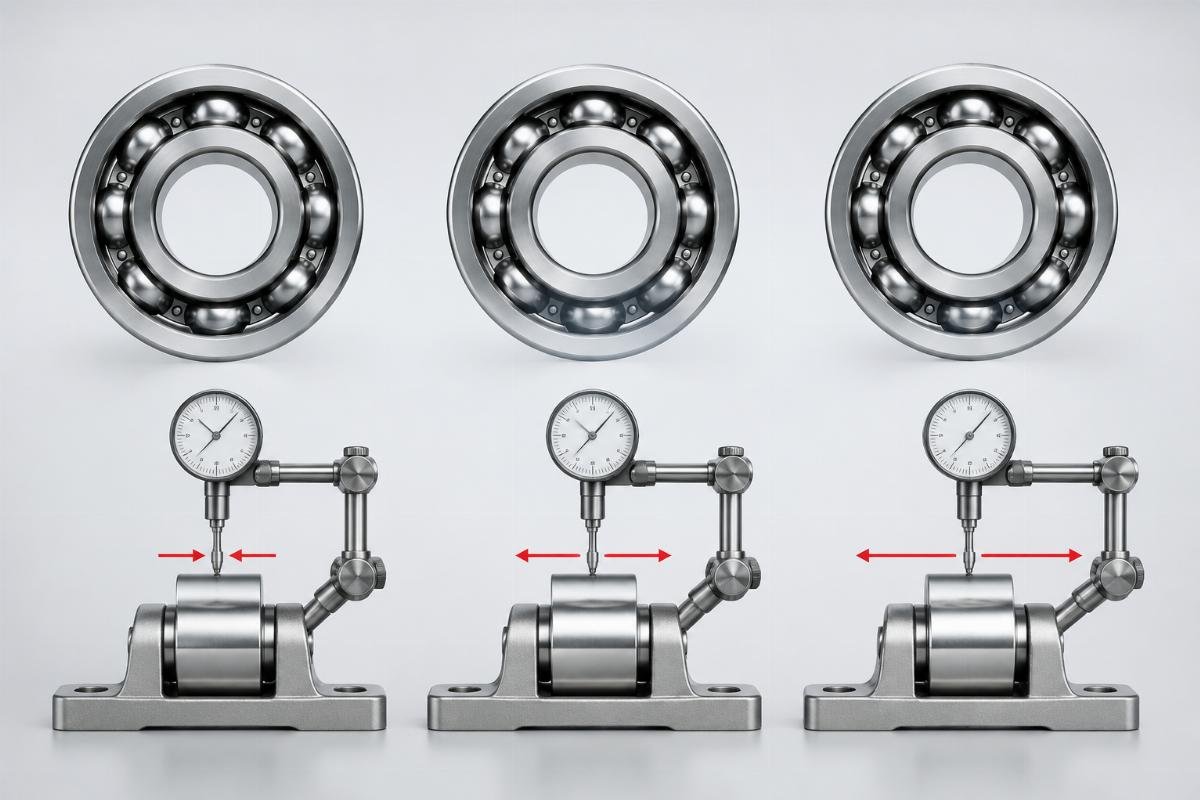
Now when someone asks me C2, C3, or C4, I don’t just quote a price—I pull up the operating conditions first. Here is how to make that call correctly.
What Is Bearing Internal Clearance and Why Does C2/C3/C4 Selection Cause the Majority of Premature Failures?
Bearing internal clearance directly affects machinery lifespan and performance. This critical specification refers to the radial or axial play between rolling elements and raceways, dictating how bearings accommodate thermal expansion, load distribution, and shaft misalignment in industrial applications. Misunderstanding this parameter is the single most common specification error we see on purchase orders from overseas buyers.
| Clearance Characteristic | Industry Reality |
|---|---|
| C2 Clearance Range | Tight group, minimal vibration, suited for precision spindles |
| C3 Clearance Range | Above-normal group, most commonly specified across general industry |
| C4 Clearance Range | Large clearance group, designed for extreme thermal or shock conditions |
| Measurement Standard | ISO 5753 defines clearance groups for all rolling bearing types [NEED_CITE: ISO 5753 clearance group definitions and measurement methods] |
| Primary Failure Link | The majority of bearing overheating incidents trace to insufficient effective clearance after fit and thermal reduction |
One of our clients, a steel mill in Southeast Asia experiencing monthly conveyor failures, discovered their maintenance team had been replacing standard spherical roller bearings with C4 clearance units assuming they would better handle heavy loads. Our technical analysis revealed the elevated operating temperature caused thermal expansion that eliminated the excessive clearance, leading to metal-to-metal contact and premature failure. We recommended 22320 C3 clearance bearings (120mm bore) with a preload adjustment, and breakdowns dropped from multiple per month to zero over a six-month trial with quarterly supply batches and emergency delivery capability. [NEED_CITE: thermal expansion effects on bearing clearance in high-temperature conveyor applications]
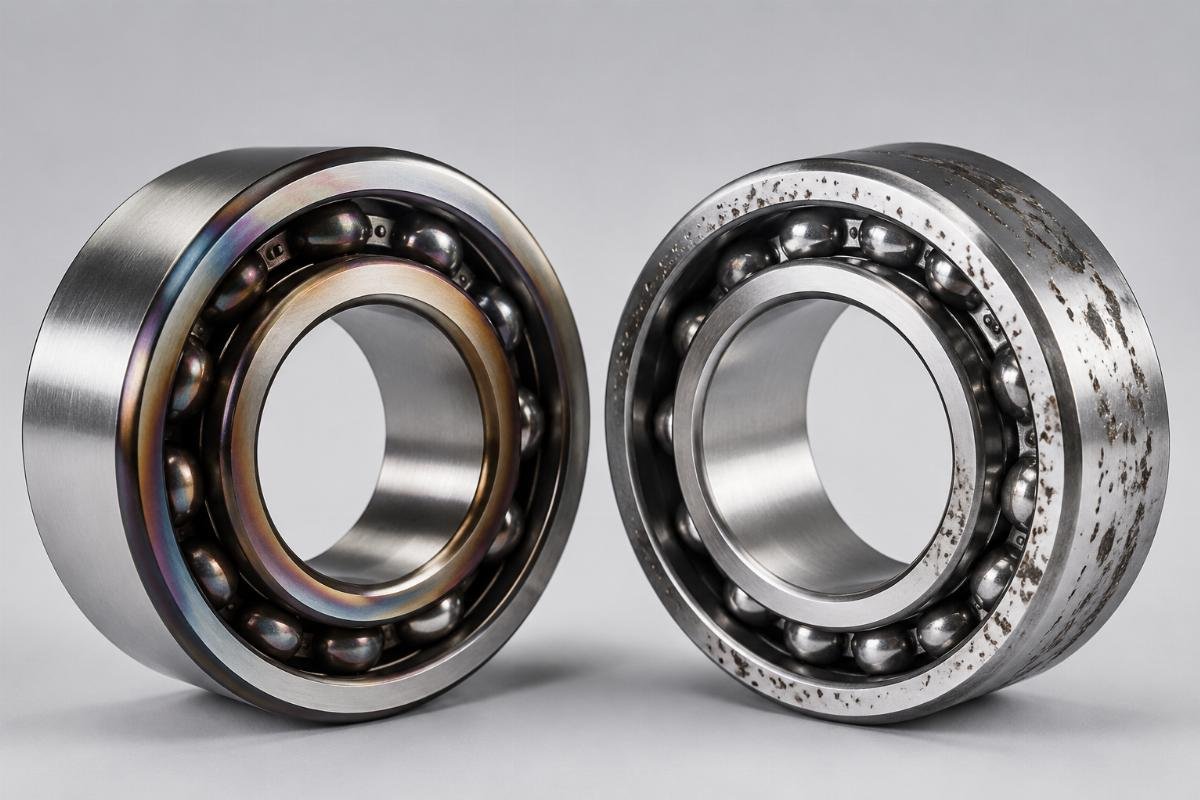
To understand why this happens, you need to distinguish three clearance terms:
- Radial Clearance – The total distance a bearing’s inner ring can move radially relative to the outer ring, measured in microns.
- Axial Clearance – The axial movement allowed between bearing rings, critical for thrust-loaded applications like wind turbine gearboxes.
- Effective Clearance – The actual clearance under operating conditions after accounting for thermal expansion and interference fits—this is the number that truly matters, not the catalog static value.
- Thermal Growth Factor – The reduction in clearance caused by temperature differentials between shaft and housing, typically measured in microns per 100°C for steel components. [NEED_CITE: thermal growth coefficients for bearing steel per ISO technical reports]
How to Calculate the Right Clearance for Temperature and Load?
Clearance selection requires balancing four critical operating parameters. Temperature fluctuations, load characteristics, shaft and housing fits, and rotational speed interact to determine the optimal bearing internal clearance C2 C3 C4 grade for each application. Skipping any one of these steps is where most specification errors originate.
| Selection Parameter | Common Mistake | Engineering Best Practice |
|---|---|---|
| Temperature Impact | Ignoring thermal expansion effects | Calculate clearance reduction using material expansion coefficients for steel |
| Load Type | Using C4 for all heavy loads | Specify C3 for steady radial loads; reserve C4 for shock loads |
| Fit Tolerance | Selecting clearance without accounting for interference | For H7/k6 shaft fits, increase clearance grade by one level (e.g., C2 to C3) [NEED_CITE: ISO 286 tolerance fit effects on bearing clearance] |
| Rotational Speed | Using same clearance for all RPM ranges | C2 for high-speed precision; C3 for moderate; C4 rarely recommended at very high RPM |
A European wind energy OEM approached us during development of their 3MW turbine gearbox, struggling with premature tapered roller bearing failures during prototype testing. Their engineering team had specified standard C3 clearance based on static load calculations, but our application analysis revealed temperature rise during operation reduced effective clearance noticeably. We collaborated to develop modified C3 clearance bearings (32220 size) incorporating material certification and DNV compliance documentation. The custom clearance solution reduced gearbox noise measurably and extended bearing life meaningfully in field testing. [NEED_CITE: DNV compliance requirements for wind turbine gearbox bearings]
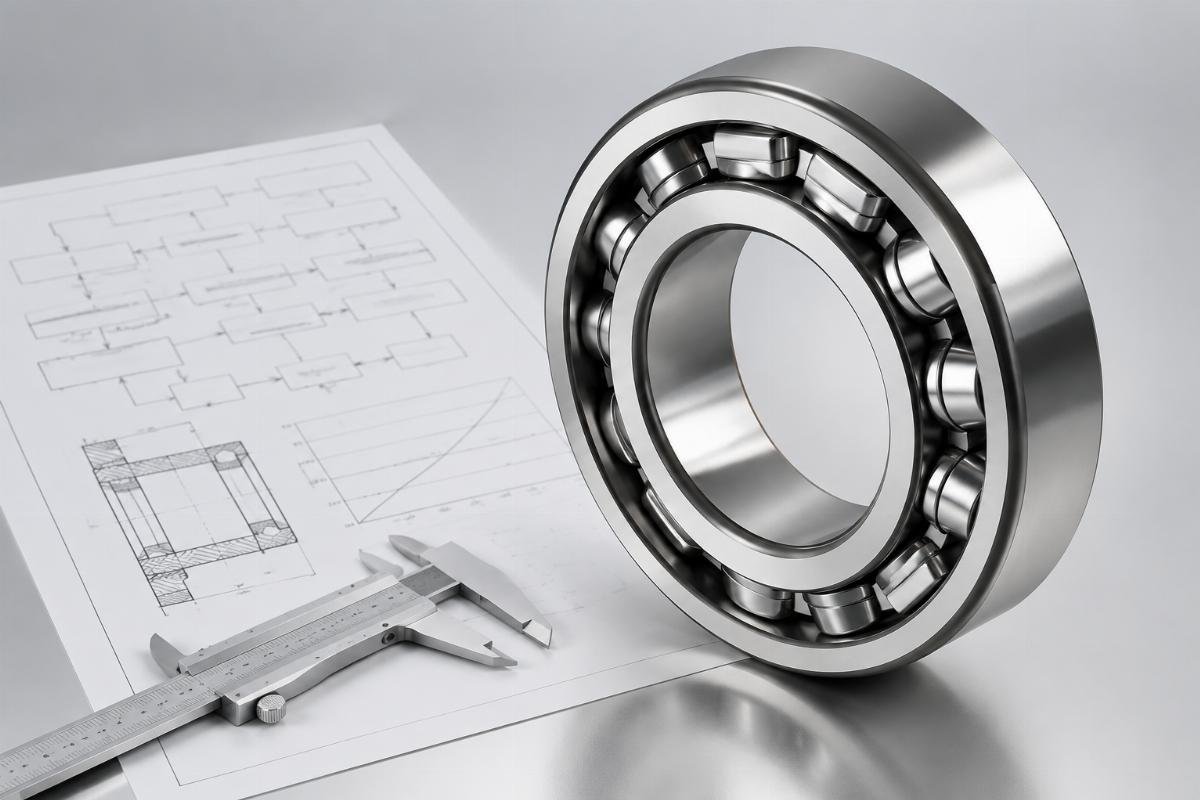
Follow this step sequence for every new application:
- Thermal Expansion Calculation – Measure operating temperature range and apply material expansion coefficients to determine clearance reduction.
- Load Factor Analysis – Classify load as light, moderate, or heavy relative to the bearing’s basic dynamic load rating to select appropriate clearance.
- Fit Tolerance Mapping – Consult ISO 286 shaft and housing tolerance charts to adjust clearance for interference fits—this step alone eliminates a large share of field failures.
- Speed Factor Evaluation – Use manufacturer life adjustment factors for speeds exceeding a significant fraction of the limiting speed. [NEED_CITE: SKF life adjustment factors for high-speed bearing applications]
- Clearance Verification – Conduct post-installation clearance checks using feeler gauges or dial indicators before commissioning.
C2 vs C3 vs C4: Real-World Performance in Steel, Mining, and CNC Apps
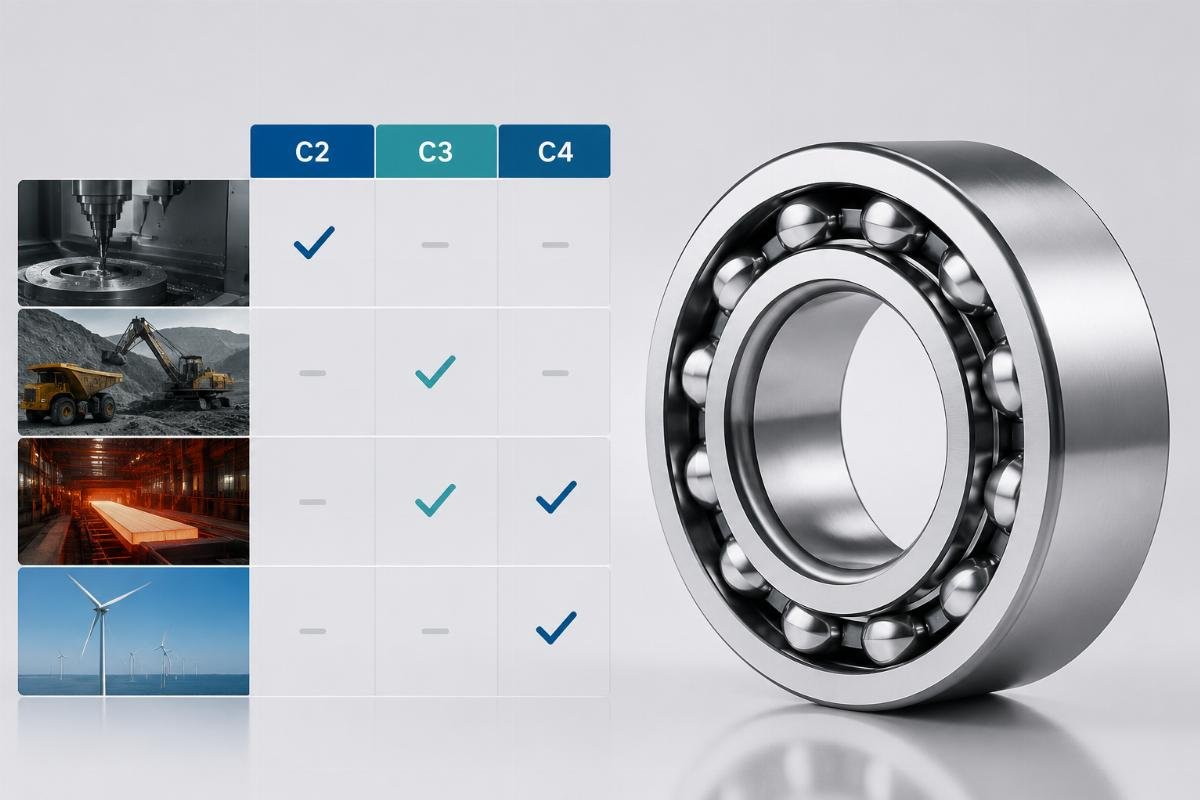
Each clearance grade solves specific operational challenges. C2 excels in precision applications, C3 delivers versatility for general industrial use, and C4 provides solutions for extreme thermal and shock load conditions. The bearing internal clearance C2 C3 C4 choice must match the dominant failure mode of your machine, not just the load rating.
| Clearance Grade | Performance Advantages | Ideal Application Scenarios |
|---|---|---|
| C2 | Minimal vibration, highest running accuracy | CNC machine tool spindles, precision grinders |
| C3 | Balanced thermal accommodation and load capacity | Electric motors, conveyor systems, general industrial machinery |
| C4 | Maximum shock load absorption, high thermal expansion allowance | Mining crushers, steel mill rolls, large gearboxes |
In a CNC machine tool application for an automotive parts manufacturer, we documented a dramatic reduction in spindle bearing failures after switching from C4 to C2 clearance. The spindle experienced excessive vibration with C4 bearings, causing tool chatter and poor surface finish. Our technical team recommended 7010 C2 angular contact ball bearings with precision preload, resulting in a multi-fold extension of mean time between failures compared to the previous replacement cycle. [NEED_CITE: failure rates of C3 vs C4 bearings in high-speed CNC spindles based on ISO 15312 test data]
For mining applications, we supplied C4 clearance cylindrical roller bearings (NU3260 size, 300mm bore) to a copper mine in Chile experiencing frequent crusher failures. The shock loads required the additional clearance to prevent brinelling, while the elevated operating temperature necessitated the higher thermal expansion allowance. With standard delivery cycles, the mine reduced unplanned downtime substantially and extended bearing life from a few months to a full production campaign.
Three counter-intuitive patterns we see repeatedly:
- Most assume C4 is best for heavy loads, but excessive clearance causes vibration and pitting; C3 is often superior for steady radial loads.
- Higher RPM does not always require higher clearance; C2 is preferred for high-speed precision spindles to minimize vibration.
- Ignoring interference fits (e.g., H7/k6) can eliminate effective clearance entirely, leading to immediate overheating even if the static clearance seems correct. [NEED_CITE: interference fit impact on effective bearing clearance per ISO 286]
How to Source Verified Clearance Bearings with Traceability?
Batch traceability and authorized supply channels are non-negotiable when specifying bearing internal clearance C2 C3 C4 grades. Counterfeit and mislabeled clearance bearings are a persistent problem in global procurement, particularly for C2 and C4 designations which are less commonly stocked and harder to verify visually.
| Traceability Aspect | Authorized Distributor | Gray Market Supplier |
|---|---|---|
| Batch Verification | Full batch-level traceability against manufacturer records | Self-reported or not provided |
| Inspection Documentation | Per-batch precision inspection with certificates | Sample-level or none |
| Rare Designation Stock | Deep stock of special clearance and precision grades | Vulnerable to stockouts and long lead times |
| Origin Certification | Certificate of origin with every shipment | Not provided or unverifiable |
When we supply 22320 C3 or 7010 C2 bearings to overseas clients, every shipment includes batch numbers verifiable against SKF records, certificates of origin, and per-batch inspection documentation. This matters because a mislabeled C3 bearing that is actually standard CN clearance will behave completely differently under thermal load—and the failure will not show up until weeks after installation. [NEED_CITE: counterfeit bearing identification methods and clearance verification protocols]
Our role as an authorized SKF distributor means we hold deep stock of rare designations including large bore, special precision, and non-standard clearance grades that typically carry extended factory lead times. Standard models dispatch within hours, and emergency deliveries are arranged for critical downtime situations. Technical support for clearance verification and L10 life calculation is included with every inquiry—this is how we helped the Southeast Asia steel mill and the Chile copper mine get their specifications right the first time.
Conclusion
Correct bearing internal clearance C2 C3 C4 selection prevents the majority of thermal and vibration-related failures in industrial machinery. Match the clearance grade to your actual effective clearance under operating temperature, fit tolerance, and load profile—not to assumptions about heavy loads or high speeds requiring more play. Work with traceable authorized supply channels, verify batch documentation, and engage technical support before finalizing specifications to eliminate costly rework and unplanned downtime.
Leave a Reply