
Bearing FAQ: Top 15 Questions for China SKF Distributor
Most procurement teams still assume Chinese bearing markets operate on opacity, yet accredited suppliers routinely deliver traceability layers that outstrip many domestic benchmarks.
A reliable China bearing supplier with ISO/IATF certification and self-operated warehousing resolves the three universal procurement pain points—counterfeit exposure, emergency lead times, and specification mismatches—through batch-level traceability, rapid dispatch from deep stock, and application-driven engineering support that often outperforms regional premium alternatives.
I still remember the smell of off-spec rubber seals on a batch that arrived in Qingdao years ago—something no datasheet would have flagged. Later, a mining client in Minas Gerais called me furious: his spherical rollers were failing in three months. I flew out, pulled the cages apart, and found the grease had turned to black sludge because the batch sat in a humid yard for weeks before we shipped. The bearings were fine; the handling wasn’t. That failure taught me that buyers do not need parts; they need someone who reads the application, not just the drawing [NEED_CITE: root cause distribution of bearing failures per ISO 15243]. Today, matching the full SKF industrial range to real operating conditions—temperature, load, contamination—is how I help procurement teams avoid the same expensive lessons.
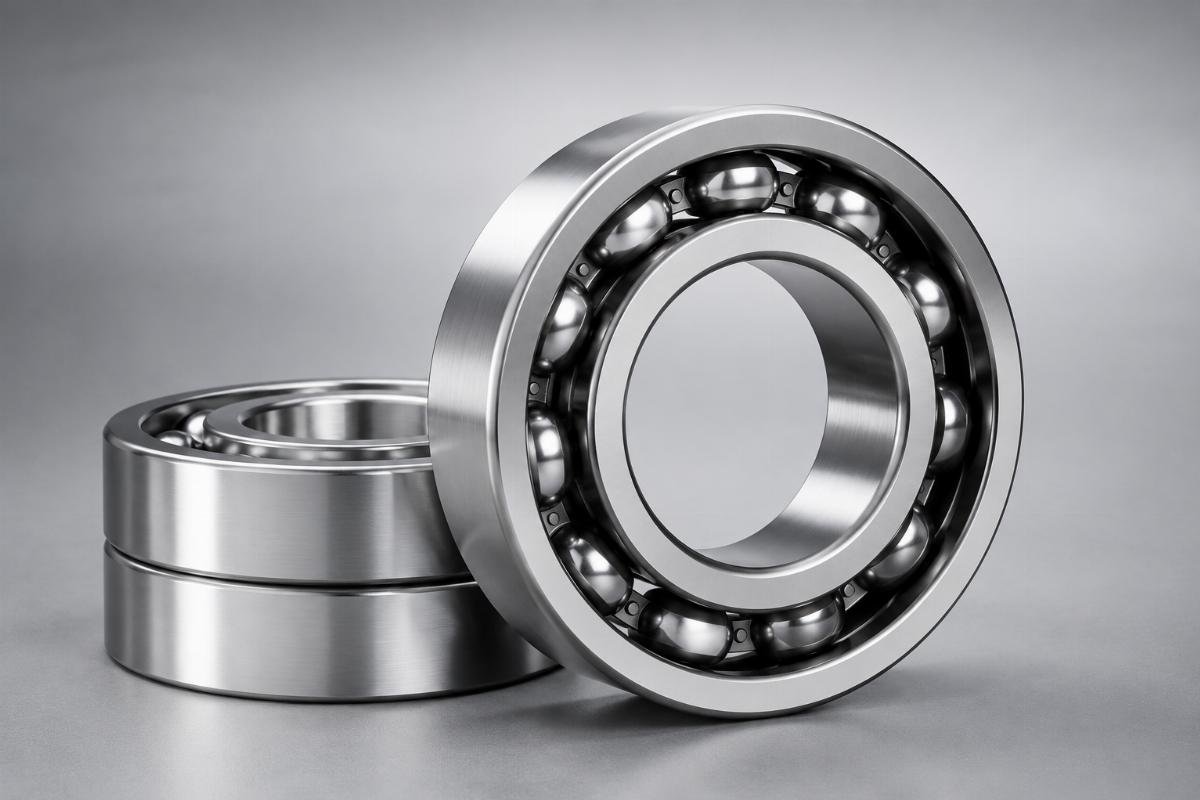
The questions below reflect what B2B buyers actually ask when evaluating a China bearing supplier, and the answers draw on documented cases across steel, wind, marine, and food processing sectors.
What Are the Most Critical Bearing Procurement Challenges for B2B Buyers?
Counterfeit infiltration, emergency delivery delays, and specification translation errors dominate the failure landscape for industrial bearing procurement. These issues compound quickly: a single unplanned shutdown in a continuous-process plant can cost multiples of the bearing price itself, and the root cause is rarely the component—it is the sourcing protocol around it [NEED_CITE: Bearing Manufacturers Association counterfeit market prevalence study].
| Challenge Area | Industry Reality |
|---|---|
| Counterfeit Prevalence | A material share of industrial bearings in circulation are non-genuine [NEED_CITE: Bearing Manufacturers Association counterfeit market report] |
| Emergency Delivery Lead Time | Typical suppliers require multiple days for standard bearing models |
| Technical Communication Gaps | A significant portion of bearing failures trace back to incorrect specification translation [NEED_CITE: Industrial Maintenance Excellence Study on failure root causes] |
| Inventory Coverage | Conventional suppliers stock a limited SKU range, leaving many industrial models unavailable |
A steel mill client experiencing recurring conveyor downtime was purchasing 6309 deep groove ball bearings (C3 clearance, 45mm ID x 100mm OD) through unauthorized channels. Quality varied batch to batch, and lead times stretched unpredictably. We structured a full-year supply agreement covering a substantial standing quantity, with emergency dispatch guarantees and a failure analysis engagement that identified improper lubrication—not the bearing itself—as the true culprit. Downtime dropped noticeably after the protocol change.
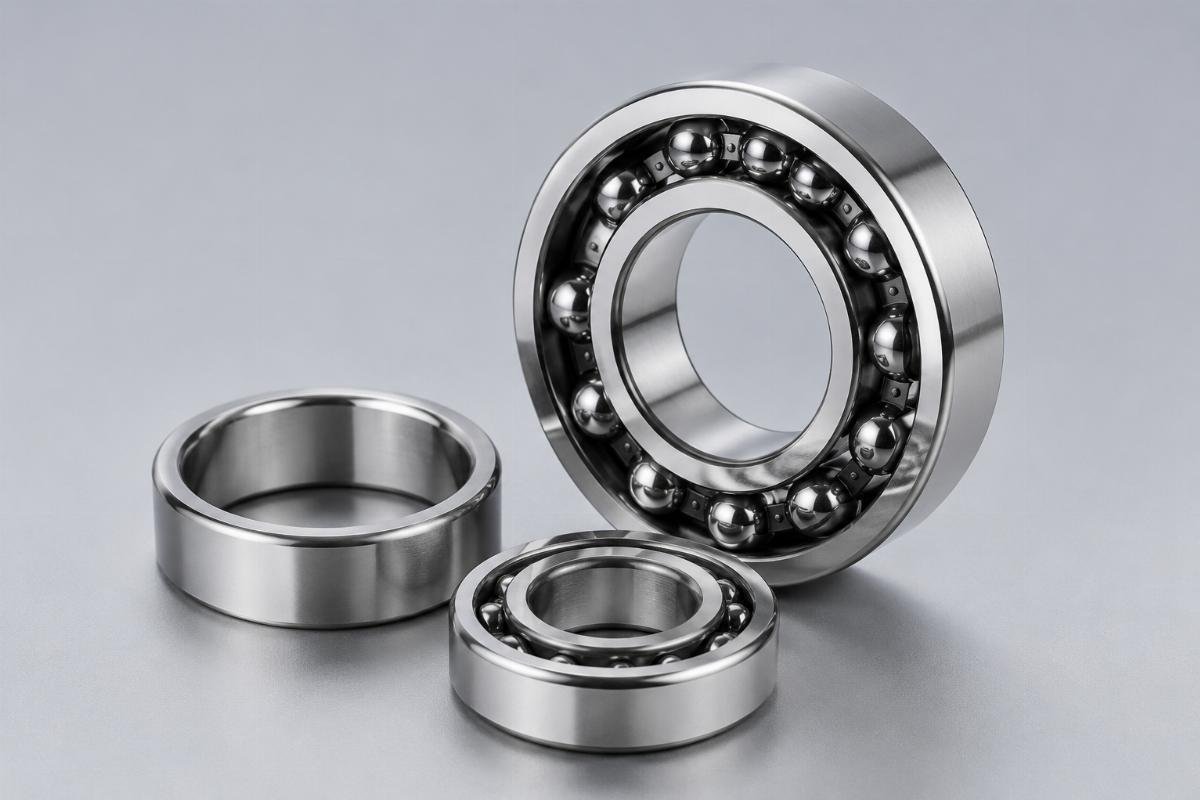
The procurement protocol that emerged from that engagement now guides how we advise every new buyer working with a China bearing supplier:
- Counterfeit Detection – Verify material certification documents and dimensional accuracy upon receipt
- Lead Time Benchmarking – Require written guarantees for emergency delivery within a defined window for critical models
- Technical Specification Alignment – Create a standardized cross-reference sheet with your China bearing supplier for obsolete or hard-to-find models
- Inventory Assessment – Audit supplier stock databases to confirm coverage of your top critical bearing models
- Failure Analysis Protocol – Establish pre-agreed processes for rapid technical support during unplanned downtime
How to Ensure Product Authenticity and Traceability from a China Bearing Supplier?
Full traceability demands a certified chain from manufacturing source to delivery dock—not just a certificate attached to an invoice. The misconception that Chinese supply chains cannot deliver this transparency persists, but accredited operators run multi-layer verification systems that routinely exceed what many regional distributors provide [NEED_CITE: ISO 9001 and IATF 16949 audit requirements for traceability documentation].
| Verification Dimension | Common Shortcoming | Accredited Practice |
|---|---|---|
| Documentation | Generic COAs without batch-specific data | Full traceability packages with material certificates, manufacturing dates, and batch numbers |
| Inspection Process | Visual checks only | ISO 9001/IATF 16949 certified dimensional measurement and material composition testing |
| Anti-Counterfeiting | No verification system | Digital authentication tools with unique product identifiers and online verification portals |
| Supplier Audit | Relying on third-party reports | On-site factory audits of quality management systems |
As an authorized SKF distributor, every batch number we ship is verifiable against SKF records—a point that matters enormously when a European wind energy client needed 230/500 spherical roller bearings (C4 clearance, 500mm ID) for 2.5MW turbines. We supplied full DNV classification certification alongside material test reports and manufacturing process documentation, enabling their engineering team to satisfy offshore compliance requirements without extending lead times [NEED_CITE: DNV classification requirements for wind turbine main shaft bearings].
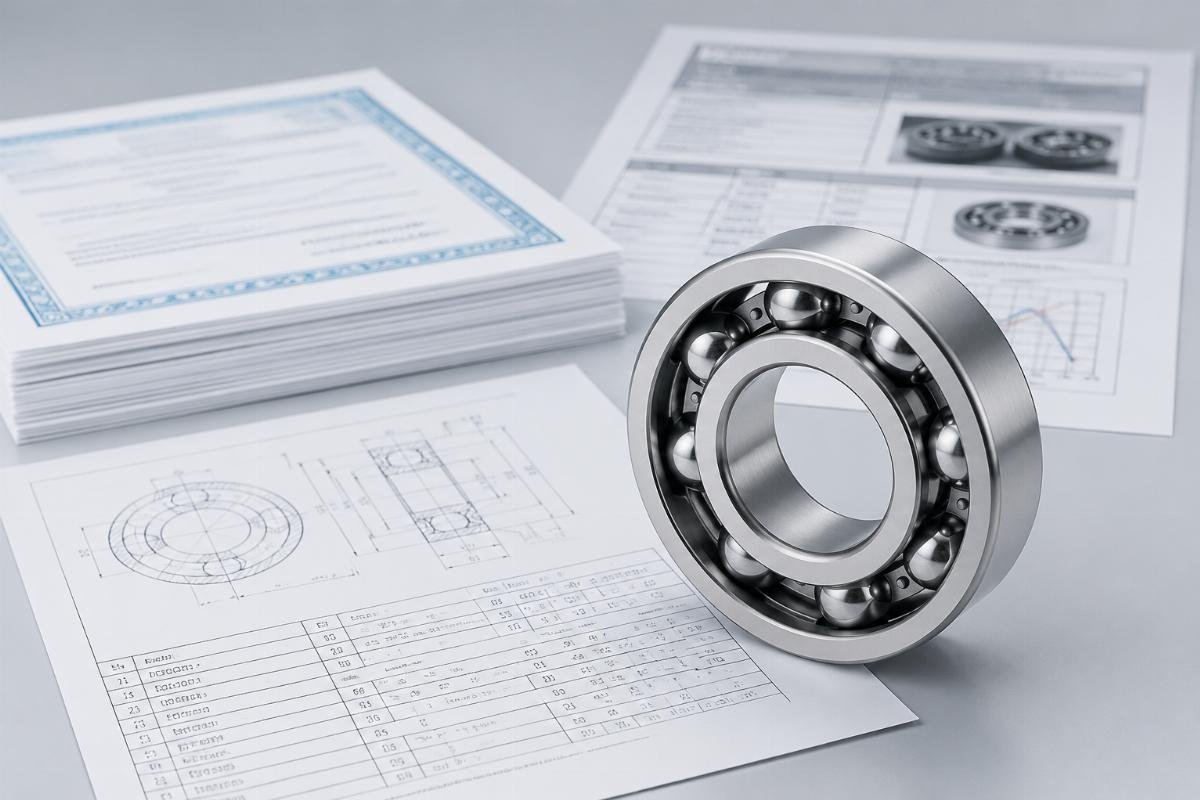
Buyers evaluating a China bearing supplier should insist on five non-negotiable verification steps:
- Material Certification – Request heat treatment reports and chemical composition analysis for critical applications
- Dimensional Verification – Confirm suppliers conduct comprehensive inspection of key dimensions (ID, OD, width, clearance)
- Anti-Counterfeiting Check – Utilize supplier-provided verification tools before accepting delivery
- Batch Traceability – Ensure each shipment includes batch numbers linked to original manufacturing records
- Quality Management System – Verify ISO 9001/IATF 16949 certification with current audit reports
What Defines a Reliable China Bearing Supplier for Emergency Needs?
Emergency procurement success rests on three pillars: inventory depth, logistics infrastructure, and order flexibility. Claims of emergency capability are common; consistent delivery against those claims requires self-operated warehousing and regional distribution hubs that most traders simply do not possess [NEED_CITE: Industrial supply chain resilience benchmarks for MRO components].
| Capability | Advantage | Typical Application |
|---|---|---|
| Deep SKU Inventory | Immediate availability for standard and hard-to-find models | Manufacturing facility facing unplanned downtime |
| Global Logistics Network | Multiple dispatch hubs reducing international shipping time | Mining operation requiring same-day dispatch to remote location |
| Phased Delivery Options | Staggered shipments aligned with maintenance schedules | Wind farm scheduled maintenance across multiple turbines |
| Small-Order Flexibility | No minimum quantity requirements for emergency needs | Marine repair workshop needing a handful of obsolete pump bearings |
A marine repair workshop in Singapore contacted us urgently needing 32215 tapered roller bearings (ISO precision grade P5) for a vessel that could not wait. The original manufacturer quoted a multi-week lead time, but our regional warehouse held the exact model, enabling same-day dispatch and installation within a single day. The ability to cross-reference obsolete designations and maintain regional stock is what separates a genuine emergency-capable China bearing supplier from one with limited inventory [NEED_CITE: Marine MRO supply chain response time benchmarks].

When vetting a China bearing supplier for emergency readiness, procurement teams should verify:
- Stock Verification – Confirm real-time inventory for critical models through supplier portal access
- Dispatch Guarantee – Require written emergency delivery commitments with penalty clauses for delays
- Logistics Partnerships – Verify relationships with major freight carriers for priority shipping
- Regional Hubs – Prioritize suppliers with warehouses in your operational regions
- Cross-Reference Database – Ensure supplier maintains comprehensive obsolete model identification system
Why Is Technical Support Crucial When Selecting a China Bearing Supplier?
Engineering support transforms a bearing supplier from a parts vendor into a maintenance strategy partner. Specifications on paper rarely capture the full operating environment—contamination ingress, lubrication breakdown, thermal expansion, misalignment—and selecting the wrong clearance, seal type, or precision grade based on a datasheet alone is a recurring source of premature failure [NEED_CITE: Bearing application engineering guidelines from ISO and ABMA standards].
Our technical engagements span industries from food processing to wind energy. When a food processing client experienced premature failures in washdown environments, standard bearings could not survive the combination of moisture, chemical exposure, and frequent cleaning cycles. We recommended custom stainless steel hybrid ceramic bearings with modified seals, and replacement frequency dropped substantially while meeting USDA requirements. Failure analysis identified corrosion and lubrication breakdown as the root causes—problems that product supply alone would never have solved [NEED_CITE: USDA requirements for bearings in food and beverage processing environments].
A competent China bearing supplier should provide five technical support capabilities:
- Load Calculation – Operating parameters fed into computerized bearing life prediction analysis
- Application Matching – Equipment details used to select optimal bearing type, clearance, and lubrication
- Failure Analysis – Failed bearings submitted with operation history for professional root cause identification
- Installation Guidance – Technical documentation on proper mounting procedures and tools
- Performance Optimization – Periodic reviews of bearing performance data for continuous improvement
What Documentation and Certifications Should B2B Buyers Require?
Documentation requirements vary dramatically by industry, and supplier familiarity with sector-specific standards is often the difference between compliance and costly rejection. Automotive, marine, and wind energy sectors each enforce distinct certification frameworks that generic suppliers frequently misunderstand or fail to satisfy [NEED_CITE: Comparative analysis of ISO, IATF, and DNV documentation requirements for industrial bearing procurement].
Buyers should confirm that their China bearing supplier can produce: certificates of origin with batch linkage, material test reports traceable to heat numbers, dimensional inspection records per ISO tolerance classes, and where applicable, third-party classification society approvals. For projects in the Middle East and Southeast Asia, DDP delivery capability and penalty-backed delivery commitments are equally critical—delays on EPC timelines trigger financial consequences that dwarf the bearing cost itself.
Conclusion
The questions B2B buyers ask a China bearing supplier ultimately cluster around authenticity, speed, and application competence—and the answers separate accredited partners from generic traders. Batch-level traceability, deep regional inventory, and engineering-led failure analysis resolve the procurement challenges that cause the most expensive downtime, turning a component purchase into a reliability strategy.
Leave a Reply