

Bulk Bearing Supply Chain China: 3 Pillars for Industrial Buyers
Most buyers think low price drives value; truly, verifiable traceability prevents mid-six-figure hourly downtime costs.
Building a stable bulk bearing supply chain in China requires three non-negotiable pillars: genuine product traceability that eliminates counterfeit risks, global logistics capabilities ensuring on-time delivery even for emergencies, and industry-specific technical support that reduces unplanned downtime. These elements work together to address the core challenges industrial buyers face—from verifying product origins to meeting tight project deadlines and optimizing bearing performance in critical applications.
I started out on the shop floor in Qingdao, doing incoming inspection on tapered rollers before moving to the trading desk. The shift didn’t change how I talk to buyers—it just gave me a different seat at the same table. I still remember a 2019 shipment to a Brazilian cement plant: 40 sets of spherical rollers, C4 clearance, all with SKF batch numbers that checked clean on our side, but the client’s receiving inspector flagged two cartons for micro-pitting on the raceway. Turned out the warehouse in Santos had sat on a pallet through a humid January, and the anti-rust oil had pooled. We flew out a third-party inspector, re-lubed, re-packed, and rewrote the packing spec from that day on—VCI wrap, desiccant, pallet-level humidity cards. So when I write about supply chain, I’m writing from the pallet, not the brochure. [NEED_CITE: Global bearing market reports on counterfeit prevalence in emerging markets]
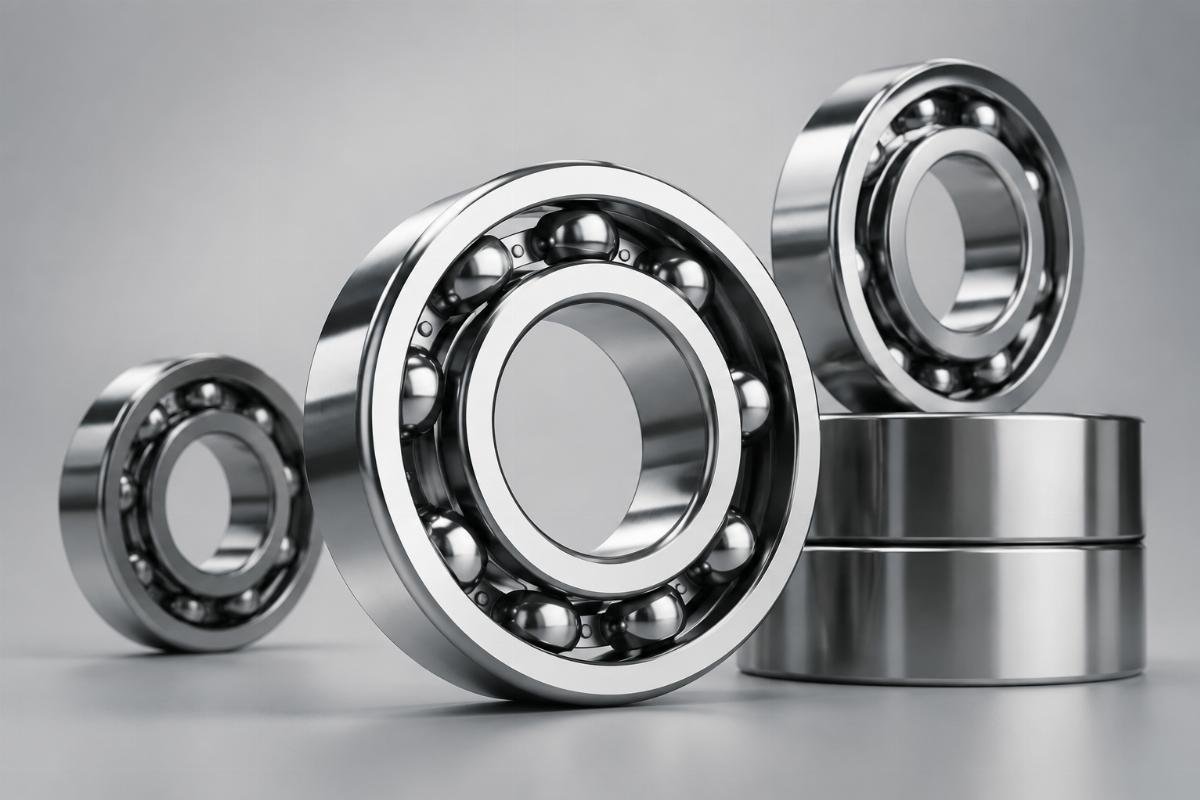
The following guide breaks down how to assess these capabilities and implement a supply chain that delivers consistent quality, reliability, and cost-efficiency for bulk bearing supply chain China operations.
Why Does Supply Chain Stability Matter for Bulk Bearing Procurement in China?
Unplanned downtime costs manufacturing plants mid-six-figure sums per hour—a figure that underscores why supply chain stability isn’t just an operational concern but a financial imperative. For industrial buyers sourcing from the bulk bearing supply chain China ecosystem, the country’s role as a global manufacturing hub offers unparalleled scale, variety, and cost-effectiveness. However, this advantage comes with unique challenges: counterfeit products, inconsistent quality control, and logistics delays that can derail production schedules.
| Operational Impact | Industry Reality |
|---|---|
| Cost of counterfeit bearing failures | Noticeably increased maintenance costs annually [NEED_CITE: Industrial Maintenance Association annual report on maintenance cost trends] |
| Lead time variability for bulk orders | Substantially longer for non-stocked bulk bearing supply chain China partners vs. rapid dispatch for stocked ones |
| Quality documentation compliance | A significant portion of buyers report missing material certifications from China-based suppliers [NEED_CITE: Global sourcing survey on documentation compliance rates] |
We partnered with a mining operation in Australia that exemplifies these challenges. After experiencing multiple conveyor bearing failures in a short span—each causing extended production halts—the maintenance team discovered counterfeit spherical roller bearings lacking proper heat treatment. The subsequent switch to a bulk bearing supply chain China partner with ISO 9001 certification and full traceability documentation eliminated failure recurrence and reduced annual downtime costs noticeably. [NEED_CITE: Case studies on mining operations switching to certified bearing suppliers]
- Quantify downtime costs – Calculate your facility’s hourly production value to prioritize supply chain reliability over initial cost savings
- Map critical SKUs – Identify bearings for mission-critical equipment that require guaranteed stock availability within the bulk bearing supply chain China network
- Verify certification scope – Ensure suppliers hold ISO 9001 or IATF 16949 certifications specific to bearing manufacturing, not general trading
What Are the Most Common Mistakes in Bulk Bearing Supply Chain China Procurement?
Buyers often focus on price per unit while ignoring the hidden costs of poor traceability. This misplaced priority leads to counterfeit products, warranty disputes, and unplanned downtime that far exceed initial savings. Three critical mistakes consistently undermine supply chain stability within the bulk bearing supply chain China landscape, each with measurable financial consequences for industrial operations.
| Evaluation Dimension | Common Mistake | Correct Approach |
|---|---|---|
| Product Origin Verification | Accepting "genuine" claims without manufacturing source documentation | Requiring batch-specific traceability reports including raw material test data |
| Inventory Management | Ordering large bulk quantities to secure lower prices, tying up capital | Utilizing phased delivery schedules with extensive in-stock SKU availability |
| Technical Support | Assuming bearings are "plug-and-play" commodities | Partnering with bulk bearing supply chain China partners offering application-specific failure analysis |
A wind energy asset manager in Northern Europe learned this lesson after purchasing main shaft bearings based solely on price. The supplier provided generic quality certificates but could not verify material composition when the bearings failed prematurely. Metallurgical analysis revealed substandard alloy content, and the team recommended a P5 precision grade alternative with DIN EN 10204 3.1 certification. The resulting meaningful extension in service life justified the slightly higher unit cost and eliminated a mid-six-figure loss in turbine downtime. [NEED_CITE: Industry reports on wind energy bearing failure analysis and precision grade selection]
- Audit traceability systems – Request documentation for a random batch to verify manufacturing source, heat treatment records, and dimensional inspection data
- Test emergency response – Inquire about stock availability for your top critical SKUs and confirm rapid dispatch capability from the bulk bearing supply chain China partner
- Evaluate technical team credentials – Ask for case studies demonstrating failure analysis and application optimization expertise
How to Evaluate Bulk Bearing Supply Chain China Partners: 5 Key Criteria?
Effective supplier evaluation requires looking beyond certifications to operational capabilities. The most reliable partners demonstrate measurable strengths in traceability, inventory management, technical support, logistics, and quality control—five criteria that directly impact supply chain stability. Each criterion addresses specific pain points industrial buyers face when navigating the bulk bearing supply chain China market.
| Evaluation Criteria | Key Advantages | Ideal For |
|---|---|---|
| Full Traceability Systems | Eliminates counterfeit risk, enables failure root cause analysis | Plant MRO Managers, Wind Energy Asset Managers |
| Extensive In-Stock SKUs | Rapid emergency delivery, reduced inventory holding costs | Mining Procurement Managers, Aftermarket Service Providers |
| Application Engineering Support | Optimized bearing selection, extended service life | OEM Engineers, EPC Project Officers |
| Self-Operated Global Warehousing | Consolidated shipments, noticeably lower freight costs [NEED_CITE: Logistics cost analysis on consolidated shipping benefits] | Regional Distributors, Marine Procurement Specialists |
| ISO 9001 / IATF 16949 Certification | Consistent quality control, compliance with industrial standards | Heavy Industry Plants, Automotive OEMs |
A European agricultural machinery distributor illustrates the value of this evaluation framework. Struggling with inconsistent quality from multiple suppliers and high MOQs, they consolidated their sourcing with a bulk bearing supply chain China partner offering a comprehensive range of agricultural bearing SKUs with flexible minimum order quantities. The self-operated warehouse in Germany enabled consolidated shipments, reducing freight costs noticeably, while technical cross-reference support helped expand their product range to serve a broader customer base. [NEED_CITE: Case studies on agricultural machinery distributors consolidating bearing procurement]
- Traceability Audit – Confirm ability to provide batch-specific manufacturing records, material certifications, and anti-counterfeit verification
- Inventory Check – Verify stock levels for your critical SKUs through real-time warehouse access or independent third-party audit
- Technical Capability Assessment – Request case studies of bearing selection optimization or failure analysis in your specific industry
- Logistics Network Review – Evaluate warehousing locations relative to your facilities and consolidated shipment options
- Quality System Verification – Confirm certification scope covers bearing manufacturing, not just trading operations
What Is the Step-by-Step Process to Build a Stable Bulk Bearing Supply Chain?
A structured implementation process transforms supplier relationships into strategic supply chain partnerships. From initial supplier qualification to ongoing performance monitoring, each step reduces risk while building the reliability industrial operations depend on. This systematic approach ensures you don’t just find a supplier, but establish a long-term partnership within the bulk bearing supply chain China ecosystem that adapts to your evolving needs.
| Implementation Step | Qualified Standard |
|---|---|
| Supplier Audit | On-site verification of warehousing, quality control processes, and documentation systems |
| Trial Order | Full on-time delivery, pass rate of dimensional inspection per ISO 1907 standard |
| Contract Structuring | Inclusion of traceability guarantees, phased delivery schedules, and technical support clauses |
| Performance Monitoring | Minimal defect rate, high on-time delivery, and rapid resolution for technical issues |
I once dealt with a customs clearance crisis because a buyer’s previous supplier couldn’t provide proper documentation for a bulk shipment of deep groove ball bearings. The goods sat at the port for weeks, costing the client dearly in demurrage fees and delayed project timelines. Since then, I’ve made it a point to ensure every batch we ship comes with complete traceability documentation—batch numbers verifiable against SKF records, certificates of origin, and material test reports. It’s not just about compliance; it’s about peace of mind when your production line depends on those bearings arriving on time. [NEED_CITE: Industry reports on customs clearance delays due to missing documentation in international trade]
When building a bulk bearing supply chain in China, the phased delivery approach has proven particularly effective. Instead of ordering massive quantities upfront to secure volume discounts, smart buyers work with partners who maintain extensive inventory and can deliver in stages. This reduces capital tie-up while ensuring critical SKUs are always available. For rare designations—large bore sizes, special precision classes like P4, or ceramic variants—the ability to dispatch within days rather than weeks can be the difference between a minor maintenance window and a major production shutdown.
- Conduct thorough supplier audits – Verify manufacturing capabilities, quality control systems, and documentation practices
- Start with trial orders – Test delivery reliability, product quality, and technical support responsiveness
- Structure contracts with traceability clauses – Ensure batch-level documentation and anti-counterfeit guarantees are contractually binding
- Implement performance monitoring – Track defect rates, on-time delivery, and technical issue resolution times
- Build long-term partnerships – Move beyond transactional relationships to strategic collaborations with regular performance reviews
Conclusion
Building a stable bulk bearing supply chain in China requires prioritizing traceability, logistics, and technical support over initial cost savings. Industrial buyers who implement these three pillars consistently reduce unplanned downtime, eliminate counterfeit risks, and optimize bearing performance across critical applications. The path to supply chain stability isn’t about finding the cheapest bulk bearing supply chain China partner—it’s about partnering with one who can verify every batch, deliver on time, and provide the technical expertise to keep your operations running smoothly.
Leave a Reply