
How Bearing Steel Prices Impact Procurement: China Supplier Guide for OEMs
Lower steel indices do not automatically mean better procurement deals. Substandard bearing steel can inflate your total lifecycle costs several times over due to accelerated failure rates and unplanned downtime. The real cost drivers in bearing steel pricing extend far beyond iron ore benchmarks, encompassing alloy element markets, energy costs, and quality certification overhead. Strategic partnerships with China bearing supplier networks offering full batch traceability allow OEMs to absorb market volatility without compromising material integrity.
I remember sitting across from a European wind energy OEM buyer who was convinced our quarterly quote reflected pure supplier margin expansion. The spot market had spiked, and his procurement team was pushing back hard. I pulled up the GCr15 billet cost charts from the preceding six months, walked him through the chromium and nickel alloy surcharges, and we ended up locking a quarterly adjustment clause that kept the account intact. That conversation reinforced something I see constantly: bearing steel prices are not a single number on a commodity ticker. They are the steel market, the exchange rate, the furnace schedule, and the certification audit all rolled into one. [NEED_CITE: World Steel Association quarterly specialty steel pricing methodology]
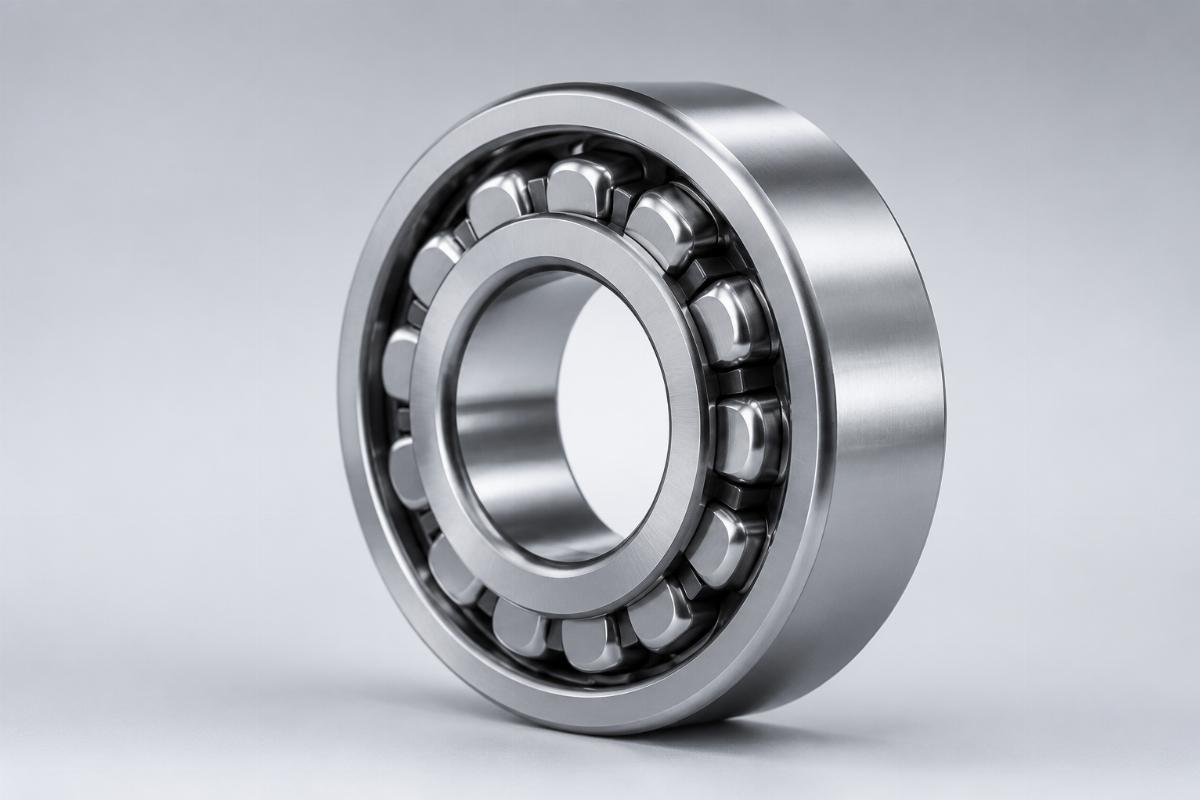
Understanding how bearing steel prices impact procurement requires looking past the headline index and examining the complete cost architecture. Let us break down what actually moves the needle on your bearing spend.
What Really Drives Bearing Steel Costs Beyond the Index?
Alloy content and energy costs outweigh iron ore fluctuations in specialty bearing steel pricing. Most procurement teams monitor benchmark steel indices and assume those numbers directly translate to bearing component costs. The reality is far more layered. Specialty bearing grades like GCr15SiMn require precise alloy compositions and controlled manufacturing processes that decouple their pricing from generic carbon steel benchmarks.
| Cost Component | Relative Weight | Primary Market Driver |
|---|---|---|
| Iron Ore | Moderate | Australian and Brazilian mining output cycles |
| Alloy Elements (Ni, Cr) | Substantial | Global mining supply and geopolitical trade policies |
| Energy Costs | Significant | Natural gas and electricity pricing for electric arc furnaces |
| Supply Chain Logistics | Moderate | Steel mill production scheduling and freight bottlenecks |
| Quality Certification | Noticeable | Testing, documentation, and compliance overhead for premium grades |
The alloy element component deserves particular attention. Chromium and nickel are not optional additives; they are fundamental to achieving the hardness and fatigue resistance required in bearing applications. When nickel prices surge due to supply constraints or export restrictions from major producing regions, bearing steel costs respond immediately, regardless of where iron ore sits. [NEED_CITE: Global alloy market volatility impact on specialty steel pricing per industry association reports]
A European wind energy OEM approached us during a period of acute steel market turbulence. They needed a full order of spherical roller bearings at precision grade P5, featuring stainless steel cages and modified clearance C3, for their main shaft assembly. The spot market had jumped noticeably, and their existing supplier was passing through every basis point. Because we maintain long-term supply agreements with Chinese steel mills, we held pricing stable and delivered the complete order within the standard lead time, actually ahead of the typical industry schedule. The client avoided the cost spike entirely because the procurement structure insulated them from spot market exposure.
Procurement teams evaluating bearing steel prices should assess supplier relationships with primary alloy producers, verify exact chromium and nickel percentages in material certifications, and understand the energy sourcing of partner steel mills. These factors determine how exposed your supply chain is to commodity shocks.
How Does Material Quality Dictate Total Cost of Ownership?
Premium certified steel reduces lifecycle costs by preventing premature failures under heavy industrial loads. The temptation to chase lower unit prices by accepting material substitutions is understandable when procurement budgets are under pressure. However, the total cost of ownership tells a very different story.
| Cost Dimension | Substandard Material Approach | Certified Premium Material Approach |
|---|---|---|
| Initial Purchase Price | Noticeably lower | Higher upfront investment |
| Field Failure Rate | Substantially elevated in heavy-duty applications | Minimal within equivalent service period |
| Maintenance Burden | Frequent replacements and unplanned downtime | Extended service intervals |
| Documentation | Limited traceability, compliance exposure | Full material certification per EN 10083-3 |
| Lifecycle Cost | Several times higher over multi-year operation | Meaningfully lower due to reliability |
I have seen the consequences of material variance firsthand. A South American copper mine was cycling through cylindrical roller bearings in the 300-500mm diameter range for their grinding mill operation at an alarming rate. Their maintenance team kept replacing components and attributing the failures to load conditions. When we conducted a root cause analysis, the previous supplier had been providing standard carbon steel instead of the specified GCr15SiMn bearing grade. After switching to certified material with full documentation, the mine achieved a dramatically improved first inspection pass rate and reduced annual replacement expenditure by a substantial margin. The premature wear under heavy load conditions simply vanished once the correct material was in place. [NEED_CITE: SKF Engineering Research Center findings on material certification correlation with bearing service life]
This pattern repeats across heavy industry. Mining operations, wind energy installations, and offshore platforms all operate in environments where bearing failure triggers cascading costs: production stoppages, emergency logistics, crane mobilization, and labor overtime. The bearing itself represents a fraction of the total expense when a failure occurs. Procurement decisions that optimize for unit price while ignoring material certification are optimizing for the wrong variable entirely.
Buyers should insist on complete documentation from steel mill through finished product, implement systematic failure analysis protocols, and quantify the financial impact of unplanned downtime before accepting material substitutions. The numbers rarely support the cheaper option once lifecycle costs are properly calculated.
How Can China Suppliers Stabilize Volatile Procurement Budgets?
Integrated supply chains and long-term contracts absorb market shocks more effectively than spot purchasing. China-based bearing supplier networks with direct steel mill relationships, self-operated warehousing, and flexible logistics capabilities offer structural advantages for procurement teams navigating commodity volatility.
| Procurement Approach | Structural Advantage | Best Suited Scenario |
|---|---|---|
| Long-term Steel Contracts | Insulation from spot market spikes, predictable budgeting | OEMs with recurring annual demand patterns |
| Phased Delivery Programs | Reduced inventory carrying costs, price locking for project timelines | Capital projects with extended procurement windows |
| Consolidated Shipments | Lower freight expenditure, simplified customs and logistics | Regional distributors serving multiple end-users |
| In-Stock Inventory Programs | Rapid dispatch for standard and rare designations | MRO operations and emergency replacement needs |
| Custom Material Sourcing | Access to specialized alloys and marine-grade certifications | Offshore, marine, and corrosion-sensitive applications |
An offshore platform operator faced a critical dry-dock maintenance window with an urgent requirement for DNV-certified thrust bearings featuring stainless steel construction and bronze cages for their propeller shafts. Standard lead times would have extended the dry-dock period significantly, triggering penalty clauses and operational losses running into the high six figures. Our warehousing infrastructure allowed us to dispatch the required components well ahead of typical industry timelines, preserving the maintenance schedule and avoiding the financial exposure. [NEED_CITE: Global Bearing Market Research on China supplier logistics capabilities and inventory depth]
This capability stems from maintaining substantial inventory depth across the SKF industrial range, including rare designations with large bores, special precision classes, and non-standard clearance specifications. When a procurement team needs a specific cylindrical roller bearing with C4 clearance or a thrust bearing in stainless steel construction, waiting weeks for factory production is not an option during unplanned downtime events. The bearing steel prices embedded in stocked inventory reflect historical contract pricing, not current spot market rates, providing immediate cost certainty for emergency requirements.
Procurement leaders should evaluate supplier inventory strategies, negotiate framework agreements with volume commitments, and establish consignment stock programs for high-demand specifications. These mechanisms transform volatile commodity exposure into predictable operating expenses.
What Questions Ensure Traceability and Risk Mitigation?
Verifying heat treatment records and batch traceability prevents counterfeit exposure and compliance failures. The bearing supply chain carries genuine counterfeit risk, particularly for premium brands and specialized designations. Procurement teams that fail to vet suppliers on traceability protocols expose their operations to material fraud, documentation gaps, and regulatory non-compliance.
| Evaluation Dimension | Minimum Acceptable Standard |
|---|---|
| Material Certification | Complete documentation from steel mill including heat treatment records and chemical composition analysis |
| Price Stabilization Mechanisms | Formal processes such as fixed-price contracts or hedging strategies for managing steel price fluctuations |
| Anti-Counterfeiting Protocols | Laser marking verification, batch traceability systems, and authentication procedures |
| Quality Control Systems | Comprehensive dimensional inspection, material testing, and compliance with ISO 9001 and IATF 16949 standards |
| Supply Chain Visibility | End-to-end tracking capability from steel production through manufacturing and final delivery |
As an authorized SKF distributor, we maintain the ability to verify every batch number against SKF global headquarters records. This verification capability is not merely a paperwork exercise; it is the definitive safeguard against counterfeit components entering your supply chain. When a Middle East client received a shipment of bearings that failed to meet expected performance standards, the root cause traced back to a non-traceable supplier who could not authenticate their material sources. The resulting equipment damage and production losses dwarfed any initial savings from choosing a cheaper source. [NEED_CITE: Bearing industry counterfeit prevalence studies and authentication best practices]
Critical questions procurement teams should pose to potential suppliers include: Can you provide heat treatment records for each batch? How do you verify material authenticity against manufacturer records? What is your protocol when a batch fails incoming inspection? Do you maintain authorization documentation from the original manufacturer? Suppliers who cannot answer these questions with specificity should be eliminated from consideration immediately.
The bearing steel prices you pay must include the assurance that the material is genuine, certified, and traceable. Anything less represents an unacceptable risk exposure in industrial applications where bearing failure carries severe operational and safety consequences.
Conclusion
Bearing steel prices impact procurement far beyond the raw material index, encompassing alloy markets, energy costs, certification overhead, and supply chain structure. Procurement teams that focus exclusively on steel benchmarks while ignoring material quality, traceability, and total cost of ownership will consistently make suboptimal sourcing decisions. Strategic partnerships with China bearing supplier networks offering integrated supply chains, long-term contract structures, and verifiable batch traceability provide the most effective path to cost stability without compromising component integrity.
Leave a Reply