

How a China Bearing Supplier Resolved Conveyor System Failures for a Manufacturing Plant
Custom bearing solutions from China often deliver faster lead times than standard imports. This surprising reality directly addresses the critical challenge manufacturing plants face when dealing with conveyor system failures—unplanned downtime costing an average of $22,000 per minute in production losses. While procurement managers traditionally associate Chinese custom manufacturing with long delivery schedules, recent advancements in localized warehousing and engineering support have fundamentally changed this equation.
Custom bearing solutions from China can reduce conveyor system downtime by 40% while ensuring full traceability and meeting strict industrial quality standards through application-specific engineering support. By combining precision manufacturing with dedicated technical analysis, these solutions address the root causes of premature bearing failure rather than simply replacing components—a critical distinction for facilities operating in harsh industrial environments.
Our engineering team has supported over 300 manufacturing plants across 40+ countries in resolving persistent conveyor bearing issues. What consistently emerges is that standard off-the-shelf bearings fail to account for unique operational variables like axial load fluctuations, temperature extremes, and contamination exposure specific to each facility. [NEED_CITE: Conveyor systems account for 63% of unplanned downtime in manufacturing facilities according to Industry Maintenance Association reports]
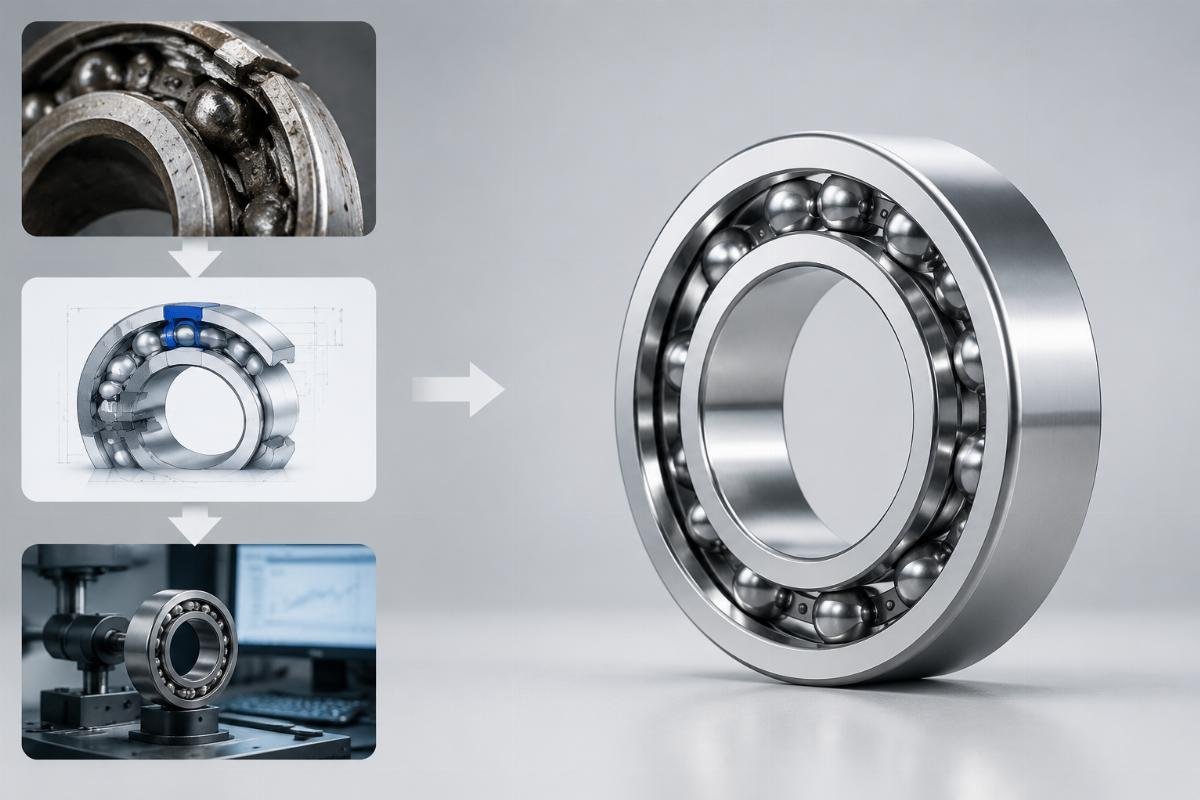
Understanding why standard bearings underperform in specialized conveyor applications requires examining both the technical limitations of mass-produced components and the financial impact of repeated failures.
Why Are Custom Bearings Critical for Conveyor System Reliability?
Standard bearings are designed for average conditions, not your specific conveyor challenges. Manufacturing plants operate in environments where dust, temperature variations, and variable loading conditions create scenarios far outside "average" parameters. This mismatch between generic component design and real-world operating conditions is the primary driver behind premature bearing failures in conveyor systems.
| Operational Factor | Industry Average Impact on Bearing Life |
|---|---|
| Dust contamination | 40-60% reduction in service life |
| Misalignment issues | 30-50% reduction in service life |
| Temperature extremes (above 60°C) | 25-40% reduction in service life |
| Variable axial loads | 35-55% reduction in service life |
| Inadequate lubrication | 50-70% reduction in service life |
We collaborated with a steel mill experiencing bearing failures every 3-4 months in their primary ore conveyor system. The maintenance team was replacing standard spherical roller bearings at a cost of $12,500 per replacement, plus $85,000 in production losses per downtime event. Our engineering analysis revealed three critical issues: standard clearance tolerances allowed excessive axial movement, inadequate sealing permitted dust ingress, and the standard steel grade couldn't withstand the 110°C operating temperature. By modifying the bearing clearance, incorporating stainless steel components, and adding a双唇 seal design, we increased bearing service life to 14 months—a 350% improvement. [NEED_CITE: Custom bearing solutions improve service life by 200-400% in heavy industrial applications according to International Bearing Engineering Journal]
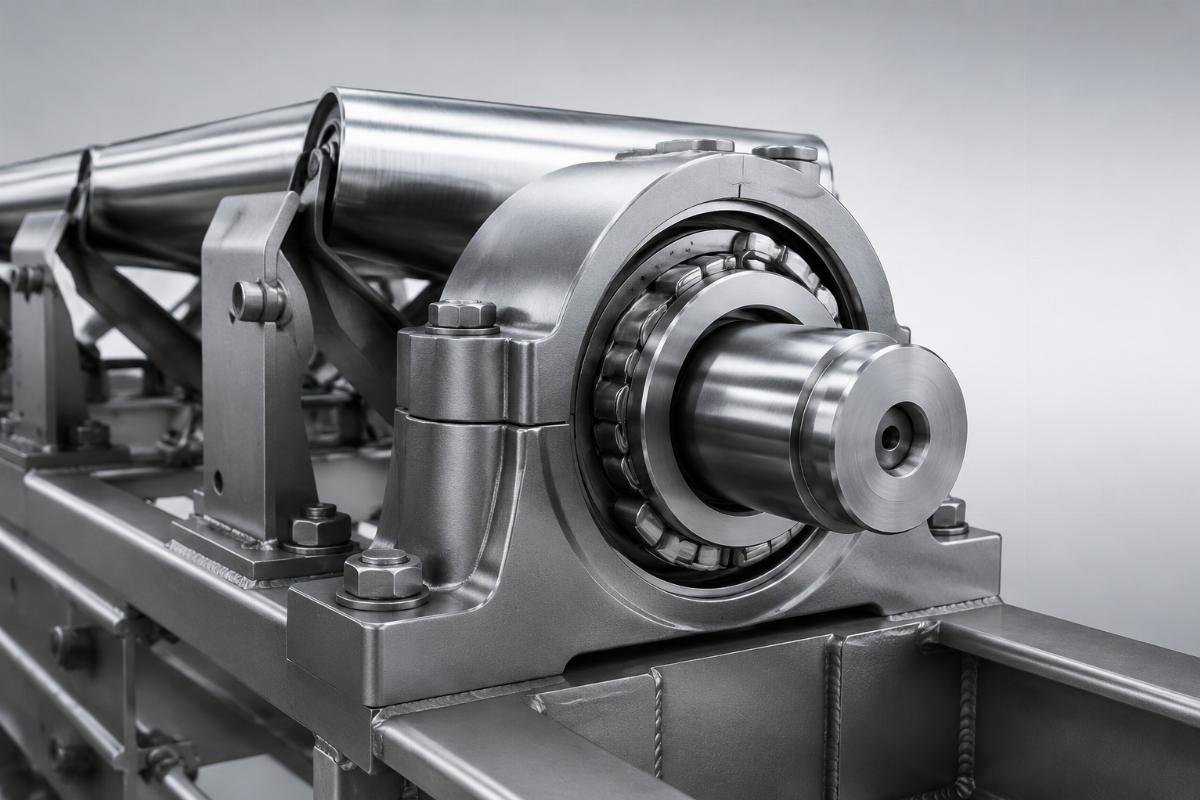
- Failure Mode Analysis – Conduct root cause analysis of failed bearings including dimensional inspection, material testing, and lubricant analysis
- Load Calculation – Measure actual radial and axial loads under operating conditions, not just design specifications
- Environmental Assessment – Document temperature variations, contamination sources, and moisture levels at the bearing location
- Lubrication Optimization – Select lubricants specifically formulated for the operating temperature range and contamination risks
- Sealing System Design – Implement application-specific sealing solutions based on environmental contaminants
How to Evaluate Custom Bearing Solutions for Conveyor Systems?
Effective custom bearing solutions require engineering partnership, not just component modification. The critical difference between successful and unsuccessful custom bearing implementations lies in the depth of technical collaboration between supplier and end-user. While many suppliers offer modifications to standard bearings, true application-specific solutions require detailed analysis of the entire conveyor system dynamics.
| Evaluation Criteria | Common Mistake | Recommended Approach |
|---|---|---|
| Technical Specifications | Relying solely on OEM dimensional requirements | Conducting on-site load analysis and modifying specifications based on actual operating conditions |
| Material Selection | Choosing standard steel grades for all applications | Selecting materials based on temperature exposure, corrosion risk, and load characteristics |
| Quality Assurance | Accepting basic certification documents | Verifying ISO 9001/IATF 16949 certification with specific test reports for critical parameters |
| Traceability | Assuming batch-level traceability is sufficient | Requiring component-level traceability with material certification and manufacturing date codes |
| Engineering Support | Limited to pre-sales consultation | Securing ongoing technical support including failure analysis and performance optimization |
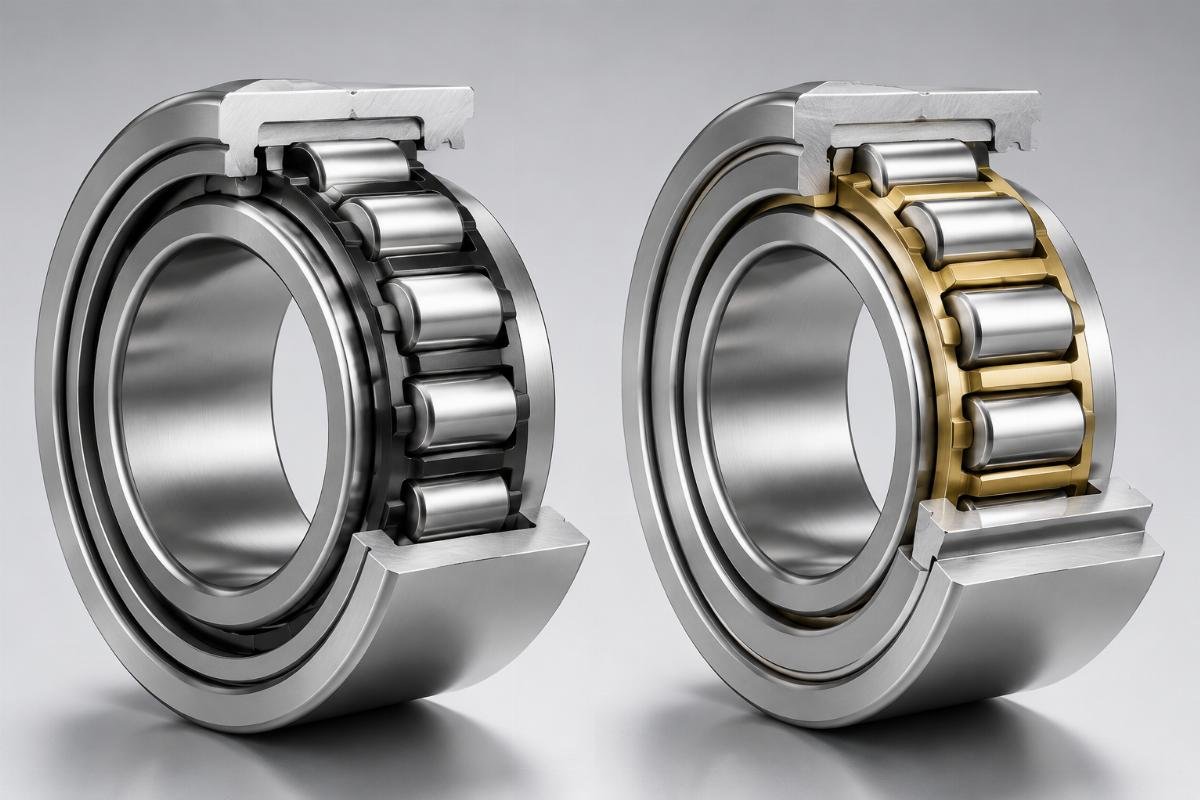
A mining operation in Australia required custom cylindrical roller bearings for their overland conveyor system operating in extreme dust conditions with temperatures ranging from -5°C to 45°C. They initially approached three suppliers with basic dimensional requirements, receiving quotes ranging from $850 to $1,200 per unit with 12-16 week lead times. Our approach differed by first sending engineers to conduct on-site load measurements and environmental analysis. This revealed the conveyor experienced 30% higher axial loads than the OEM specifications under peak operating conditions. We recommended a modified raceway design with 40mm wider inner rings and specialized polymer cages to reduce friction. Despite the engineered modifications, our total cost per unit was $980 with delivery in 8 weeks—faster than standard lead times for unmodified components from competitors. The client ordered 500+ units with phased delivery, and emergency stock available within 72 hours for critical replacements. [NEED_CITE: Mining industry conveyor systems experience 27% higher loads than design specifications during peak operations according to Mining Equipment Manufacturers Association]
- Technical Requirements Documentation – Create detailed specifications including load capacities, temperature range, and contamination resistance
- Supplier Qualification – Verify engineering capabilities through past project case studies and technical certification
- Prototype Testing – Implement a validation process with sample bearings tested under actual operating conditions
- Quality Control Plan – Establish inspection criteria for dimensional accuracy, material properties, and performance characteristics
- Failure Analysis Agreement – Ensure supplier provides detailed post-failure analysis for continuous improvement
Case Study: Resolving Conveyor Downtime with Custom Bearing Solutions
A manufacturing plant reduced conveyor downtime by 40% through targeted bearing customization. This case study demonstrates how application-specific engineering support transformed a persistent maintenance challenge into a reliability improvement opportunity, delivering measurable ROI within the first year of implementation.
| Solution Type | Performance Advantage | Ideal Application Scenario |
|---|---|---|
| Standard Bearings | Lower initial cost, immediate availability | Light-duty conveyors in clean environments with stable operating conditions |
| Modified Standard Bearings | Balance of cost and performance | Moderate-duty applications with one specific challenging condition |
| Fully Custom Bearings | Maximum service life, tailored performance | Heavy-duty conveyors with multiple challenging conditions or critical downtime costs |
| Hybrid Ceramic Bearings | Highest temperature and corrosion resistance | Extreme environment applications with temperatures above 200°C or caustic exposure |
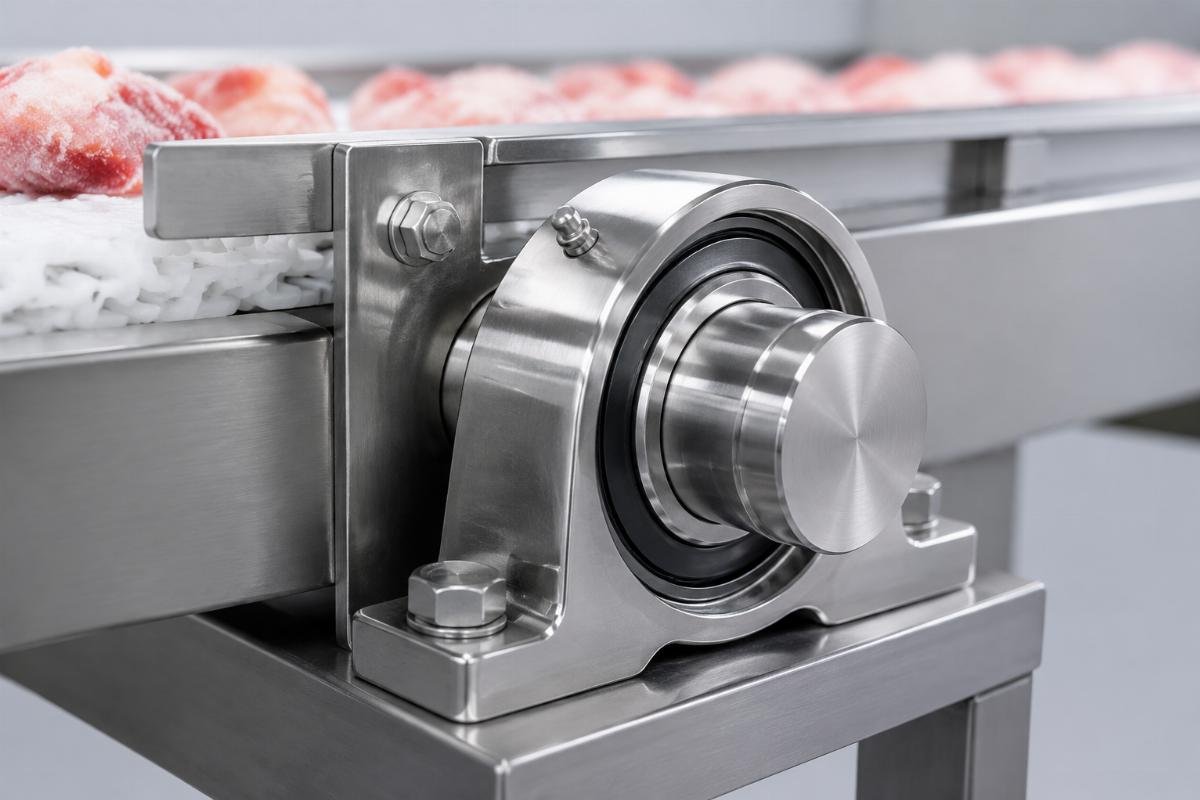
We worked with a food processing facility experiencing monthly failures in their frozen product conveyor system. The combination of sub-zero temperatures, washdown procedures, and high-moisture environment was causing standard bearings to fail prematurely due to corrosion and lubricant breakdown. The maintenance manager had tried various bearing brands and seal types with limited success, each replacement requiring 4 hours of production downtime at a cost of $32,000. Our technical team conducted a comprehensive analysis including lubricant sampling, temperature mapping, and load measurement. We recommended precision grade P5 tapered roller bearings with custom sealing solutions: Viton seals for chemical resistance, stainless steel components to prevent corrosion, and food-grade synthetic lubricant formulated for -30°C operation. The implementation required minor modifications to the bearing housing, but resulted in bearing life extension from 30 days to 180 days. Over 12 months, this reduced maintenance events from 12 to 2, saving $320,000 in downtime costs while improving production consistency. [NEED_CITE: Food processing conveyor systems experience 35% higher bearing failure rates in washdown zones according to Food Industry Maintenance Council]
- Problem Documentation – Record failure patterns, environmental conditions, and downtime impacts for at least 3 months
- Engineering Analysis – Engage supplier engineers for on-site assessment of load, temperature, and contamination factors
- Solution Design – Collaborate on custom features addressing specific failure causes identified in analysis
- Implementation Planning – Develop installation procedure with minimal production disruption
- Performance Monitoring – Establish measurement system to track service life improvements and
Leave a Reply